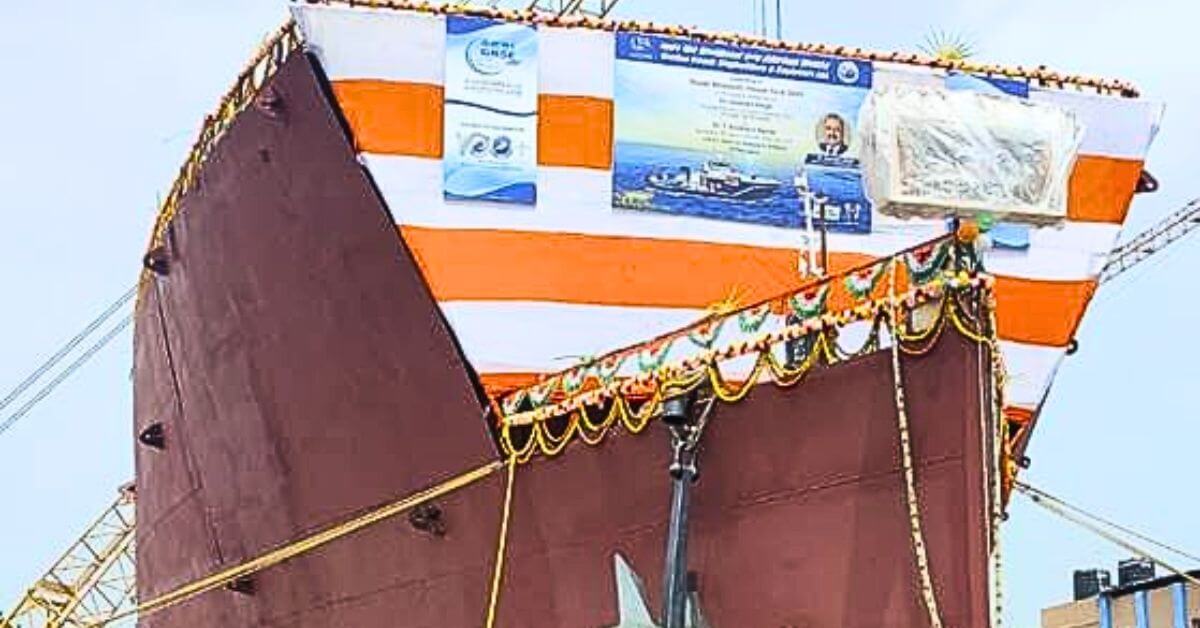
The Indian Navy's launch of the Ocean Research Vessel *ORV Sagar Manthan* at Rishi Bankim Shipyard is not merely a ceremonial milestone. It represents a tangible step toward closing the observational gaps that have long limited our understanding of the Indian Ocean's dynamics. For an ocean that influences monsoon patterns, sustains critical fisheries, and serves as a global shipping corridor, the arrival of a purpose-built research platform is both timely and necessary.
This vessel enters service at a moment when the demand for ocean intelligence is accelerating. As we recently examined in Bridging Data Gaps: Integrating Citizen Science for Ocean Intelligence, traditional monitoring networks remain sparse, particularly in coastal zones where human and ecological pressures converge. The *Sagar Manthan* can help address that deficit by deploying calibrated instruments, collecting empirical samples, and validating remote-sensing data across under-observed regions. Meanwhile, the parallel development of Integrated Subsea Cables Enhance Data Transmission Across the Indian Ocean reminds us that vessel-based research must feed into a broader data ecosystem. A research ship's value is multiplied when its measurements, temperature, salinity, dissolved oxygen, current profiles, are integrated with cable-borne sensors and satellite observations to produce real-time, peer-reviewed ocean intelligence.
What distinguishes the *Sagar Manthan* from earlier Indian research vessels is its explicit alignment with naval operations. This is not a purely academic ship; it serves national security interests by improving ocean-state forecasting, supporting anti-submarine warfare training, and enhancing maritime domain awareness. Some observers may worry that military involvement compromises open science. We would argue the opposite: when naval platforms share declassified oceanographic data with civilian researchers, everyone gains. The vessel's ability to operate in challenging conditions and its advanced instrumentation make it a unique asset for collecting longitudinal datasets in regions where commercial and academic ships rarely venture.
The practical takeaway for our readers is this: the *Sagar Manthan* will generate the kind of validated, measurable data that climate modelers and policymakers depend on. Every deployment of a CTD rosette, every sediment core extracted, every acoustic survey completed will feed into the integrated data ecosystem that underpins effective ocean stewardship. We will be watching how the Indian Navy manages the balance between operational security and scientific transparency, and whether the vessel's data streams become accessible through open repositories. The vessel's name, *Sagar Manthan*, or "churning of the ocean", is fitting. The question is whether that churning will yield clarity or remain confined to classified channels.