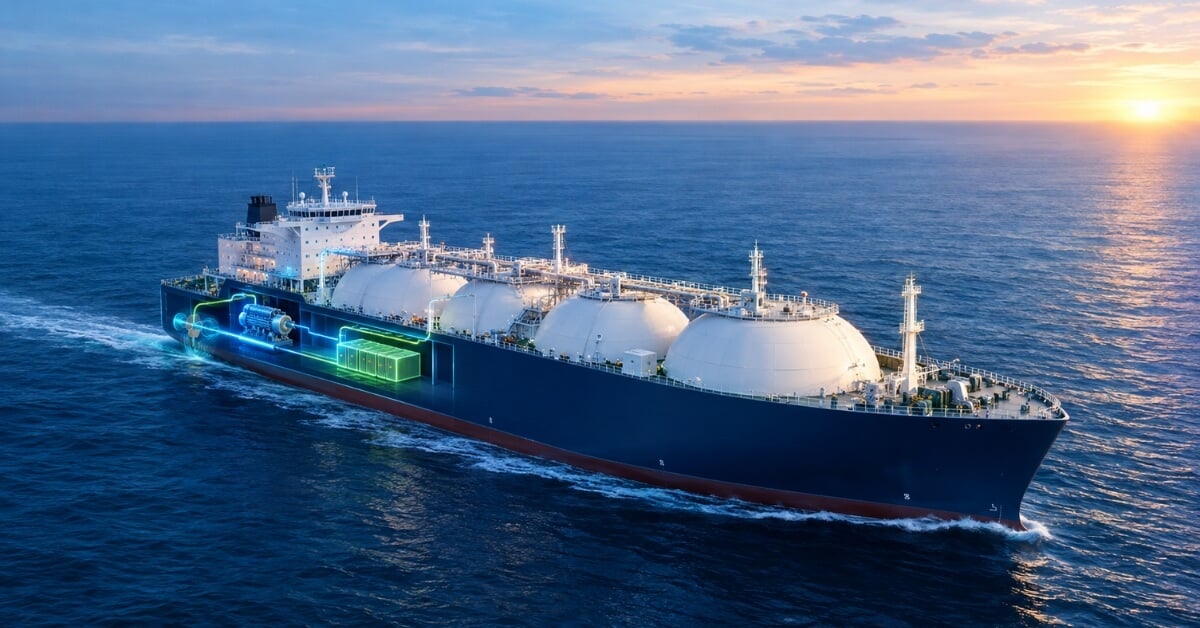
The decision by Lloyd's Register, HD Korea Shipbuilding & Offshore Engineering, and HD Hyundai Heavy Industries to collaborate on hybrid electric propulsion for LNG carriers is a measured step forward, not a revolution. It is the kind of incremental, engineering-led progress that actually moves the needle on maritime emissions. For our readers, the significance lies not in a single breakthrough, but in how this design integrates existing technologies into a coherent system. This echoes a theme we have explored in our coverage of bridging data gaps for ocean intelligence: the real gains come from connecting what is already there, not from waiting for a magic bullet.
The hybrid approach here is pragmatic. By pairing conventional LNG propulsion with electric motors and battery storage, the partners are targeting the operational profile of a modern carrier: the need for rapid load changes, precise maneuvering, and reduced auxiliary engine use. This is not about eliminating fossil fuels tomorrow; it is about making each voyage measurably less carbon-intensive today. We would tell any operator or charterer watching this space to pay attention to the specifics of the energy management system rather than the headline of "hybrid." The value will be in the calibration of when and how the electric side takes over, and whether the system delivers the promised fuel savings over a full year of trading, not just in ideal conditions.
This development also sits alongside a separate but related finding from LR's own analysis of larger 200,000 m³ LNG carriers, which suggested that increased cargo capacity alone could cut transport costs while remaining compatible with existing infrastructure. The two efforts are complementary. One pushes the economic envelope of ship size; the other refines the propulsion plant for whatever size hull it sits in. Together, they point toward a future where efficiency is not a single design feature but a layered strategy. That is a more honest and useful picture than any claim of a single "green" solution. It also raises a question for the industry: will the ancillary systems, portside power, and crew training keep pace, or will we again see hardware outpace the operational ecosystem that makes it work?
What we will be watching is the transition from design approval to class notation and, eventually, to sea trials. The partnership has not yet published performance data, and that is where the credibility of the project will be tested. A concrete detail to track is the specific hybrid configuration chosen: whether it uses DC or AC distribution, and how much battery capacity is actually allocated for peak shaving versus emergency backup. For a reader asking us what to make of this news, our answer is straightforward: this is a sensible, low-drama investment in incremental efficiency. The real proof will come when independent, peer-reviewed operational data emerges from a vessel in service. Until then, treat the design as a promising hypothesis, not a proven outcome.