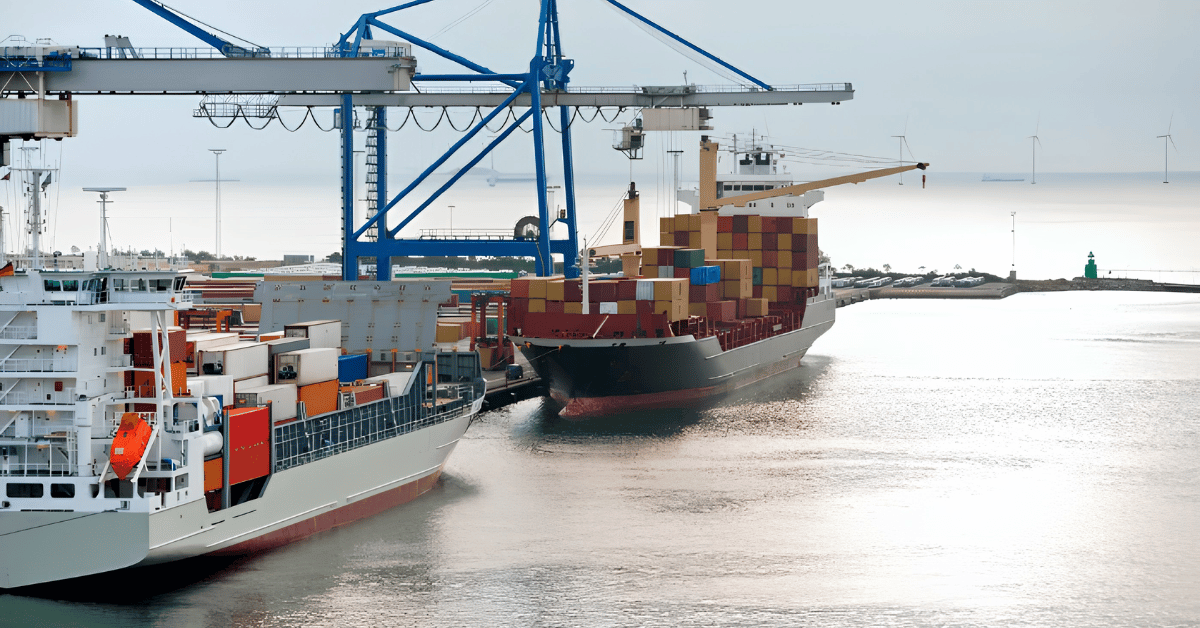
A new deep-sea port and special economic zone in Ogun State, Nigeria, is a measured step forward for West African maritime infrastructure, and we see it as a practical test of how integrated logistics can drive regional trade. The Memorandums of Understanding signed by DP World, the Ogun State Government, and Ogun Deep Sea Port Company Ltd propose a 10,000-hectare site that combines port infrastructure, manufacturing, and logistics along the Lagos-Calabar Coastal Highway. This matters because it moves beyond the usual piecemeal port expansions, it attempts to build a self-contained economic engine. For readers tracking global trade flows and climate indicators, this project offers a real-world case study in how infrastructure investment can reshape supply chains. It also connects directly to the patterns we monitor in New Seaborne Trade Data Charts Global Economic Currents, where empirical shipping data reveals the shifting currents of global commerce. Nigeria, with one of Africa's largest consumer markets, is positioning itself to capture more of that value chain.
The scale is worth examining. A 10,000-hectare development is not a modest upgrade; it is a deliberate bet on long-term industrial growth. Governor Dapo Abiodun cited 50,000 direct jobs, and DP World's Yuvraj Narayan emphasized a decade of existing operations in Nigeria. That history matters. DP World has committed roughly US$3 billion to port infrastructure across Africa, including the Port of Ndayane in Senegal and Banana Port in the Democratic Republic of Congo. This Ogun project is not an isolated gamble, it is part of a calibrated, continent-wide strategy. For our audience of researchers and policymakers, the key detail is the economic zone's adjacency to the port. That integration reduces friction: goods move from factory floor to ship hold without crossing multiple jurisdictions or transport modes. It is a model that, if validated, could be replicated elsewhere. The announcement also echoes themes from Empirical ocean data powers the measurable path to energy transition, where we argued that data-driven infrastructure decisions are essential for sustainable development. Here, the measurable outcome will be trade volume, job creation, and port efficiency, metrics that can be tracked and compared.
What remains unspoken in the MoUs is the environmental baseline. A deep-sea port of this scale will alter coastal sediment transport, affect local fisheries, and require significant dredging. The press release does not mention environmental impact assessments or climate resilience measures. For a publication that has covered China Submerges AI Data Center in Ocean Floor Deployment, we recognize that ocean infrastructure comes with complex trade-offs. Nigeria's coastline is already vulnerable to erosion and sea-level rise. Building a 10,000-hectare zone demands empirical data on currents, storm surges, and biodiversity, data that should be collected and shared openly. The project's success will depend not only on steel and concrete but on integrated ocean intelligence that informs every phase of construction and operation.
The concrete point to watch is the next 18 months. MoUs are expressions of intent, not binding commitments. DP World and the Ogun State government must now move to feasibility studies, environmental reviews, and financing arrangements. If they release empirical data on projected trade flows, job multipliers, and ecological impacts, this project will set a new standard for transparency in African port development. If the data stays behind closed doors, the risk of unintended consequences rises. For our readers, the takeaway is direct: the Ogun Deep Sea Port is not just a Nigerian story. It is a test case for whether integrated, data-informed infrastructure can deliver on its promises, and whether the ocean intelligence we advocate for will be part of the plan.