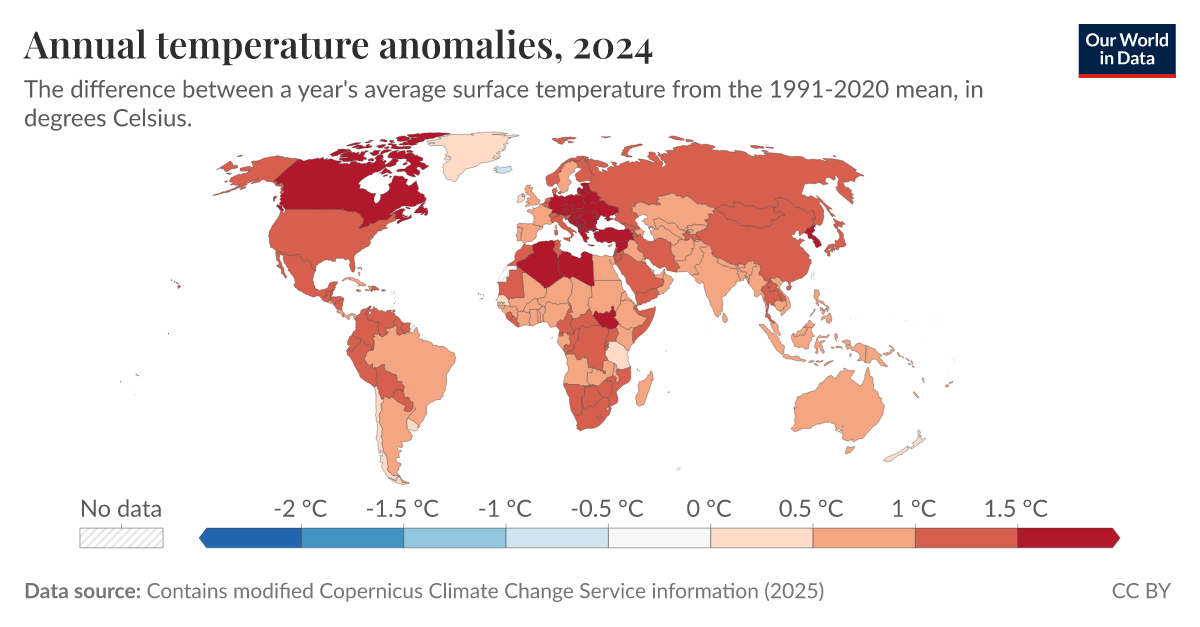
The 2025 temperature anomaly data is not another headline; it is a calibration point. When the difference between a given year's average surface temperature and the 1991-2020 mean is measured across all land and ocean surfaces, we are not observing weather. We are observing a sustained, quantifiable shift in the climate system, and that distinction matters for every decision made in the coming decade. The value of this dataset, processed from the Copernicus Climate Change Service's ERA5 reanalysis, is not that it confirms what we suspect, but that it gives us a precise, peer-reviewed baseline against which adaptation strategies can be validated.
This is where the story connects directly to the work of building an integrated data ecosystem. A single year's anomaly is a signal, but its meaning depends on the infrastructure that surrounds it. As we noted in A Shared Data Ecosystem to Deepen Global Ocean Understanding, the power of ocean intelligence comes from linking atmospheric, oceanic, and terrestrial observations into one coherent framework. The 2025 anomaly figures are only useful if they are placed alongside the other empirical indicators we track, such as the intensification of global wave energy documented in Seismic data reveals warming oceans are intensifying global wave energy. Together, these measurements form a longitudinal record that tells us not just that the system is changing, but how fast and in which directions.
For researchers and policymakers, the practical takeaway is straightforward: the reference period itself is a moving target. The 1991-2020 mean is the standard, but as anomalies accumulate, that baseline will eventually become less representative of current conditions. This is not a flaw in the data; it is a feature of how climate science progresses. What matters is that we keep the methodology transparent, repeatable, and open. The latitude-weighted processing applied to country-level figures, and the explicit handling of small landmass limitations, are exactly the kind of calibrated detail that separates credible ocean intelligence from vague claims. We should demand that same rigor from every derived indicator we use.
The open question is whether our institutions are prepared to act on this signal with the same precision with which it was measured. The 2025 anomaly is a concrete number, but it becomes a decision only when it is integrated into planning for coastal resilience, marine resource management, and emissions targets. Watch how the next round of national climate commitments incorporates this specific data point. If the anomaly appears as a named reference in policy documents, we will know the measurement culture is taking hold. If it does not, we will have a clear indicator of the gap between observation and action. That gap, not the temperature itself, is the risk we should be managing now.