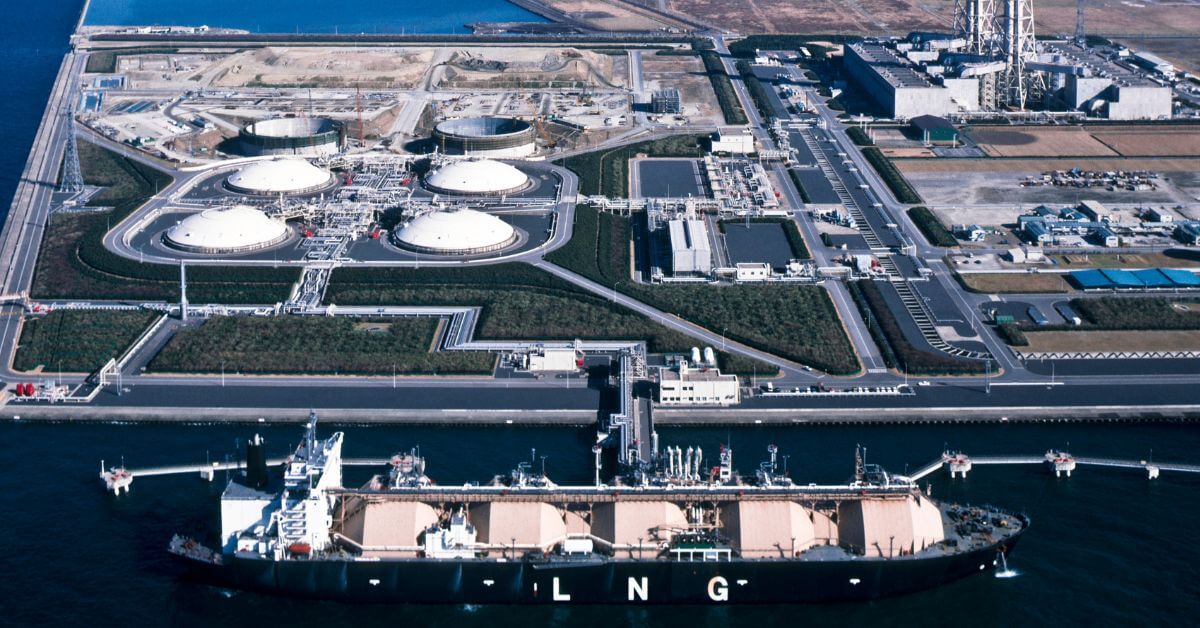
A $200 billion South Korean investment in U.S. nuclear capacity and an Alaska LNG export corridor is not merely an energy deal, it is a recalibration of global maritime logistics and geopolitical leverage. We see this as a clear signal that long-term capital is betting on a future where energy security and ocean-borne trade are inextricably linked, and where the Pacific basin becomes the new center of gravity for both. For our readers, this means closely watching how new LNG export infrastructure will reshape shipping routes and demand for tanker capacity, especially as parallel developments unfold in the Gulf and the Strait of Hormuz.
The proposed projects would add new power generation capacity domestically while positioning the U.S. to supply Asian markets with liquefied natural gas. This aligns with recent patterns we've tracked, such as the movement of Iranian crude under U.S. authority across the Atlantic, a reminder that energy transport is never just about supply, but about who controls the corridors. The South Korean commitment also comes as Phased Negotiations Aim to Ease Restrictions on Strait of Hormuz, a development that could alter tanker deployment globally. If Hormuz opens further, the relative value of an Alaska-to-Asia LNG route changes; if it remains constrained, that corridor becomes even more strategic. These are not separate stories, they are the same story written in different currents.
What this means in practical terms is that the ocean intelligence community must update its models. An integrated data ecosystem for global shipping now needs to account for new LNG terminals, nuclear-powered grid stability in the U.S., and the ripple effects on vessel utilization rates. The Korean investment is validated by measurable projections of Asian demand, but the real-time variable remains geopolitical friction. Consider that the same week this deal was announced, an Autonomous Vessel Demonstrates Advanced Torpedo Deployment Capability in a joint U.S.-UK test. The ocean is simultaneously becoming more transited, more contested, and more automated. Any long-term energy corridor strategy that ignores these empirical shifts risks being calibrated for a world that no longer exists.
The specific consequence to watch is the timeline for LNG export capacity from Alaska relative to the phased Hormuz talks. If both materialize in the same window, we could see a structural oversupply of tanker demand in the Pacific, compressing charter rates and altering investment patterns for newbuilds. If one stalls, the other gains outsized importance. For now, the data point is clear: $200 billion is a vote of confidence in a future where ocean energy corridors are defined not by geography alone, but by the alliances and technologies that govern them. We will be tracking the empirical indicators, vessel utilization, transit times, and port congestion, to see if the reality matches the ambition.