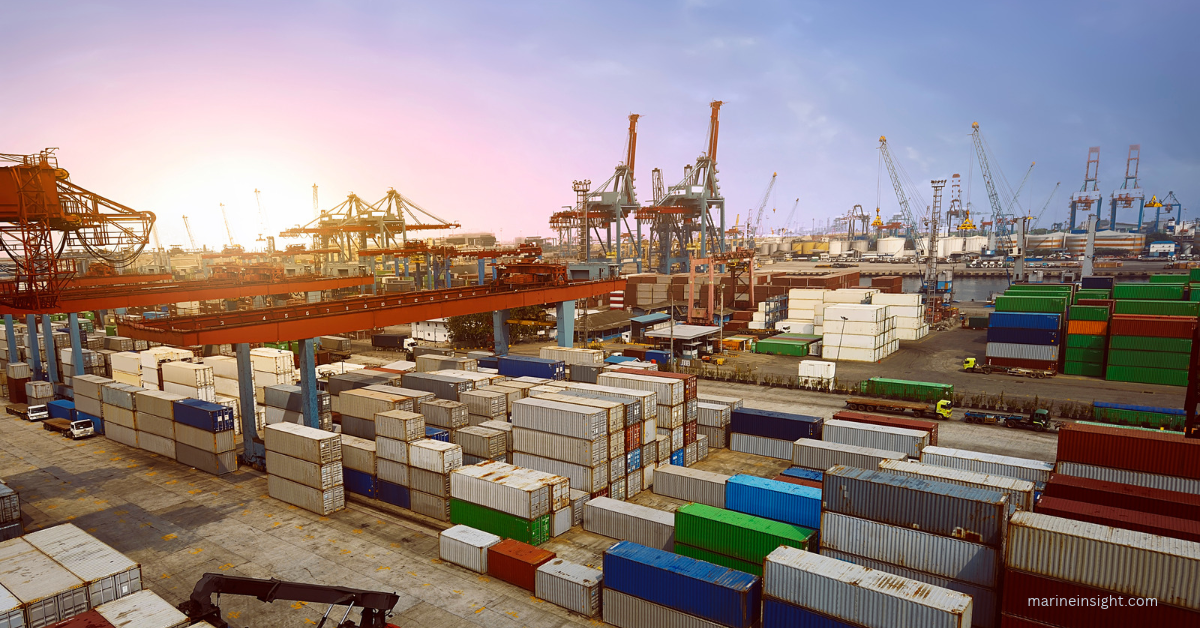
Up to 75% of container moves at a single terminal are classified as nonproductive. That is not a failure of effort; it is a failure of information. The validated 2026 study from Tecnológico de Monterrey, conducted with two terminal employees, makes clear that the majority of yard work, reshuffling containers to reach buried ones, repositioning boxes for pre-clearance services, does not move cargo closer to its destination. It simply moves it out of the way. For an industry that measures itself in throughput and dwell time, this finding demands a reckoning with how terminals see their own yards.
The study pinpoints a structural inefficiency. About 51% of those unproductive moves involved containers requiring a pre-clearance service, an administrative step that forces extraction regardless of where the container sits. That is not a stacking problem; it is a coordination problem. The terminal's own data, spanning recent years, shows that roughly a third of all containers needed at least one such service, yet yard planners lacked the foresight to place them near service areas. This is where machine learning enters the picture. The research team built models on historical operational data to predict, before a vessel is discharged, which containers will need a service and how long they will stay. With that information, planners can place short-stay containers in accessible slots and long-stay containers in low-priority zones. A separate 2026 preprint applied similar dwell-time predictions to real terminal data and cut relocations by up to 14.68%. That is not a theoretical gain; it is a measurable reduction in waste.
The implications extend beyond productivity. As Adani Ports Expands Global Liquid Storage Reach With €2.56 Billion Evos Deal shows, the industry is consolidating assets and betting on scale. But scale without intelligence compounds inefficiency. A larger yard with the same blind stacking strategy simply buries more containers deeper. Meanwhile, Floating data centers anchor ocean intelligence to existing port infrastructure demonstrates a different path: embedding data processing capacity where the cargo moves. The 2026 study makes a parallel argument, that the terminal's own operational data, properly structured and predicted, is the missing layer. The International Maritime Organization's recommendations on dangerous cargo location records reinforce the point: knowing where a container is, and what it contains, is not optional. It is a safety requirement.
The takeaway is direct: terminals that treat yard management as a logistical afterthought are paying for it in every reshuffle. The study covers one terminal, so the numbers are not universal, but the mechanism is. Dwell time, pre-clearance needs, and stacking strategy form a triangle of variables that can be modelled before a container ever touches the quay. The open question is whether operators will adopt predictive stacking at scale, or continue to accept that three out of four moves achieve nothing.