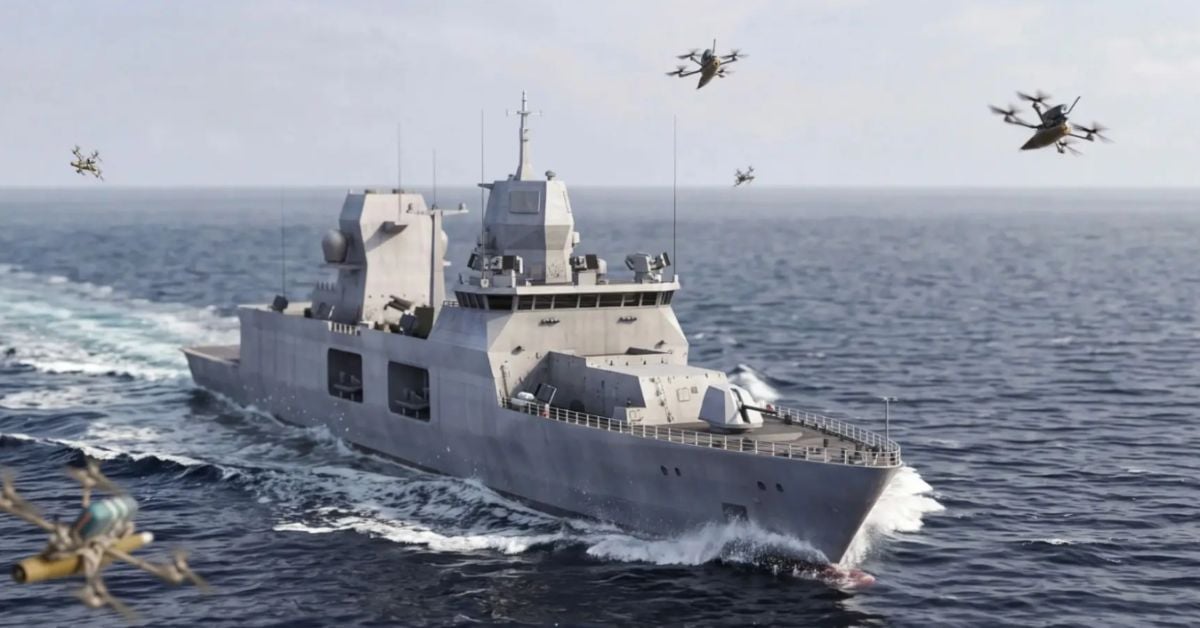
The counter-drone system developed by Mehler Production in roughly 18 months is not just another piece of maritime hardware. It is a response to a threat that has quietly redefined naval security over the past few years. The fact that it underwent more than 48 trials before being mounted on vessels tells us something important: the developers understood that in an environment where uncrewed systems are now cheap and ubiquitous, validation is not a box-ticking exercise. It is the difference between a defensive tool and an expensive guess. Russia’s recent push to calibrate export revenue for new icebreakers and concerns over Russian drone operations in the Mediterranean both point to the same reality: state and non-state actors are treating the ocean as a contested domain where small, cheap systems can challenge billion-dollar platforms.
Our take is straightforward: this system matters because it is empirical, not aspirational. Too often, maritime security products are marketed on promise rather than proof. Mehler Production chose a different path, subjecting the system to repeated trials until it met a measurable standard of performance. That is the kind of discipline the industry needs more of. For naval operators and commercial shipping companies alike, the takeaway is not that a new tool exists, but that it has been tested under conditions that approximate real-world use. This shifts the conversation from "what does it claim to do?" to "what has it already proven it can do?" That is a distinction every procurement officer should care about.
What is more telling is the timing. The system arrives as record port activity reflects rising Chinese exports, meaning maritime chokepoints and anchorages are busier than ever. More traffic means more vectors for drone incursions, whether from hostile state actors or opportunistic groups. A counter-drone system that has been validated over 48 trials offers a practical layer of protection that can be integrated into existing vessel operations without requiring a complete overhaul of onboard systems. For a captain or a fleet manager, that is not a luxury. It is becoming a baseline expectation.
If we were advising a reader who asked whether this development is worth watching, we would say this: pay attention to how the next phase of testing unfolds. The 48 trials are a strong start, but the system's real value will be proven in operational environments where it faces not just scripted scenarios but the unpredictability of open water, electronic interference, and evolving drone tactics. The question is not whether counter-drone systems belong on ships. They do. The question is whether developers like Mehler Production can sustain this level of empirical rigor as the threat evolves. That is the standard we will be watching.