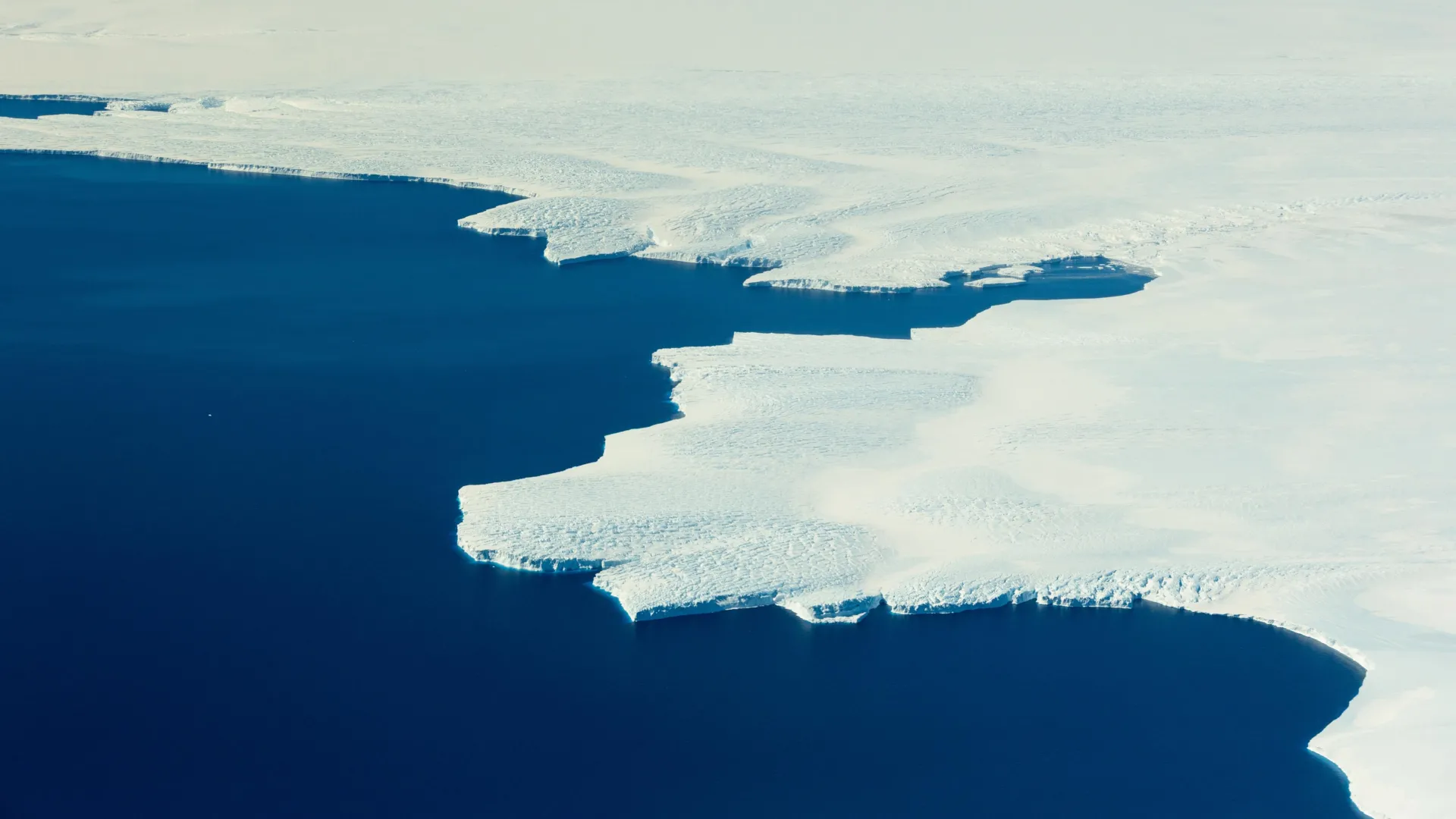
East Antarctica gained 695 billion tons of ice between 2021 and 2023, a figure large enough to pause the continent's long-term decline. Researchers attribute the gain to heavy snowfall triggered by warming thousands of miles away in the tropical ocean, which altered atmospheric circulation and funneled moisture southward. This is not a reprieve from climate change; it is a reminder that the system is more interconnected, and less predictable, than any single trend line suggests. The same planetary dynamics that produced this snowfall are visible in other regions, as documented in our recent analysis of Atlantic Circulation Weakens: Global Climate Reshaping Predicted and Coastal Upwelling Dynamics in the Gulf of Guinea, Quantified. Together, these stories illustrate how a warming ocean does not act uniformly; it redistributes heat and moisture in ways that can produce localized gains even as the global system loses stability.
Our take is straightforward: celebrate the data, not the narrative. A 695-billion-ton ice gain is a valid, measurable event that improves our empirical models of Antarctic mass balance. But it would be a mistake to treat it as evidence that East Antarctica is safe. The study's authors trace the cause to tropical ocean warming, the same underlying driver that is weakening the Atlantic Meridional Overturning Circulation and reshaping coastal upwelling in the Gulf of Guinea. In other words, the temporary ice gain is a symptom of the same planetary fever. For researchers and policymakers, this means that single-region observations must be integrated into a broader ocean intelligence framework. A reader asking whether this changes the outlook for sea-level rise should hear this: one extraordinary snowfall event does not reverse decades of measured ice loss from West Antarctica and the Antarctic Peninsula. It does, however, sharpen the question of how long such atmospheric anomalies can persist before the underlying warming overwhelms them.
What we would tell that reader next is to watch the next few years of longitudinal data. The snowfall event was driven by a specific atmospheric configuration linked to tropical sea-surface temperatures. If those temperatures remain elevated, similar patterns could recur, or they could shift, leaving East Antarctica exposed to the same melting forces that have already reshaped other parts of the continent. The practical consequence for climate modelers is clear: we need calibrated, real-time observations of both polar and tropical systems, not as separate datasets but as an integrated data ecosystem. The 695 billion tons are a signal in that system, not a conclusion.
The most concrete detail to monitor is the duration of the atmospheric circulation anomaly that delivered the moisture. If it weakens or reverses in the coming years, the temporary ice gain will be erased by subsequent melt. If it persists, East Antarctica may continue to accumulate mass in the short term, even as West Antarctica's decline accelerates. Either outcome is scientifically informative. Neither justifies complacency. Understanding drives protection, and understanding this event means placing it alongside the weakening Atlantic circulation and the shifting upwelling dynamics we have already quantified. The ocean does not offer simple headlines. It offers integrated signals. Our job is to read them together.