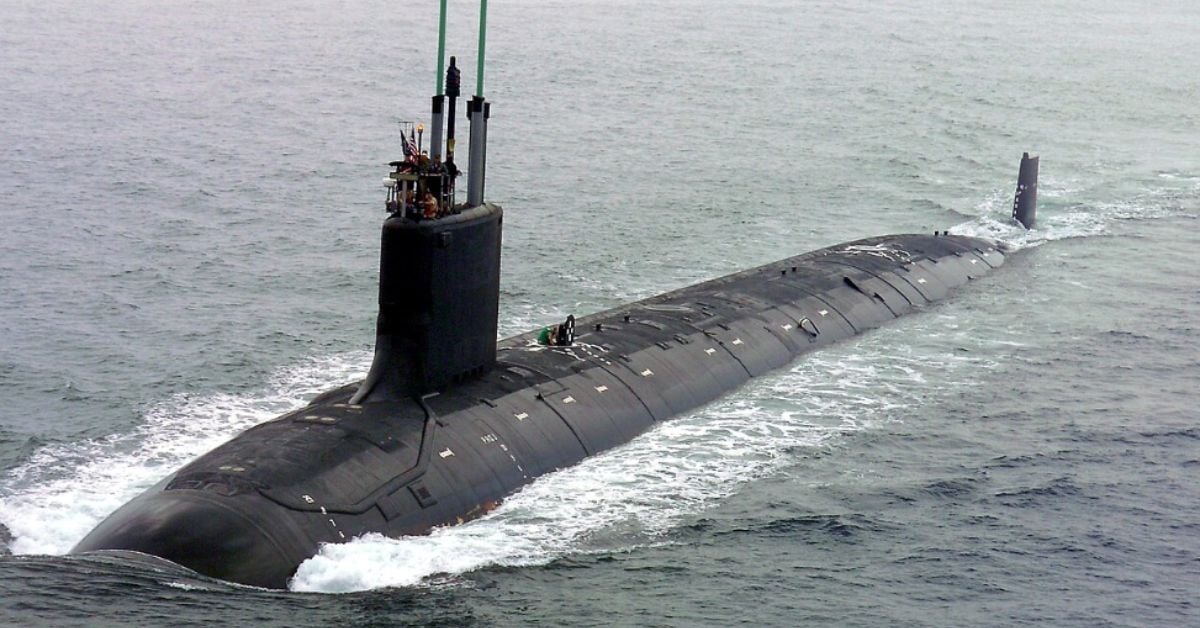
The U.S. Navy's decision to integrate nuclear-capable sea-launched cruise missiles into Virginia-class submarines represents a significant recalibration of maritime deterrence, but one that demands careful scrutiny beyond the headlines. This is not merely a technical upgrade; it is a strategic bet on undersea warfare that carries implications for global stability, defense spending, and the very nature of naval power projection.
The contract modification with General Dynamics Mission Systems, valued at $194 million for fire control subsystem development, signals a methodical, two-year engineering push to equip these nuclear-powered platforms with weapons that blur the line between conventional and strategic roles. Virginia-class submarines were originally designed for anti-submarine warfare, surveillance, and land attacks using non-nuclear payloads. Adding nuclear-capable cruise missiles transforms them into dual-capable platforms, a move that introduces new layers of complexity to command-and-control protocols and escalation dynamics. For our readers, many of whom track Validated AI inspection scaled to $300M for fleet readiness and the Navy's broader modernization efforts, this integration underscores a pattern: the service is simultaneously investing in predictive maintenance tools to boost readiness and in fire control systems that increase the lethality of its submarine fleet. The question is whether these parallel tracks are adequately balanced.
The SLCM-N program's fire control subsystem is the critical interface between the submarine's combat systems and the missile itself, processing targeting data, coordinating launch sequences, and ensuring accuracy. General Dynamics' prior experience with the Trident II fire control system for ballistic missile submarines provides a strong empirical foundation, but the operational context here is different. A nuclear-capable cruise missile launched from a fast-attack submarine introduces tactical flexibility that strategic ballistic missiles do not. That flexibility, however, also raises the stakes for any miscalculation in a contested environment like the South China Sea or the Atlantic approaches. The Navy has not disclosed the missile's hardware, software, or performance parameters, which is understandable for security reasons but also limits public and allied understanding of the system's safeguards.
From a practical standpoint, this contract is also a jobs story. General Dynamics is adding at least 200 engineering and manufacturing positions across Virginia, Pittsfield, and Manassas, and investing $1.3 million in facility upgrades. That economic impact matters, especially in regions already shaped by defense spending. But the strategic consequence is what deserves sustained attention. As the Carrier Roosevelt Arrives in Yokosuka as Pacific Exercises Begin, the integration of nuclear-capable cruise missiles into submarines operating in those same waters creates a new variable in an already tense theater. The Navy plans to build 45 Virginia-class boats; 26 are complete, eight are under construction. Each additional boat equipped with this fire control system represents a tangible expansion of the United States' ability to hold targets at risk from unexpected positions.
The specific detail to watch is the fire control subsystem's certification timeline. Without a publicly announced schedule for integration testing, the risk of program delays or technical surprises remains real. And in an era where Cargo spill in the Strait of Hormuz scatters consumer goods across shipping lane reminds us how quickly maritime incidents can escalate into broader disruptions, the margin for error in undersea weapons integration is vanishingly small. The Navy's ability to validate this system under real-world conditions will determine whether this capability strengthens deterrence or introduces new vulnerabilities. The data will tell.