Too many choices complicate female frogs’ sex lives
Our take
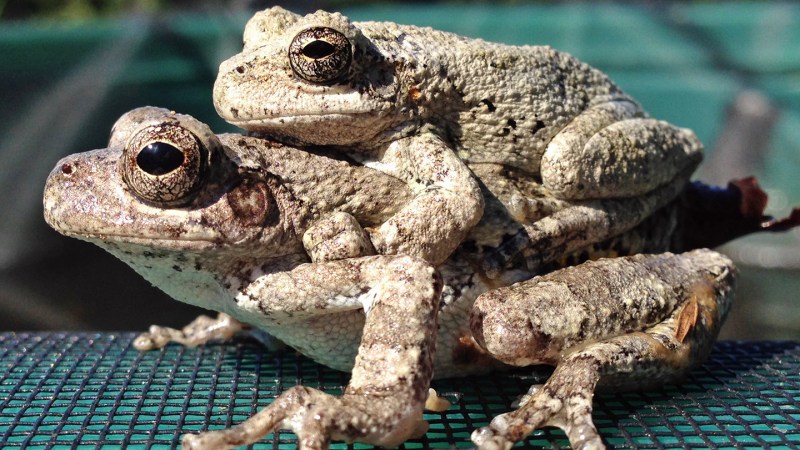
The seemingly simple act of a female frog choosing a mate reveals a surprisingly complex interplay of behavioral ecology and sensory processing, as highlighted by recent research demonstrating that increased male vocalization can actually decrease a female’s likelihood of selecting her preferred suitor. This isn’t a story about male dominance in the traditional sense, but rather an illustration of how environmental factors, specifically the sheer volume of information, can disrupt established mating preferences. It echoes findings in other species, including the remarkable ability of elephants to relearn wild behaviors after captivity, as documented in Elephants can relearn how to live wild after years in captivity, showcasing the plasticity of animal behavior in response to changing circumstances. Furthermore, this research connects to broader investigations into sensory evolution, similar to the work exploring how seals developed amphibious hearing over vast timescales – a capability detailed in Seals’ amphibious hearing developed a long, long time ago, underscoring the intricate adaptations that allow animals to thrive in diverse environments. The core finding – that cognitive overload can override instinctive preferences – has profound implications for understanding animal decision-making in increasingly complex and noisy environments.
The mechanism at play here isn't necessarily about females actively disliking preferred males, but rather about their ability to process the influx of information. As the number of competing mating calls increases, the cognitive load on the female likely rises, leading to a more random or less discerning choice. This aligns with broader principles of information theory and sensory ecology, where the signal-to-noise ratio becomes critical. A cacophony of calls essentially drowns out the subtle cues that initially identified a desirable mate, highlighting the importance of environmental context in shaping reproductive success. This phenomenon isn’t unique to frogs; similar principles are likely at work in other species where mate choice is driven by acoustic or visual signals, particularly in environments experiencing anthropogenic noise pollution or habitat fragmentation. The lab setting, while controlled, provides a valuable model for understanding these dynamics in the wild, where the complexity is amplified exponentially.
The broader significance of this research extends beyond the realm of amphibian mating behavior. It offers a valuable lens through which to examine the impact of human-induced environmental changes on animal decision-making. As our planet becomes increasingly noisy and fragmented, many species are facing a constant barrage of sensory input. This can disrupt foraging behaviors, predator avoidance strategies, and, as this frog study demonstrates, mate selection processes. Understanding the cognitive limitations of animals in the face of these challenges is crucial for developing effective conservation strategies. For instance, mitigating noise pollution in critical habitats could improve reproductive success for numerous species, not just frogs. This research serves as a reminder that seemingly subtle environmental changes can have cascading effects on ecological systems, impacting everything from population dynamics to genetic diversity.
Looking ahead, a critical question arises: how will these complex sensory dynamics shape the evolution of mating signals and preferences in the future? Will species evolve strategies to filter out noise and prioritize key cues, or will we see a shift towards more generalized mating behaviors? Longitudinal studies, incorporating real-time monitoring of both acoustic environments and animal behavior, are essential for addressing these questions. The development of integrated data ecosystems, leveraging validated and calibrated sensor networks, will be key to collecting the empirical data needed to understand these evolving relationships. The ocean intelligence we strive to cultivate at World Data Ocean is fundamentally about understanding these intricate connections—and predicting their consequences—so that we may better steward the planet’s resources and ensure the long-term health of its ecosystems.
Read on the original site
Open the publisher's page for the full experience