Elephants can relearn how to live wild after years in captivity
Our take
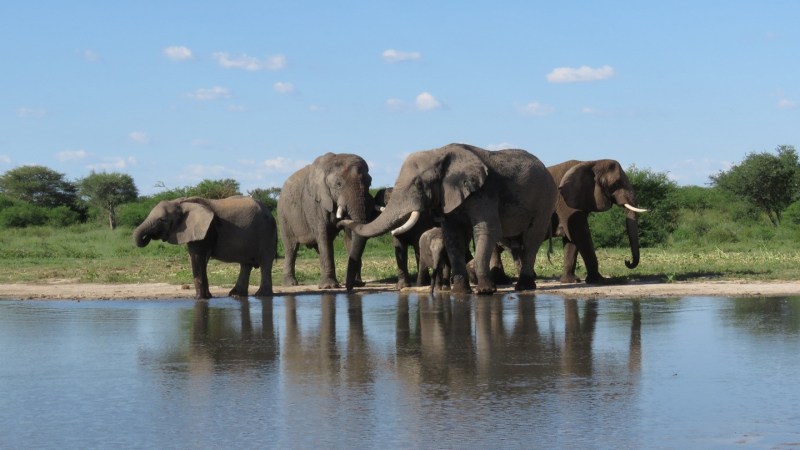
The remarkable findings detailed in the recent report on elephant rehabilitation—demonstrating behavioral convergence between captive-rehabilitated elephants and their wild counterparts—offer a compelling case study in behavioral plasticity and the potential for ecological restoration. It’s a story that resonates deeply with the core principles underpinning World Data Ocean’s mission: understanding complex systems and leveraging data-driven insights to inform conservation efforts. This research builds upon existing understanding of animal behavior, much like our own work exploring the nuances of marine ecosystems, such as the [Limitations of using the canopy to infer the structure and functioning of giant kelp forests], where simplified data can obscure critical ecological processes. Similarly, the challenges of accurately interpreting animal behavior, whether it's elephants relearning wild skills or seals adapting their hearing [Seals’ amphibious hearing developed a long, long time ago], highlight the importance of rigorous, longitudinal data collection and analysis. The ability to observe and quantify these shifts across individuals and populations is vital for developing effective conservation strategies.
The study’s methodology, focusing on behavioral similarities rather than simply documenting survival rates, is particularly noteworthy. Tracking nuanced actions—social interactions, foraging techniques, and navigation strategies—provides a far richer picture of an elephant's reintegration into the wild than a simple presence/absence metric. This echoes the need within ocean conservation to move beyond broad assessments of habitat health and embrace the collection of granular data points concerning species behavior and interactions. For example, initiatives focused on whale migration, such as the interactive experience mentioned in [Looking for scientific feedback on a short interactive experience about whale migration], are attempting to capture complex migratory patterns and behaviors in engaging ways. The elephant study underscores the value of such detailed observation and the potential for uncovering insights that might otherwise remain hidden. The fact that these elephants, after years of captivity, could relearn these skills is a testament to the inherent adaptability of these animals, and reinforces the possibility of successful interventions in other cases of human-animal conflict and habitat degradation.
The implications extend beyond elephant conservation. The principles demonstrated here—the power of observation, the importance of longitudinal data, and the potential for behavioral rehabilitation—are broadly applicable to other species facing habitat loss or displacement. Consider the challenges of reintroducing endangered marine species, or the need to help wildlife adapt to changing climate conditions. This research offers a framework for designing interventions that focus not just on providing suitable habitat, but also on actively facilitating the relearning of crucial survival skills. The validated, measurable data provided by this study—demonstrating empirically the convergence of behaviors—strengthens the scientific basis for such interventions and provides a valuable benchmark against which to assess their effectiveness. Calibrated assessments, integrating diverse data streams, become increasingly vital as we strive to build a more comprehensive ocean intelligence.
Ultimately, this study poses a critical question: To what extent can we actively shape the behavioral trajectories of animals impacted by human activity, and how can integrated data ecosystems empower us to do so effectively? The successful rehabilitation of these elephants provides a powerful—and hopeful—response, but the ongoing challenge lies in scaling these interventions and applying the lessons learned to a wider range of species and ecosystems. The need for real-time data and adaptive management strategies, informed by rigorous scientific scrutiny, has never been more apparent.
Read on the original site
Open the publisher's page for the full experience