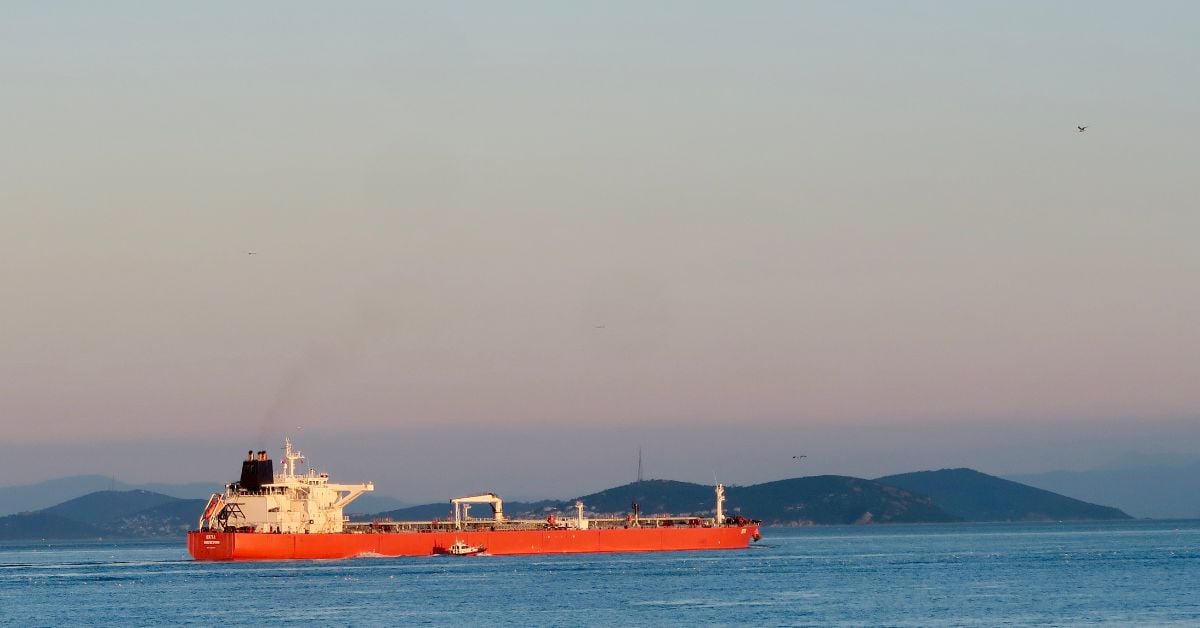
The towing of a Greek-operated products tanker to the north side of the Strait of Hormuz, following an attack last weekend, is not merely a logistical footnote. It is a calibrated pressure test on the chokepoint that moves a fifth of global oil supply. For an audience that tracks maritime risk and energy flows, the event signals something more precise than escalation: it signals that the rules of transit are being rewritten in real time, and that the commercial calculus of every vessel in the region has already changed.
This incident does not exist in isolation. It sits alongside two other recent developments that, taken together, describe a regional system under strain. Gulf of Oman STS Transfers Max Out Amid Rising Saudi Oil Exports shows that the workaround for constrained shipping lanes is already at capacity. Meanwhile, Phased Negotiations Aim to Ease Restrictions on Strait of Hormuz suggests that diplomatic channels are open, yet the tanker's seizure demonstrates that the gap between negotiation and on-water behavior remains wide. The contrast is instructive: while the United States and Iran discuss phased relief, the operational reality for shippers is that deviation, inspection, and interdiction are no longer hypotheticals.
Our read is that this incident is less about the tanker itself and more about the signal it sends to the insurance market and the war-risk premium. When a vessel is towed to the north side, it is a deliberate, visible act. It is not a random act of piracy, which brings us to the Puntland Forces Intercept Hijacked, US-Sanctioned Oil Tanker After 48 Hours case. That rescue demonstrated that state and non-state actors can still interdict hijackings when they choose to. The contrast is stark: a hijacked tanker off Somalia got a 48-hour response, while a state-flagged attack in the Strait yields a tow to an undisclosed anchorage. The difference is not capability; it is intent.
For readers who operate fleets, charter cargoes, or insure hulls, the practical takeaway is not to anticipate a complete closure of the Strait. That remains a tail-risk scenario. The more immediate consequence is cost and friction. Expect longer transit times, higher premiums, and more frequent STS transfers as vessels seek cover. The question to watch is whether the phased negotiations produce any verifiable de-escalation before the next incident, or whether this towed tanker becomes a bargaining chip that hardens the very position it was meant to soften. We would tell a reader to watch the vessel's port of call and the duration of its detention. A short stay signals a message. A prolonged one signals a shift in the rules of engagement.