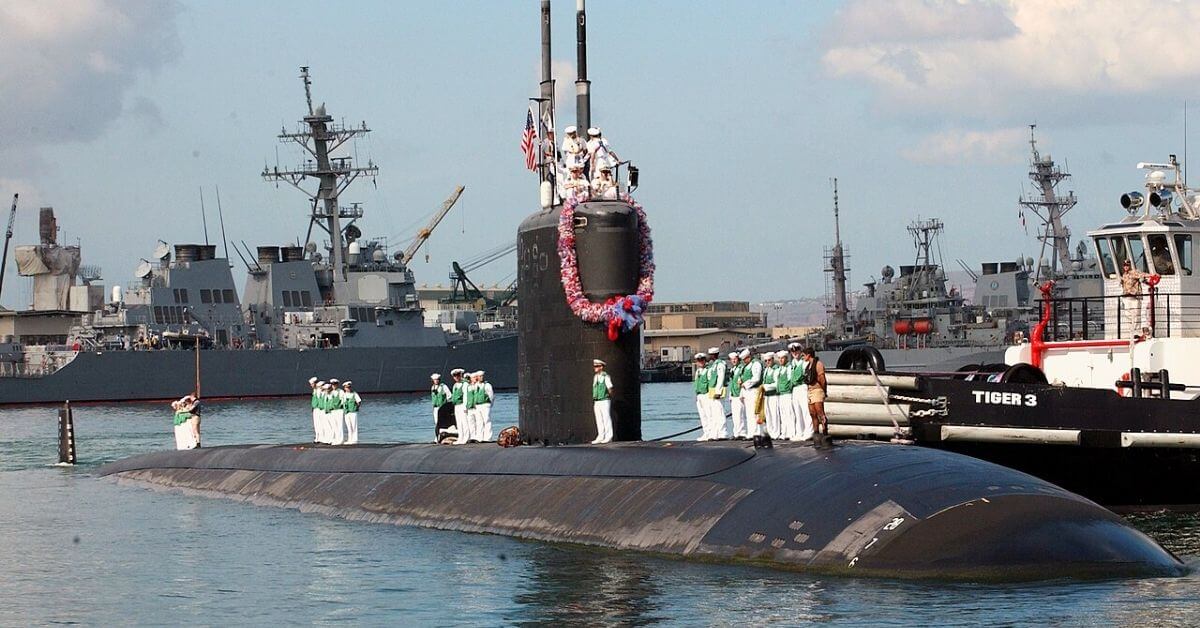
The U.S. Navy is about to pay a heavy price for deferred decisions. According to the GAO, 15 submarines could sit idle for roughly 14,000 days between 2026 and 2030, carrying a $3.4 billion tab. That is not a line item; it is a strategic liability measured in lost operational capacity. While the maritime industry watches Record Port Activity Reflects Rising Chinese Exports Amid Trade Uncertainty and tracks the shifting flows of Integrated Subsea Infrastructure Shifts to Enhance Indian Ocean Connectivity, the submarine maintenance backlog is a quieter but equally telling signal. It shows how quickly operational readiness erodes when industrial capacity falls behind schedule.
Let's be clear about what 14,000 idle days means in practice. It is not a maintenance holiday. It is a reduction in undersea presence at a time when undersea dominance matters more than ever. The Navy is not losing these days to a single catastrophic failure; it is losing them to a systemic backlog of repairs, overhauls, and certifications that have been postponed or mismanaged. The GAO's number is empirical, but the human and strategic cost is not fully captured in the estimate. Every idle submarine is a patrol not run, a deterrent not deployed, and a crew not training at sea. The ripple effect touches everything from crew retention to allied confidence in U.S. security guarantees.
Our take is straightforward: this is a procurement and maintenance failure that deserves more attention than a budget footnote. The $3.4 billion figure is not just a cost overrun; it is an opportunity cost measured in geopolitical influence. Meanwhile, the Gulf of Oman STS Transfers Max Out Amid Rising Saudi Oil Exports highlight how rival states and commercial actors are expanding their maritime capabilities while the Navy's undersea fleet idles in port. The contrast is uncomfortable but instructive. It suggests that the gap between strategic ambition and industrial execution is not narrowing; it is widening.
What would we tell a reader who asks what to watch? Watch the dry-dock schedules. The GAO's estimate is not a prediction of doom; it is a baseline for accountability. The question is not whether the Navy will recover these days, but what it will sacrifice to do so. If the maintenance backlog forces a choice between forward-deployed presence and homeport readiness, the decision will shape the next decade of naval strategy. The concrete detail to track is whether the Navy's own shipyards can increase throughput without compromising quality. If not, the $3.4 billion will be the opening bid, not the final bill. That is the number that should worry every stakeholder in maritime security.