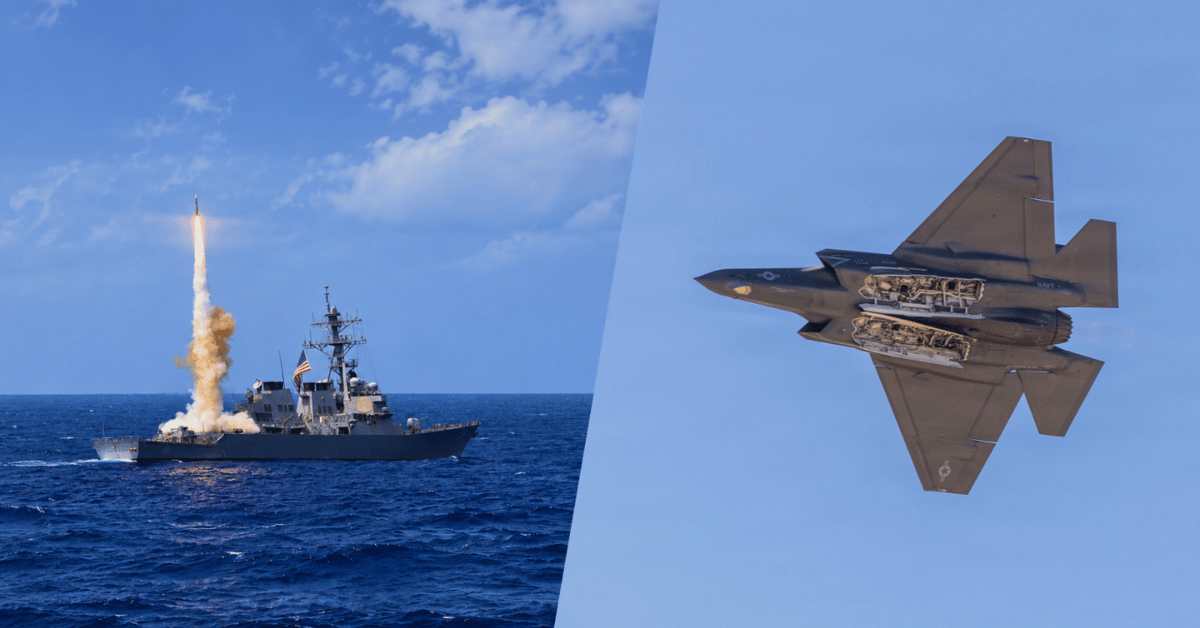
The U.S. Navy's dual award of $137 million to Ursa Major marks a deliberate shift from design ambition to manufacturing reality for next-generation missiles, and that focus on production capacity is precisely what the naval enterprise has needed. By betting on solid rocket motors that can be built at scale from the outset, rather than optimized for performance first and production second, the Navy is addressing the bottleneck that has constrained missile inventories for years. This is not simply a contract; it is a signal that the service is prioritizing sustained output over bespoke engineering.
The two programs in play, the Compact Air-to-Air Missile (CAAM) and the Naval Modular Missile (NMM), represent different ends of the tactical spectrum, but they share a common production logic. For CAAM, Ursa Major is designing a 7-inch motor that uses Highly Loaded Grain technology to fit high performance into a tight volume while keeping unit costs low. For the NMM medium-range variant, a 10-inch motor will be designed from the start for compatibility with existing shipboard launch systems and for high-rate production. In both cases, the manufacturing method used during development is the same one planned for full-rate production, meaning qualification and scale-up are no longer sequential steps. This approach builds on earlier work: in February, Ursa Major completed a $25 million pathfinder program with the Navy and the Office of Strategic Capital, static-firing a 10-inch motor and developing proprietary propellant alongside the Naval Air Warfare Center Weapons Division at China Lake and the Naval Surface Warfare Center Indian Head Division. That foundation now accelerates the timeline for fielding operational motors.
This production-first philosophy connects directly to the broader modernization picture. The Navy recently validated integrated radar and fleet defense capability during the commissioning of the USS Ted Stevens, an Arleigh Burke-class destroyer designed to operate within a networked kill chain. Missiles are the terminal effectors of that chain, and without reliable, high-volume production of solid rocket motors, even the most sophisticated radar picture remains incomplete. Similarly, as laser deterrence deploys in the Strait of Hormuz and directed-energy weapons begin to handle certain short-range threats, kinetic missiles remain essential for the harder, longer-range intercepts and strike missions that lasers cannot yet cover. The Navy cannot afford to let production capacity lag behind sensor development.
What to watch next is the qualification timeline for the NMM motor. Ursa Major's Lynx manufacturing approach and additive techniques are designed to compress the usual years-long cycle, but the real test will be whether the motor can pass Navy safety and performance requirements while sustaining the annual production volumes the service envisions. The CAAM motor, with its tight volume constraints and cost targets, will reveal whether Highly Loaded Grain can deliver on both metrics simultaneously. If these motors reach qualification on schedule, the Navy will have a template for breaking the production bottleneck across multiple missile families. If they slip, the gap between procurement intent and delivered inventory will remain the defining challenge of naval missile strategy.