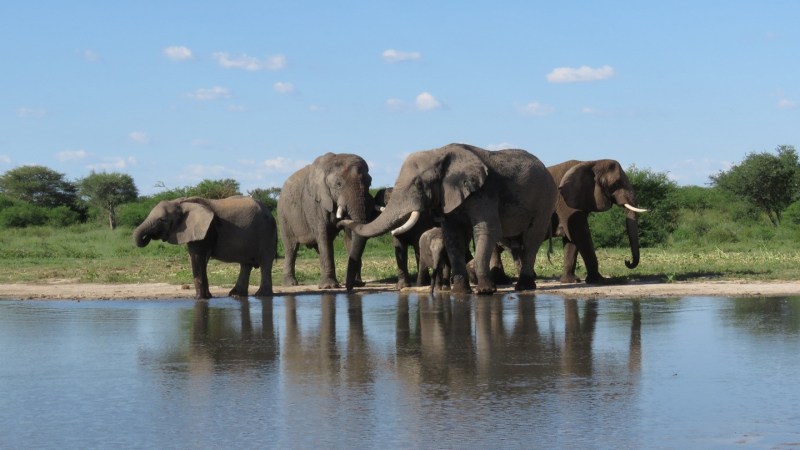
The rehabilitation of wildlife is often measured in survival rates, release dates, and satellite collar pings. But the recent documentation of behavioral convergence between 11 rehabilitated elephants and their wild counterparts shifts the metric from mere existence to genuine integration. This is not a story about animals that learned to avoid humans; it is a story about animals that relearned how to be elephants. The findings suggest that structured care, when calibrated to natural social and foraging patterns, can restore behaviors we once assumed were either innate or lost entirely.
This study resonates beyond terrestrial conservation. It raises a question that echoes across our coverage of complex systems: what does successful intervention look like when the baseline is dynamic? Consider the evidence of sequential rupture along the Cascadia subduction zone and the northern San Andreas fault, as reported in Cascadia and San Andreas: Evidence Suggests Sequential Earthquake Risk. There, researchers are not tracking recovery but anticipating cascading events within an interconnected system. Similarly, the unexpected discovery of a chiton species in Puerto Rico, detailed in Unexpected Chiton Discovery in Puerto Rico Challenges Species Distribution Models, reminds us that our models often lag behind empirical reality. In each case, the takeaway is the same: observation must outpace assumption.
For our readers, particularly those working in marine biology or policy, the elephant study offers a practical template. The rehabilitated elephants did not merely mimic wild behavior; they converged with it over time, suggesting that longitudinal monitoring is as critical as initial intervention. This aligns with the philosophy behind integrated data ecosystems, where real-time observations are continuously validated against baseline populations. A marine studies graduate, for instance, might ask how this applies to their own trajectory, as explored in Navigating a Marine Studies BA: Pathways to a Marine Biology Career. The answer is direct: the skills of measuring behavioral baselines, tracking deviations, and recalibrating expectations are transferable across taxa.
Our honest take is that this study should temper both pessimism and overconfidence. Rehabilitation is not a shortcut to conservation, but it is also not a dead end. The convergence documented here is measurable, peer-reviewed evidence that human intervention, when designed with ecological fidelity, can produce outcomes that approximate natural states. The open question is scalability. Can these methods work for species with smaller populations, longer generational times, or more complex social structures? Watch for follow-up studies on whether these behavioral similarities persist across seasons, stress events, and eventual breeding. That will be the true test of whether we have rehabilitated individuals or restored a population.