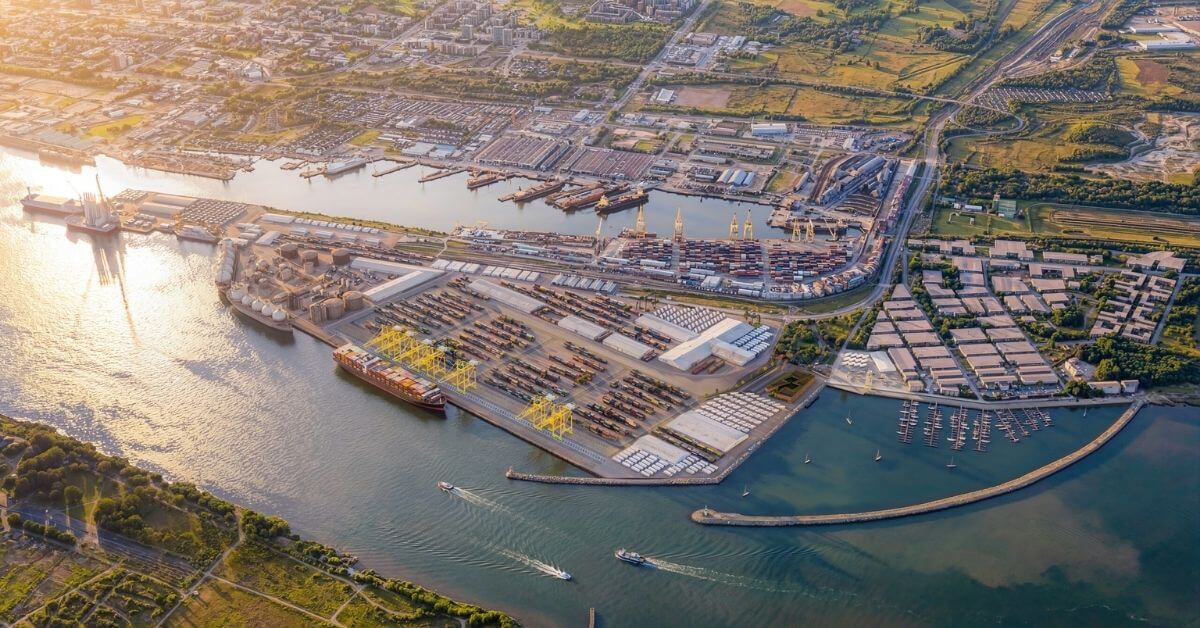
The Port of Klaipėda's €600 million expansion is a study in how maritime infrastructure can be built with an ecological conscience, but it also raises a question we should all sit with: can we engineer our way out of the very pressures we create? The new breakwaters are not just concrete barriers against the sea; they are calibrated instruments designed to limit saltwater intrusion into the Curonian Lagoon. That dual purpose, growth and protection, is the kind of integrated thinking we have long advocated for in ocean intelligence. It is not a perfect solution, but it is a measured one, and that is worth paying attention to.
This move puts Klaipėda in a different lane than other recent port developments we have covered. Consider Paradip Port Designated a Mega Port, Anchors Eastern India's Maritime Growth, which is about scale and strategic positioning for regional trade dominance. There, the focus is on capacity and economic gravity, not ecological mitigation. Meanwhile, Alaska’s Base Kodiak to Gain Enhanced Arctic Capabilities with New Pier shows how military infrastructure is being hardened for a changing Arctic, with less public discussion of environmental trade-offs. Klaipėda's approach stands out because it treats the lagoon as a stakeholder in the project, not an obstacle to be managed later. That is a meaningful difference, and it sets a practical precedent for ports operating in ecologically sensitive zones.
What does this mean for our readers in practical terms? If you are a port authority, a marine engineer, or a policy advisor, consider this: environmental constraints are no longer sidebars to infrastructure planning; they are design parameters. The breakwater's role in regulating salinity is not an afterthought, it is a core function that shapes the engineering itself. For researchers, the Curonian Lagoon becomes a living laboratory to validate the long-term effectiveness of such measures. For local communities, the promise is that economic activity and ecological health are not a zero-sum game. But we would caution against reading this as a clean victory. The real test will be in the longitudinal data, whether the salinity levels remain within the calibrated range over years of storm surges and shifting currents.
The takeaway worth quoting is this: Klaipėda is treating the lagoon not as a casualty of growth but as a condition of it, a distinction that should become the industry standard. The open question we will be watching is whether the port's monitoring systems are as integrated as its construction plans. If the breakwaters perform as modeled, they will offer a replicable template for ports from the Baltic to the Black Sea. If they do not, we will have learned something equally valuable about the limits of our predictive power. Either way, this project gives us a concrete benchmark to measure against, and that is exactly the kind of clarity we need. Keep an eye on the salinity reports over the next two years; that is where this story will be written.