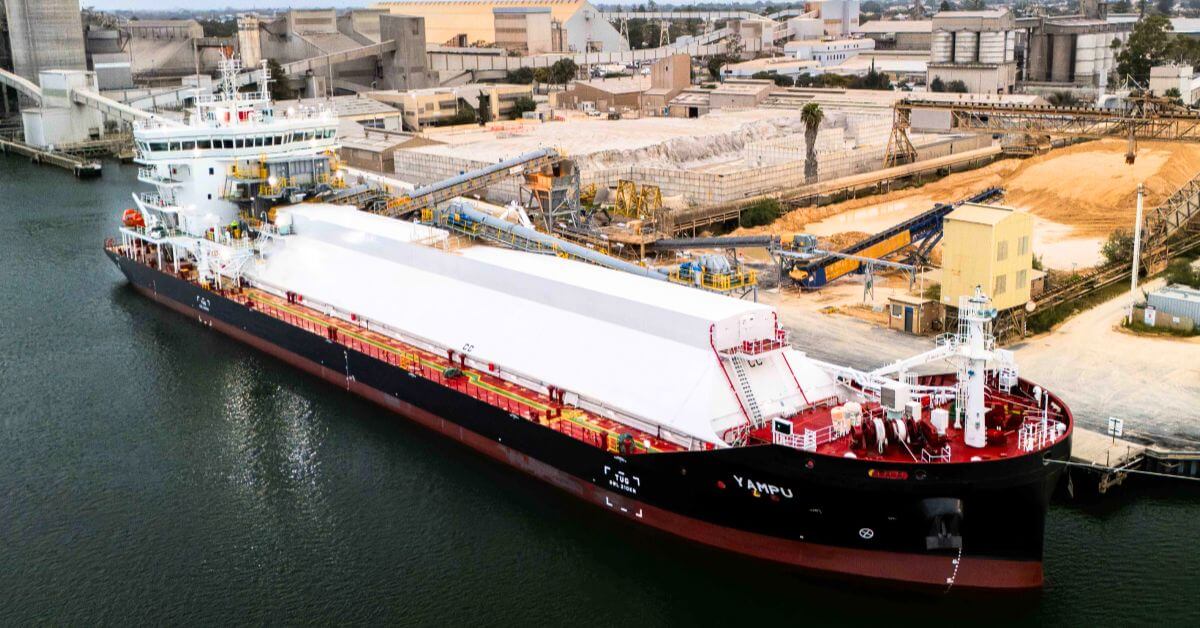
The MV *Yampu* is not just a new ship. It is a calculated answer to a logistics bottleneck that has quietly constrained Adbri's operations for years. By replacing the MV *Accolade II* and boosting annual limestone carrying capacity by 35%, the vessel directly addresses the gap between material demand and delivery capability. For an industry where margins are tied to tonnage moved per day, that jump is not incremental; it is structural. The recent Gate Delays Expose Critical Link in National Trade Flow showed how a single chokepoint can ripple across the entire supply chain. Here, the chokepoint was a single aging hull. The *Yampu* does not just add another route; it compresses the time between extraction and end-use, which is the real metric that matters.
What stands out is not the battery-powered self-unloading system, though that is noteworthy. It is the operational logic behind the investment. A 35% capacity increase is not a rounding error; it is a statement of intent. It signals that Adbri is betting on sustained demand, not speculative growth. For our readers, particularly those managing port schedules or coordinating inland freight, this means fewer delays and more predictable inventory flows. The contrast with the Bulk Carrier Freed After Prolonged Grounding Near Gladstone, Australia is instructive. That incident was a costly disruption, a reminder of what happens when a single vessel fails. The *Yampu* is built to reduce such risks, not just by carrying more, but by carrying more reliably.
We would tell a reader who asks about this vessel that the headline is not the battery or the self-unloading gear. It is the measured, deliberate scaling of capacity in a sector that often moves too slowly. The maritime industry is crowded with claims of green innovation, but a 35% efficiency gain is a concrete, verifiable outcome. It also raises a practical question that deserves attention: what happens to the *Accolade II*? Retired, repurposed, or sold, its removal from the active fleet changes the arithmetic for competitors and partners alike. As the Fatal Attack on Bulk Carrier Near Oman Highlights Maritime Security Risks reminds us, every vessel in operation carries inherent vulnerabilities. The *Yampu* reduces one kind of risk while introducing another: the complexity of maintaining a new, specialized system.
The takeaway is straightforward: capacity gains like this do not merely improve a single company's bottom line. They tighten the entire loop of material flow, from quarry to construction site. The open question is whether the rest of the fleet will follow. If the *Yampu* performs as expected, it sets a benchmark for how bulk carriers should be evaluated, not by what they carry, but by how little time they spend waiting. Watch the turnaround times in the coming quarters. That will tell you if the 35% figure is real or just a number on a press release.