Once upon a time, insects had 24 legs
Our take
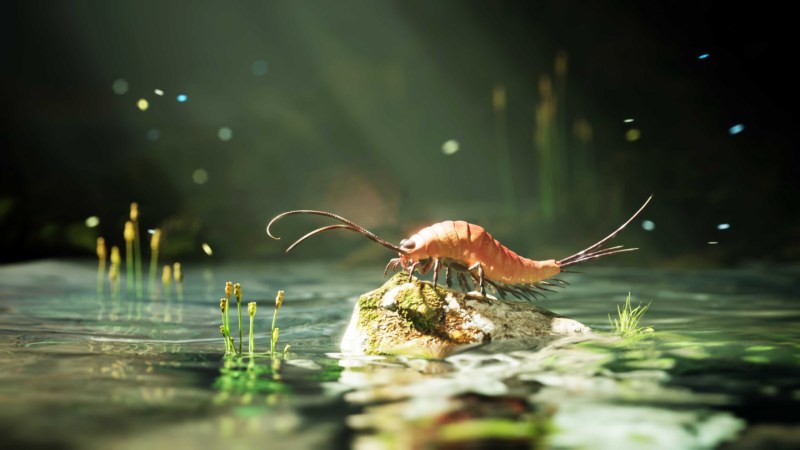
The discovery of *Stanopterigia grossa*, a remarkably well-preserved fossil insect from the Late Carboniferous period, represents a significant leap forward in our understanding of insect evolution. This creature, boasting an astonishing 24 legs – significantly more than the six legs characteristic of modern insects – challenges long-held assumptions about the ancestral state of insect leg development. The finding elegantly addresses a crucial gap in the fossil record, a period during which insects underwent a dramatic diversification. It's fascinating to consider this alongside other examples of evolutionary adaptation, like the surprising cranial reshaping observed in long-clawed shrews, where their Shrews’ noses grow in winter as their brains shrink demonstrates an extreme survival strategy linked to seasonal environmental pressures. Further contextualizing this, the recent examination of harbor seal spines and the identification of the cauda equina Where does the cauda equina start in the harbor seal spine highlights the intricate morphological variations across diverse species and the importance of detailed anatomical study.
The evolutionary narrative previously proposed suggested a gradual reduction in leg number from a more primitive, multi-legged ancestor. *Stanopterigia* provides compelling empirical evidence supporting this hypothesis, but also introduces nuance. The insect’s body plan reveals a fascinating mosaic of features – some resembling modern insects, others strikingly different. It’s not simply about leg number; the arrangement and specialization of these appendages likely played a vital role in locomotion and ecological niche partitioning. The fossil’s exceptional preservation allows researchers to analyze the detailed structure of these legs, offering valuable insights into the biomechanics of early insect movement. Understanding the selective pressures that led to the eventual reduction to six legs is now a key question. Was it a consequence of increased agility, improved energy efficiency, or perhaps a trade-off with other body features? The integrated data ecosystem we are building at World Data Ocean allows us to cross-reference this fossil evidence with climate indicators and environmental reconstructions from the Late Carboniferous, potentially revealing correlations between environmental shifts and evolutionary trends.
This discovery underscores the importance of paleontological research, particularly in periods with sparse fossil records. The Carboniferous was a time of significant environmental change, with fluctuating oxygen levels and the rise of vast coal forests. These conditions likely influenced insect evolution, driving diversification and experimentation with body plans. The meticulous work involved in excavating, preparing, and analyzing fossils like *Stanopterigia* is a testament to the scientific rigor required to unravel the history of life. Moreover, the increasing accessibility of these findings to a broader audience, facilitated by digital imaging and online databases, fosters greater public engagement with scientific discovery. Even seemingly disparate findings, such as those related to shark teeth found in coastal Georgia Can anyone help ID some shark teeth found in Tybee Island GA and HHI, contribute to a larger understanding of biodiversity and evolutionary processes.
Looking ahead, the identification of *Stanopterigia* opens up exciting avenues for future research. Detailed comparative studies with other fossil insects, coupled with advanced phylogenetic analyses, will refine our understanding of insect evolutionary relationships. The development of increasingly sophisticated imaging techniques promises to reveal even finer details of this remarkable fossil, providing further clues about its lifestyle and ecology. Perhaps the most compelling question now is: how many other multi-legged insect ancestors remain hidden within the geological record, awaiting discovery? The continued exploration of ancient ecosystems, guided by validated methodologies and a commitment to rigorous data analysis, will be crucial to filling in the remaining gaps in our understanding of the insect lineage and the broader story of life on Earth.
Read on the original site
Open the publisher's page for the full experience