anatomy
anatomy at World Data Ocean is a file of 7 stories. The newest of them: “Identifying a Squid's Unknown Organ Through Empirical Dissection”, “Shallow-water sentinels reveal a hidden signal in the shifting sands”, and “Ocean Ingestion: Could a Whale Swallow a Diver Whole?”. A first-year student's careful dissection of a squid revealed an unidentified, mushy mass behind the peritoneum, textured like ground pork and absent from standard lab diagrams. A shallow-water observer in Ventura County has surfaced a quiet puzzle from the intertidal zone. A Global Hub for Ocean Intelligence 4 World Data Ocean is a centralized digital platform where researchers, scientists, and ocean enthusiasts converge to… The list below is every anatomy story on World Data Ocean, newest first.

Identifying a Squid's Unknown Organ Through Empirical Dissection
A first-year student's careful dissection of a squid revealed an unidentified, mushy mass behind the peritoneum, textured like ground pork and absent from standard lab diagrams. This is the kind of empirical puzzle that drives real ocean science forward. Identifying unknown anatomy requires patience, precise observation, and a willingness to question what we think we know. For those building similar observational skills, our piece on crowdsourcing tooth IDs for citizen science collection offers another example of collaborative discovery.

Shallow-water sentinels reveal a hidden signal in the shifting sands
A shallow-water observer in Ventura County has surfaced a quiet puzzle from the intertidal zone. Swimming over these small, buried forms, the observer noted they close and vanish into the sand when a wave passes, most abundant at one to two meters deep, and fading past two and a half meters. The impression is of a larger body hidden below, with only a fraction exposed. It's a reminder that empirical observation, even casual, drives ocean intelligence.

Ocean Ingestion: Could a Whale Swallow a Diver Whole?
A sperm whale's throat is large enough to swallow a human, but the mechanics of such an event are far from cinematic. The animal's esophagus is designed for squid, not scuba gear, and its instinct would be to reject anything unfamiliar. Understanding these biological limits sharpens our respect for ocean life. For more on how we track such creatures, explore "Integrated Subsea Cables Enhance Data Transmission Across the Indian Ocean." Curiosity and precision drive real ocean intelligence.
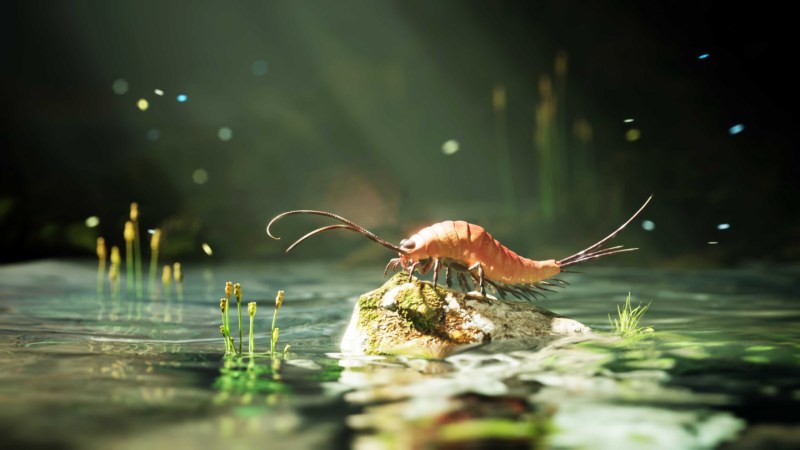
Ancient Insect Fossil Illuminates Evolution of Six-Legged Forms
A many-legged oddball from deep time is helping close a persistent gap in the fossil record, offering a clearer view of how six-legged forms emerged. The find is a reminder that evolution often experiments before it settles on a winning design. Understanding these ancient transitions sharpens our grasp of the planet's biological history. For more on how prehistoric traits shaped survival, see our related piece on fossilized feces revealing feathered dinosaur adaptations.
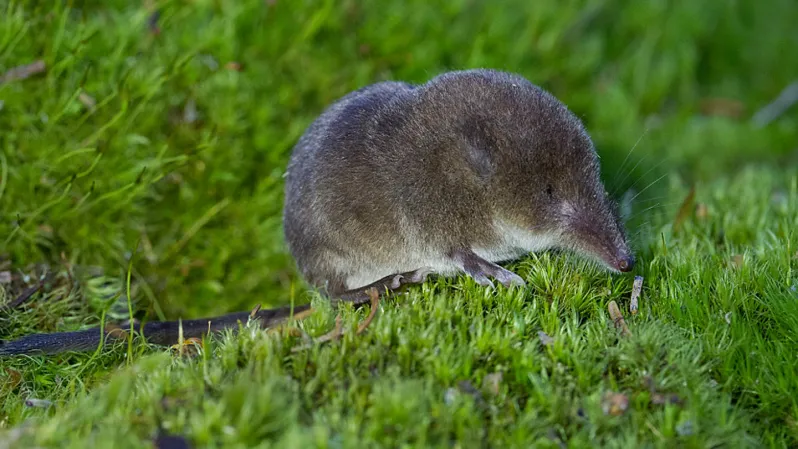
Adapting to Winter: Shrew Noses Grow as Brains Shrink.
A shrew's snout is not a fixed feature, and winter proves it. Long-clawed shrews temporarily grow larger noses as temperatures drop, a striking example of skull reshaping driven by survival needs. This adaptation suggests cold conditions demand extreme physiological flexibility, not just insulation. The finding adds a compelling layer to how small mammals endure seasonal stress, and it pairs well with our piece on fossilized feces revealing why certain dinosaurs survived extinction. Both point to survival as an active, physical negotiation with environment.
Anatomical Discovery: Clarifying Cauda Equina Location in Harbor Seals
A harbor seal necropsy led one researcher to an unexpected finding: the cauda equina positioned in the mid-thoracic spine. It's a detail that challenges assumptions, yet the lack of a definitive reference on seal spinal cord anatomy is telling. Drawings without citation aren't enough. This moment underscores why empirical, peer-reviewed documentation matters in marine anatomy. For those navigating similar gaps, our related article, "Navigating a Marine Studies BA: Pathways to a Marine Biology Career," offers context on building the expertise such questions demand.

Mysterious Vertebrae Found: Fish or Harbor Porpoise? Ocean Data Sought.
A single vertebra, small enough to fit in a palm, has sparked a quiet taxonomic puzzle. The finder's initial photo search suggested a large bony fish, yet a closer look hints at something warmer-blooded. Their theory of a harbor porpoise is reasonable, though the match remains imperfect. We appreciate the call for open data; this is exactly how community observations refine our understanding. For those tracking similar marine mysteries, our piece on the Port Phillip Bay structure offers a useful comparison.