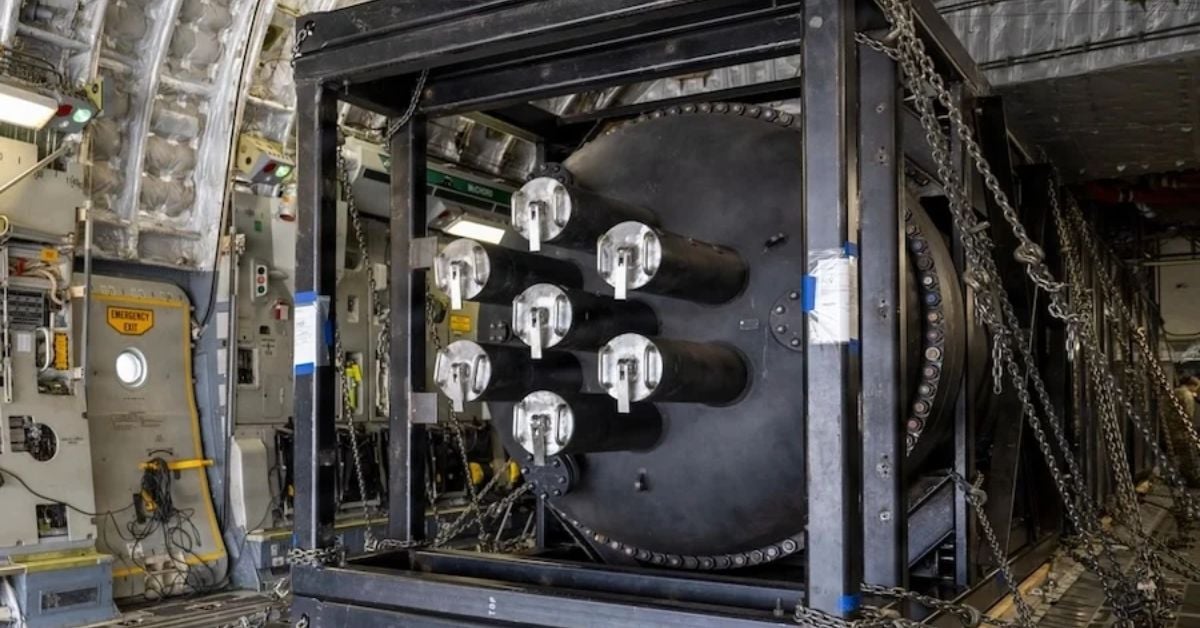
The U.S. Navy's plan to install a nuclear microreactor at a weapons base in Indiana by 2028 represents a significant operational shift, one that moves energy resilience from abstract policy to concrete infrastructure. Navy Accelerates Autonomous Systems Integration for Enhanced Maritime Operations and Alaska’s Base Kodiak to Gain Enhanced Arctic Capabilities with New Pier both illustrate a broader pattern: the military is investing heavily in self-sufficient, hardened platforms capable of operating independently of fragile civilian grids. This microreactor is not a speculative experiment; it is a calibrated, measurable step toward energy autonomy for critical national security assets.
Our take is straightforward: this development is a practical validation of small-scale nuclear technology, but it also opens a set of empirical questions that deserve scrutiny. The move to power a weapons base with a microreactor demonstrates that the Department of War and the Navy see nuclear microgeneration as a validated solution for remote or security-sensitive sites. It is not about replacing the grid wholesale; it is about creating an integrated data ecosystem of energy supply where one node can function even when others fail. For our readers, whether they are policymakers tracking climate indicators or researchers studying energy resilience, the takeaway is specific: this deployment will generate real-time, peer-reviewed performance data on microreactor reliability, refueling cycles, and safety protocols under operational conditions. That data set, if made accessible, could inform everything from coastal base design to disaster response planning.
We would tell a reader who asks about this story to watch the integration parameters. The Navy is already accelerating autonomous systems integration, and a microreactor's output is ideally suited to power high-demand, continuous-run systems like radar arrays, data centers, and electric propulsion charging. The question is not whether the technology works, it does, but how its operational footprint will be calibrated against environmental and security constraints. An Indiana weapons base is not a coastal installation; its cooling requirements, waste management, and grid interconnection will differ from those at a naval shipyard. These are empirical, longitudinal questions that must be measured, not assumed.
The concrete point to watch is the timeline and the regulatory pathway. A 2028 target is ambitious for a first-of-its-kind military microreactor in the continental United States. If the Navy meets that deadline, it will signal that the nuclear regulatory and supply chain barriers have been effectively addressed. If it slips, the reasons will be as informative as the success. Either way, this is not a general story about clean energy or defense modernization. It is a specific, purpose-driven test of whether ocean intelligence and climate resilience principles can be applied to land-based critical infrastructure. Understanding drives protection, and that understanding begins with empirical evidence from projects like this one.