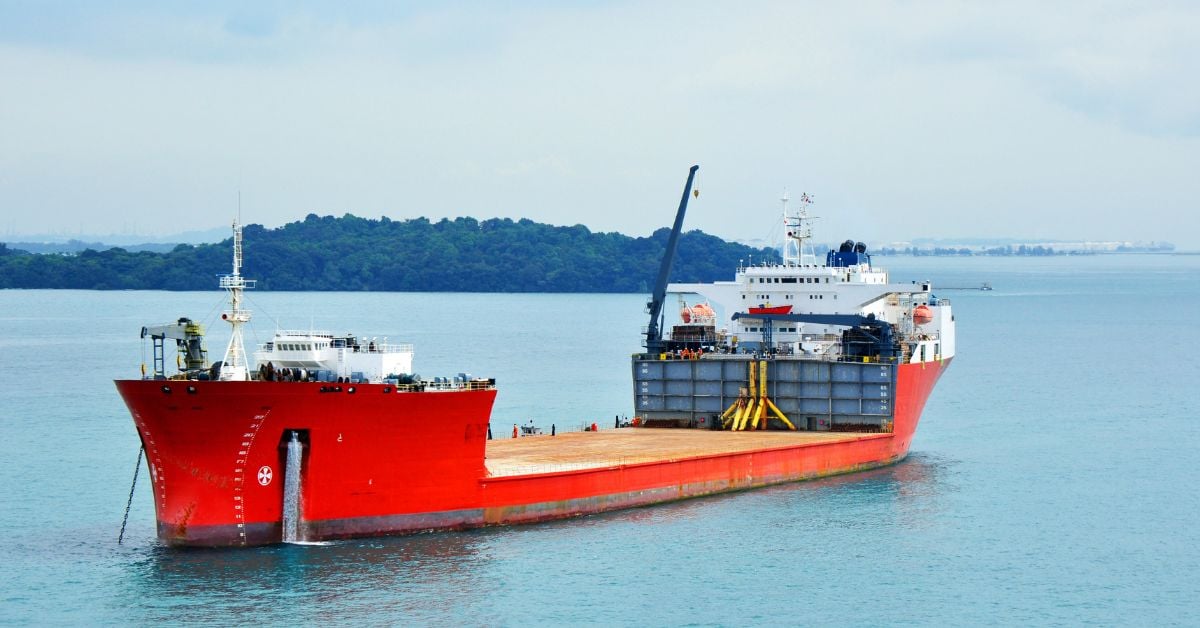
A storm in the North Sea sent a clear signal this week: our maritime safety net still has holes. When the cargo vessel *UHL Freedom* lost both engine power and its anchor system 29 kilometers north of Schiermonnikoog, it became a drifting 150-meter liability in waves reaching 4.5 meters and wind force 9. Five of the 25 crew were injured, two seriously enough to require helicopter evacuation to a hospital in Groningen. This was not a vessel built for obsolescence. The *UHL Freedom* is a modern, Tier III climate-compliant Eco-Lifter, designed to carry the very wind turbine blades that power our renewable energy transition. Its failure under stress raises a practical question for the entire integrated data ecosystem that governs maritime logistics: if a newly built, ice-classed ship with a reinforced hull can lose primary and backup control systems in a predictable North Sea storm, what is the real-world reliability of our safety protocols?
This incident is not isolated. It sits alongside a pattern of maritime vulnerability that demands empirical, measurable attention. A recent Black Sea drone strike claims life, cargo vessel loss underscores maritime threat showed how geopolitical conflict can suddenly render a ship helpless, with one seafarer killed and three missing. And a cargo spill in the Strait of Hormuz scatters consumer goods across shipping lane demonstrated that even non-catastrophic mechanical failures can transform a vessel into an environmental and navigational hazard. The *UHL Freedom* case adds a critical data point: the failure was not a collision or a strike, but a simultaneous breakdown of two independent systems, propulsion and anchoring, during a storm that was forecasted. That is a systems-integration problem, not just bad weather. For our readers, researchers, policymakers, and maritime operators, the takeaway is specific and actionable: we need real-time, peer-reviewed data on the failure modes of modern, fuel-efficient vessel designs under validated storm conditions. The ship's green credentials do not guarantee operational resilience.
The response itself was effective. A helicopter, a Coast Guard aircraft, the Dutch KNRM, two German vessels, and the rescue ship *Hamburg* all mobilized. But the fact that the *UHL Freedom* drifted for an extended period before assistance arrived, carrying a cargo of wind turbine blades, of all things, highlights a disconnect between our climate ambitions and the infrastructure that supports them. This is not an argument against building efficient ships. It is an argument for building an integrated data ecosystem that tracks not just emissions and speed, but also the failure rates of anchor systems and power plants on vessels less than four years old. Longitudinal data on these metrics would allow classification societies like DNV to calibrate safety standards against empirical performance, not just design specifications.
What should we watch next? The shipping company consulted by authorities regarding the continuation of the *UHL Freedom*'s voyage will eventually release its post-incident report. That report, if it is made publicly available, will contain calibrated measurements of what went wrong and why. Until then, the open question is whether the maritime industry will treat this as a one-off mechanical glitch or as a climate indicator of a deeper vulnerability in the vessels we are relying on to build the green economy. The answer will determine whether the next storm produces a rescue operation or a recovery mission.