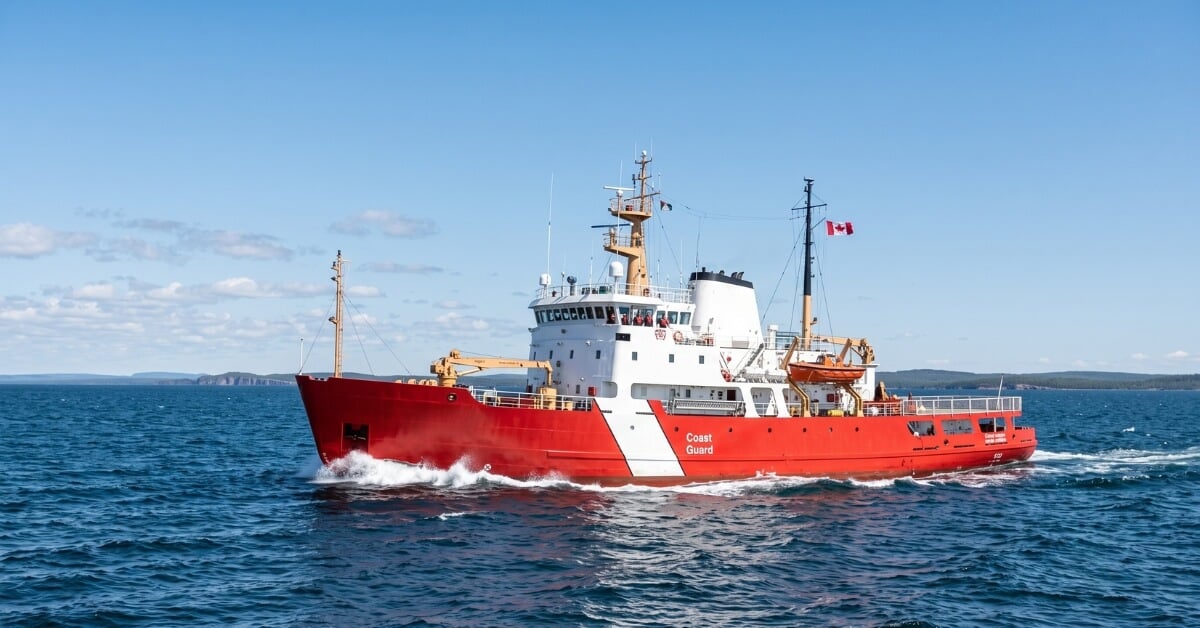
The Canadian Coast Guard's decision to name a new vessel after the Honourable Judy LaMarsh does more than mark a moment in the Great Lakes region. It connects the act of gathering ocean intelligence to the legacy of a public servant who understood that policy without evidence is just intention. LaMarsh, one of the first women to serve as a federal Cabinet Minister, spent her career pushing institutions to act on the basis of what was measured, not what was assumed. That same discipline belongs at the heart of modern marine data collection, where the difference between a useful dataset and a decorative one is often a matter of calibration and consistency.
This is not a ceremonial gesture. The vessel's real work will be in the water, building the kind of longitudinal record that researchers and policymakers depend on. We already see the stakes in adjacent domains: when the U.S. Coast Guard seizes 25,000 pounds of cocaine in three interdictions, as reported in Maritime Interdictions Yield 25,000 Pounds of Cocaine, Supporting Ocean Security, it is a direct operational payoff of persistent, well-analyzed maritime awareness. Similarly, the $315 million pier investment at Base Kodiak, detailed in Alaska's Base Kodiak to Gain Enhanced Arctic Capabilities with New Pier, signals that infrastructure follows strategy. The LaMarsh is that same logic applied to the Great Lakes: a floating platform for peer-reviewed science, not a symbolic hull.
What stands out is the choice of namesake. LaMarsh was not a marine scientist, and she never claimed to be. But she was a pragmatist who pushed for the Canadian Bill of Rights and universal healthcare, understanding that institutions only improve when they are held to measurable standards. That is the quiet argument embedded in this ship's keel. The vessel will carry sonar, water quality sensors, and climate monitoring equipment, but its most important instrument is the mandate to share what it finds. For our readers, many of whom work in research or policy, the practical takeaway is direct: this asset should be watched not for how often it sails, but for how openly it publishes its data.
There is also a lesson about who gets remembered in maritime history. Too often, we name ships after admirals and explorers, reinforcing a narrow view of who contributes to our understanding of the sea. LaMarsh's name on a Coast Guard vessel widens that frame. The real test will come in a few years, when the LaMarsh's first full seasonal dataset is released. Will it be complete, open, and methodical enough to inform decisions on invasive species tracking or shoreline erosion? That is the question we would put to anyone celebrating this launch. A name honors a legacy, but only a disciplined data ecosystem extends it. Watch for the first public release of the vessel's findings, and hold the program to the standard LaMarsh herself would have demanded.