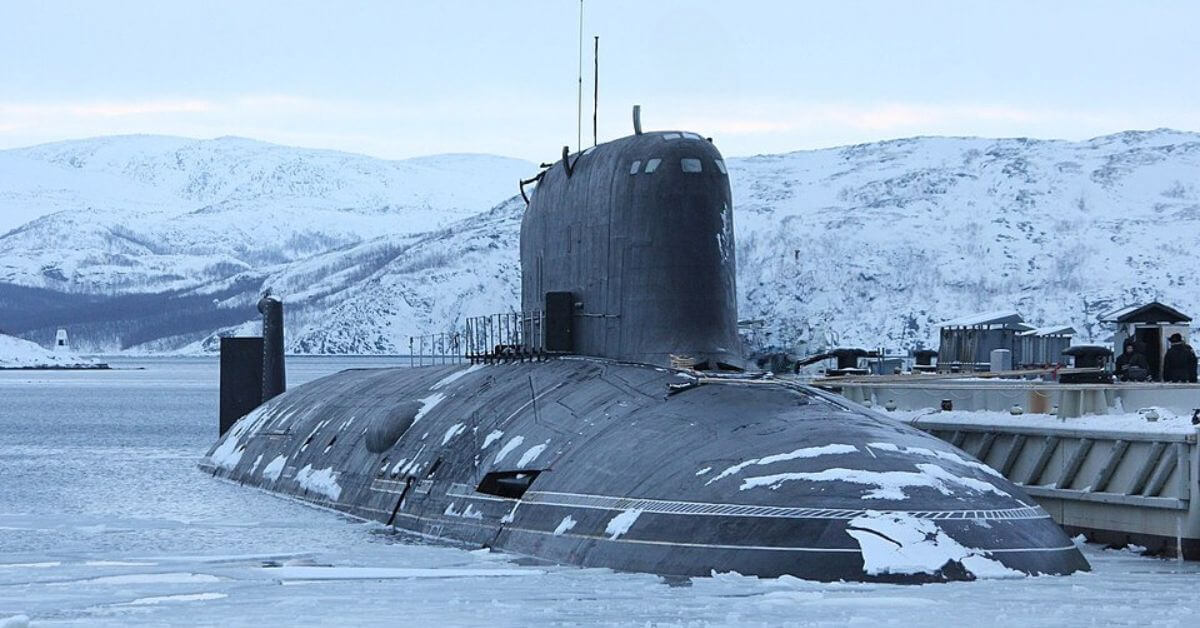
The induction of the *Perm*, Russia's first submarine armed with Zircon hypersonic missiles, is not merely a naval milestone; it is a calibrated signal that the balance of undersea deterrence has shifted. For the global maritime community, this development compresses response times, complicates defensive planning, and raises the stakes for every vessel operating in contested waters. When a submarine can launch a missile that travels at nine times the speed of sound and strike a target over 1,000 kilometers away, the concept of a safe stand-off distance evaporates. This is a measurable change in naval capability, not a rhetorical one.
The *Perm* is the sixth boat in the Yasen family and the fifth of the upgraded Yasen-M design, displacing roughly 13,800 tons submerged and carrying eight vertical launch silos. Those silos can now hold the Zircon hypersonic missile alongside Oniks anti-ship and Kalibr cruise missiles. Russia's claim that the Zircon is nearly impossible to intercept is backed by its kinematic profile, hitting Mach 9 makes it an order of magnitude faster than subsonic anti-ship missiles, and its unpredictable flight path challenges even layered air-defense systems. President Putin's attendance at the flag-raising in Severodvinsk, and his promise of five more nuclear submarines by 2030 (three of them Yasen-Ms), underscores a strategic bet: that a quiet, deep-diving platform armed with hypersonic weapons offers more survivability and reach than a surface fleet. That bet looks practical when you consider the losses Russia's surface navy has taken in the Black Sea. As we have reported, Ukraine's naval drones and missiles have repeatedly compromised the security of the Grain corridor integrity compromised as strikes hit two vessels near Odesa, demonstrating that surface warships are increasingly vulnerable close to shore. The *Perm*'s deployment to the Pacific Fleet, where two Yasen-M boats already operate, suggests Moscow is re-routing its most survivable assets away from the Black Sea theater.
The practical consequence for our readers, whether you track trade flows, manage shipping risk, or model climate-security linkages, is a new variable in maritime threat calculations. A submarine that can patrol "any part of the world's oceans" and launch hypersonic weapons from stand-off ranges makes chokepoints like the Bosphorus, the Malacca Strait, or the Panama Canal harder to defend. This intersects directly with the broader trend we have documented: Ocean intelligence confirms zero trade growth as chokepoint disruptions reshape global routes. When naval capabilities outpace the defensive systems at key maritime junctions, the cost of shipping insurance and the reliability of supply chains degrade. The *Perm* is not a single ship; it is the leading edge of a class that will multiply these dilemmas across multiple theaters by 2030.
One specific detail to watch: the *Perm*'s vertical launch silos are the same tubes that can fire Kalibr cruise missiles, the same type used in strikes against Ukrainian infrastructure. The dual-use nature of these platforms means that a Yasen-M submarine on patrol could shift from conventional land-attack to anti-ship hypersonic engagement without returning to port. For navies and commercial operators alike, the question is no longer *if* a hypersonic threat exists, but how to detect and track a submarine that may never need to surface to fire. That question has no easy answer, and the clock on finding one is running.