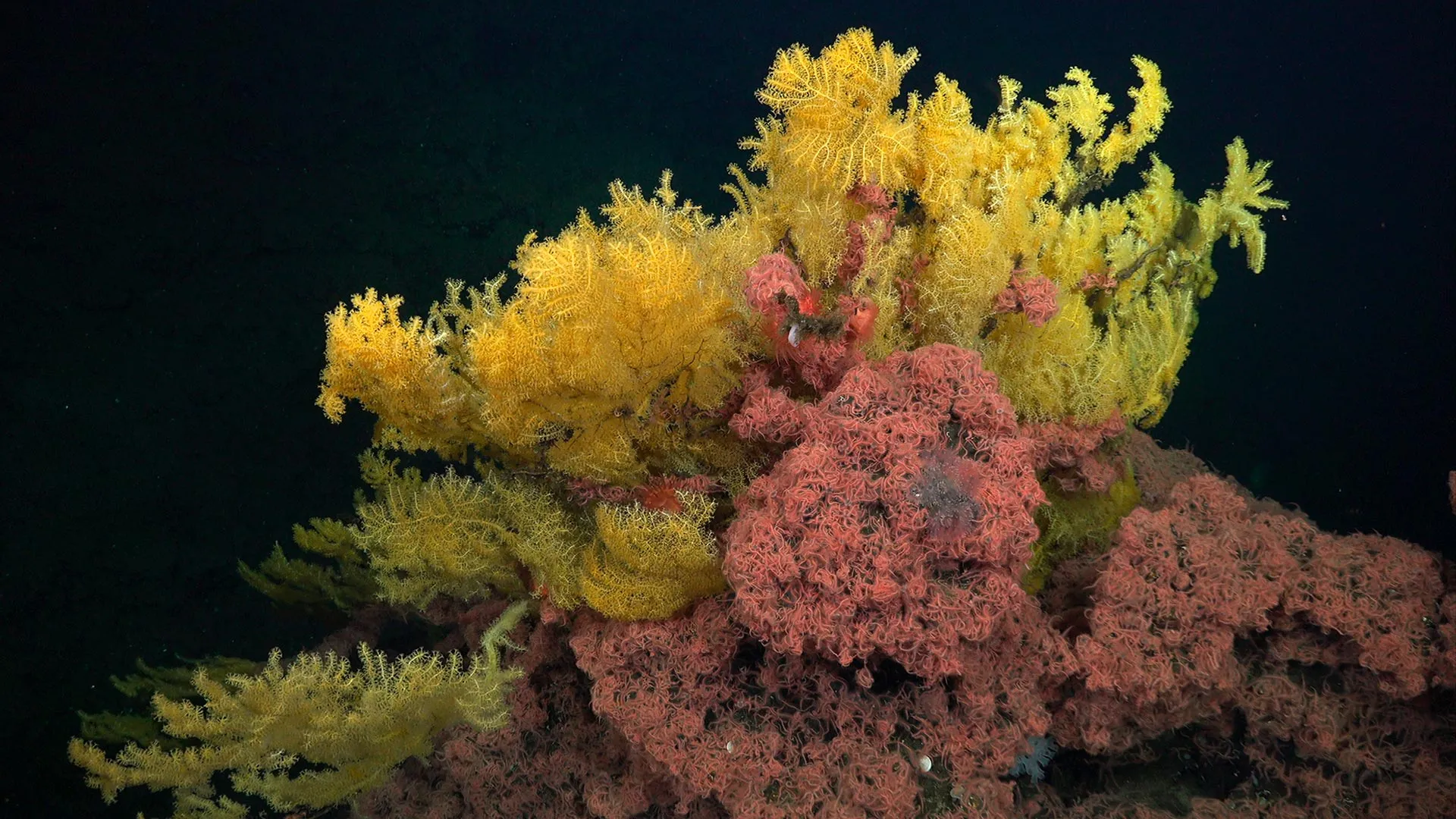
A new family of coral, named for a Tolkien tree, is a reminder that the ocean still holds lineages we have not yet mapped. The discovery of *Laurinque elenya*, the "golden tree of the stars," off Costa Rica is not just a taxonomic curiosity; it is a calibrated measurement of how much empirical work remains in our integrated data ecosystem. Genetic analysis has forced scientists to create a new branch on the tree of life, which means our current frameworks for reef biodiversity are incomplete, and that incompleteness has practical consequences for conservation priorities. This finding connects directly to the kind of longitudinal observation we have championed, such as the decade of empirical data illuminating the ocean's hidden reef ecosystems, which shows that what we call "known" is often just what we have had time to look at closely.
What matters here is that this coral was not found in a remote trench or an abyssal plain; it was found on a seafloor covered in brittle stars, a habitat that divers and submersibles have visited before. The meter-tall yellow colonies were conspicuous enough to inspire a name, yet they belonged to an evolutionary line that no one had catalogued. That gap between visibility and understanding is the real story. When we rely on visual surveys or morphological traits alone, we miss the genetic divergence that defines a family. The same lesson applies to our other ongoing investigations, including the deep-sea survey confirming 200,000 leaking barrels of Cold War radioactive waste, where the visible condition of barrels told only part of the story until chemical and radiological data were integrated. In both cases, the takeaway is identical: observation without validation is incomplete.
For researchers and policymakers, this discovery is a direct argument for expanding genetic baselines in marine protected areas. If a new family can appear in waters off Costa Rica, then similar surveys elsewhere are likely to yield comparable surprises. That is not speculation; it is a logical projection from the rate of discovery when molecular tools are applied to overlooked habitats. The practical implication is that conservation planning should not wait for charismatic megafauna or known reef-builders to justify protection. The verification of a 1961 crab balance claim from the Trieste expedition shows how revisiting old records with new methods can confirm or overturn assumptions, and the same discipline should apply to habitat classification. We should treat every seafloor as a candidate for undocumented diversity until genetic data says otherwise.
The specific detail to watch is whether *Laurinque elenya* becomes a flagship for broader surveys in the eastern Pacific, or whether it remains a single bright point in an otherwise unexamined region. The name evokes stars, but the scientific value lies in what the lineage tells us about coral evolution and dispersal. The open question is how many other families are waiting in habitats we have already visited but not yet sequenced. That number is not knowable from this one find, but it is now measurable, and that is the point.