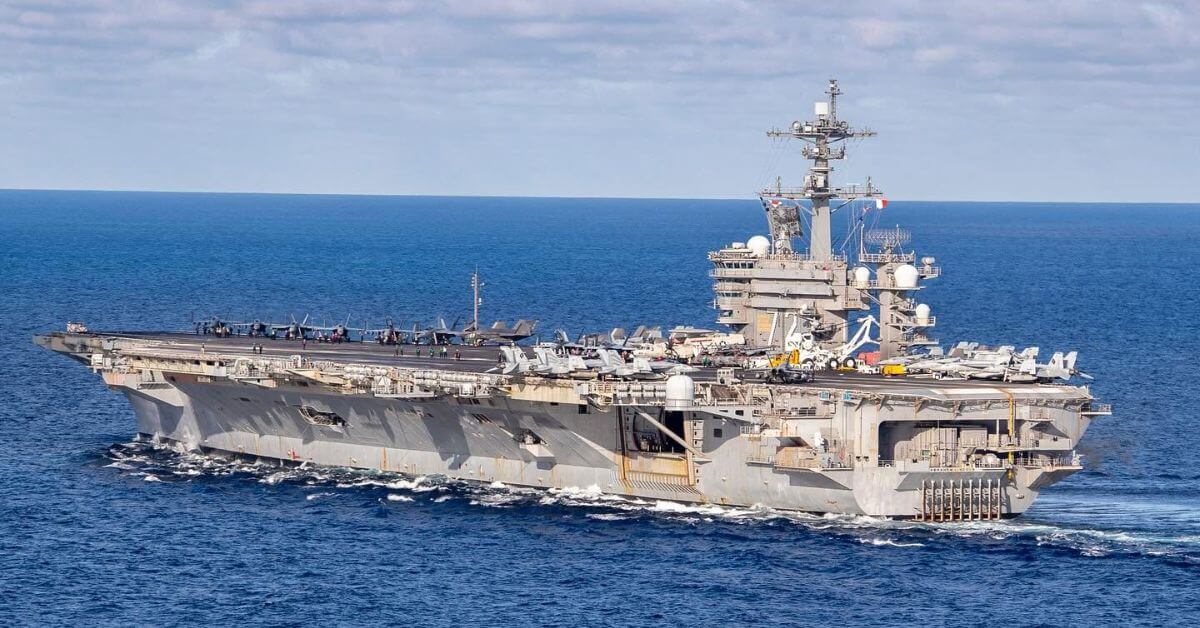
Two former U.S. Navy sailors have pleaded guilty to selling counterfeit oxycodone pills laced with fentanyl to fellow crew members aboard the aircraft carrier USS Abraham Lincoln. This is not an isolated failure of individual judgment; it is a systemic breach of trust that runs directly against the Navy's operational readiness agenda. The same institution investing heavily in autonomous systems integration and accelerating submarine production must also confront a more uncomfortable variable: the humans who crew these platforms. As the Navy pushes forward with Navy Accelerates Autonomous Systems Integration for Enhanced Maritime Operations and U.S. Navy Accelerates Submarine Production with Integrated Strategy, this case reminds us that technological superiority means little if the force's internal culture is compromised.
Our take is direct: this is a leadership failure as much as a criminal one. Fentanyl aboard a carrier is not a supply-chain anomaly; it is a predictable outcome when drug testing, mental health support, and peer accountability lag behind the pressures of deployment. The Navy can build a new centre for robotics, but it cannot outsource the integrity of its crew to algorithms. What we tell readers who ask about this story is simple: watch how the service responds beyond the courtroom. A guilty plea is a legal endpoint, not a cultural correction. The real measure will be whether the Navy treats this as a single bad actor situation or as a signal that its personnel policies need recalibration. If the service is serious about integrating autonomous systems to reduce human risk, it must equally invest in the human resilience that keeps fentanyl off a warship in the first place.
This case also highlights a contrast in how the Navy allocates attention. China's new nuclear carrier, as reported in China’s New Nuclear Carrier Signals Extended Naval Operations Capability, signals a shift in long-range power projection. But a carrier crew struggling with substance abuse is a strategic vulnerability no hull design can fix. The Navy's operational edge depends on sailors who are present, clear-headed, and trusted with lethal systems. Every fentanyl pill sold undermines that edge in ways that are harder to quantify than reactor output or sortie generation rates. We would tell any officer or policymaker reading this: do not file this under crime blotter. File it under force readiness. The data is not classified; it is a court record.
The concrete point to watch is whether the Navy revises its random drug screening protocols or expands amnesty and treatment programs in the wake of this incident. If the response is limited to prosecutions, the service has learned nothing. If, however, this prompts a review of how contraband enters a carrier strike group, that is a measurable step. The takeaway worth quoting: "A warship is only as credible as the judgment of the people who crew it, and judgment cannot be automated." The next carrier deployment will be the real test, and the Navy should treat it as such.