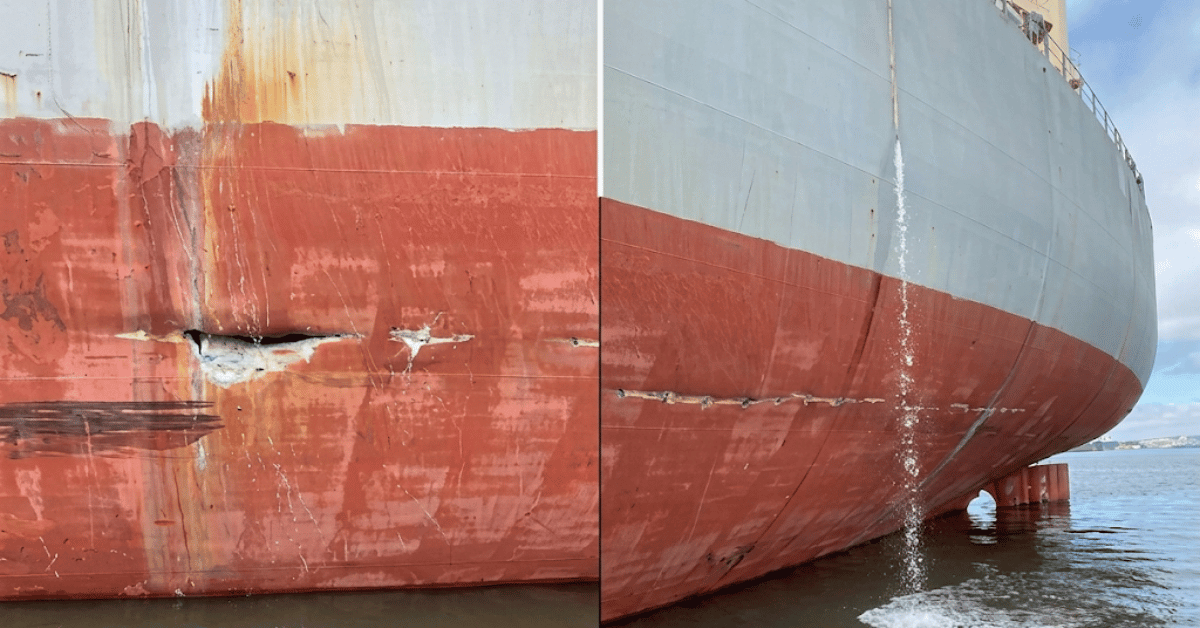
A tanker was preparing for departure at night, with light winds and two tugs alongside to help leave the berth. The Master and crew had a plan, but the execution fell apart over a simple tug-name mix-up, resulting in the vessel striking the pier and leaving hull damage in its wake. This incident is not a story about rogue waves or equipment failure; it is a story about how the most basic elements of maritime communication can unravel a maneuver that should have been routine.
This is where our take begins: the margin for error in a harbor is measured in meters, but the chain of events that leads to a collision often starts far earlier than the final approach. The misidentification of a tug is a procedural lapse, but it speaks to a deeper issue of situational awareness under the cover of darkness. When the names on the radio and the lights on the water do not align, the human mind fills the gap with assumption, and assumption is a poor substitute for verification. We see this pattern echoed in other recent incidents, such as the Cargo Ship Fire Prompts Evacuation Near Mykonos; Incident Under Investigation, where an emergency forced a full evacuation, and the Bulk Carrier Freed After Prolonged Grounding Near Gladstone, Australia, where a vessel sat aground for six days. In each case, the initial cause is less important than the failure to contain the situation once it began. A fire, a grounding, and a pier strike are all final outcomes of a process where a single point of failure was allowed to propagate.
Our readers, whether they are deck officers, port pilots, or marine insurers, know that these events are rarely isolated. They are data points in a larger pattern that demands a shift from reactive repair to predictive prevention. The practical takeaway here is not to assign blame to the Master or the tug captain, but to ask why a name mix-up was not caught earlier. This is where integrated data ecosystems and real-time tracking should step in, not as a replacement for human judgment, but as a calibrated check on it. If the vessel's bridge system had cross-referenced the tug's AIS transmission with the departure plan, the discrepancy would have been obvious. The technology is available; the question is whether the industry is willing to treat these near-misses as mandatory learning opportunities rather than isolated incidents.
We would tell a reader who asked about this event that the fix is not a new rudder or a better engine; it is a commitment to closing the gap between perception and reality. The Ukraine Supports India's Initiative for Black Sea Shipping Routes shows that even in geopolitically complex waters, the focus remains on establishing protocols that reduce ambiguity. This incident is a smaller, less dramatic version of that same challenge: ensuring that every actor in the operation knows exactly what the other is doing. The specific detail to watch is whether the investigation report recommends changes to the pre-departure checklist, specifically the communication handoff between the pilot, the Master, and the tug masters. If that single point of confusion is not addressed with a mandatory verification step, the next misidentification could happen in broad daylight.