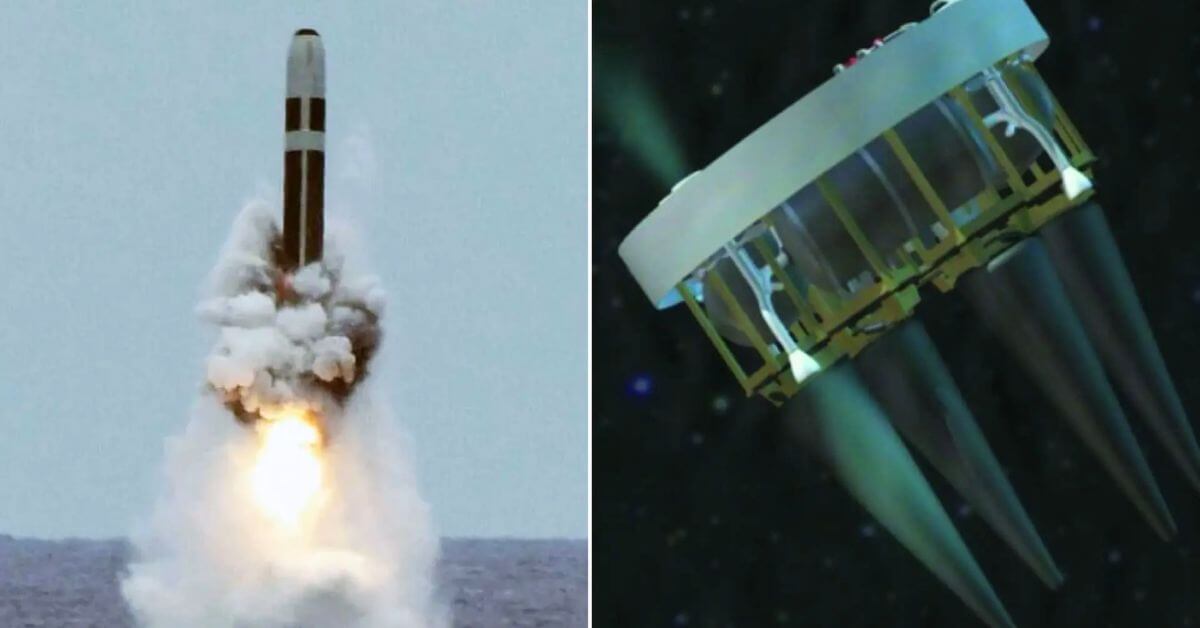
The US Navy's decision to advance the W93/Mk7 nuclear warhead programme into the Engineering and Manufacturing Development phase is a significant, and sobering, signal about the strategic priorities shaping the world's oceans. After nearly four decades without a new nuclear warhead design, this move places a weapon of immense destructive potential at the center of maritime capability. For a readership accustomed to tracking ocean intelligence, climate indicators, and the integrated data ecosystems that monitor planetary health, this development demands a clear-eyed assessment. It is not an isolated event; it runs parallel to other naval investments that, on the surface, seem purely technological. Consider the Navy's concurrent push to Navy Accelerates Autonomous Systems Integration for Enhanced Maritime Operations, which aims to weave robotic systems into daily operations. While that initiative promises efficiency and reach, it also raises a practical question: how will these autonomous platforms interface with a fleet that is now actively modernizing its nuclear arsenal?
This is where our take departs from a simple news summary. The W93/Mk7 programme is not just a hardware update; it is a statement about the value placed on ocean-based strategic deterrence. The Navy is committing billions of dollars and years of engineering effort to a system whose primary function is to remain undetectable and deliver a calibrated, devastating response. For researchers and policymakers who track maritime security, the immediate implication is a renewed focus on undersea surveillance and counter-detection technologies. The ocean, already a contested domain for data collection and resource access, becomes an even more complex arena. The Integrated Maritime Data Collection Underway in Philippine Exercise illustrates how navies are already using routine operations to gather empirical, real-time environmental data. That same data infrastructure, built for understanding currents and acoustics, can be repurposed for tracking submarines, a reality that the W93 programme tacitly reinforces.
We would tell a reader who asks about this that the headline is not about a bomb; it is about a system. The Engineering and Manufacturing Development phase means the Navy is moving from validated design concepts to the measurable, peer-reviewed processes required to produce a reliable warhead. This is a long-cycle commitment, likely spanning over a decade. The specific consequence to watch is how this programme affects non-proliferation agreements and the transparency of naval operations. As autonomous systems and data-sharing exercises expand, the presence of a new nuclear warhead programme creates a tension between collaboration and secrecy. The same ocean that hosts joint data collection efforts must now also conceal and protect a strategic asset. That duality is the core challenge for anyone working in ocean governance or security studies.
The takeaway here is practical: the W93/Mk7 programme confirms that the ocean remains the primary theater for strategic power, and that technological innovation, whether in autonomous systems or warhead design, is being pursued simultaneously, not sequentially. For our readers, the detail to watch is how the Navy integrates this new warhead with its existing fleet of submarines and the autonomous systems that will likely accompany them. The ocean intelligence community must now account for a future where the data streams from scientific sensors and military platforms are increasingly intertwined, and where the line between monitoring climate indicators and monitoring strategic assets becomes harder to draw.