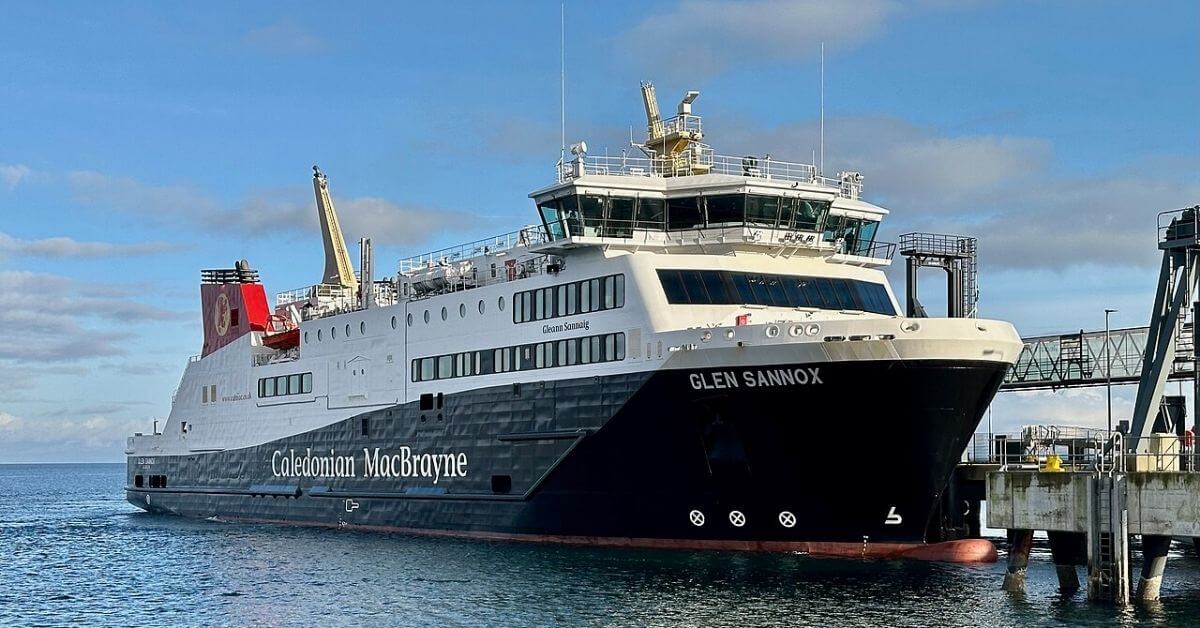
The uncontrolled release of approximately 700 kilograms of methane from a faulty valve aboard the LNG-powered ferry *Glen Sannox*, while carrying 82 passengers, is not a reason to abandon liquefied natural gas as a marine fuel. It is, however, a calibrated, empirical signal that the industry's operational safety protocols must evolve as fast as its propulsion technology. This incident is a direct, measurable data point in a larger conversation about risk, and it demands a response rooted in engineering discipline, not alarm.
The vessel's operator now has a real-world failure mode to investigate, and the maritime sector has a clear, peer-reviewed case study, one that should be integrated into every future design review. This event draws a necessary contrast with the strategic, forward-thinking work happening elsewhere in the LNG value chain. Consider the analysis from Lloyd's Register on Optimal LNG Carrier Design: Boosting Capacity, Reducing Costs, which focuses on maximizing efficiency at scale. That work is valuable, but it assumes a controlled environment. The *Glen Sannox* leak reminds us that a 200,000-cubic-meter carrier is only as good as the integrity of its smallest valve. Similarly, the successful negotiation that cleared the Strait of Hormuz for an LNG delivery to Pakistan, detailed in Negotiations Clear Strait of Hormuz for LNG Delivery to Pakistan, highlights the geopolitical and logistical complexity of moving this fuel. Yet that complexity is meaningless if a single component failure can turn a ferry into a hazard.
Our take is this: the *Glen Sannox* incident is not a verdict on LNG's viability, but it is a mandatory stress test for the systems that govern its use. The specific takeaway for our readers, whether you are a fleet operator, a port authority, or a regulator, is that **component-level validation must be treated with the same rigor as full-scale system integration.** A 700-kilogram leak is not a catastrophic failure, but it is a measurable deviation from safe operation, and it occurred on a vessel designed for passenger transport. The question we would ask a colleague is straightforward: what is your failure-mode analysis for every valve, seal, and connection in your LNG system? If the answer is not documented, peer-reviewed, and calibrated against real-world incidents like this one, then the gap between design ambition and operational safety is wider than any spreadsheet suggests.
The industry can learn from this, but only if it treats the data with the same objectivity it applies to cargo capacity or route optimization. The path forward is not to retreat from LNG, but to ensure that every component in the integrated data ecosystem of a modern vessel is validated against the harshest possible conditions. Watch how the investigation into this valve failure is shared across the sector. The degree of transparency, or lack thereof, will be the most telling metric of all.