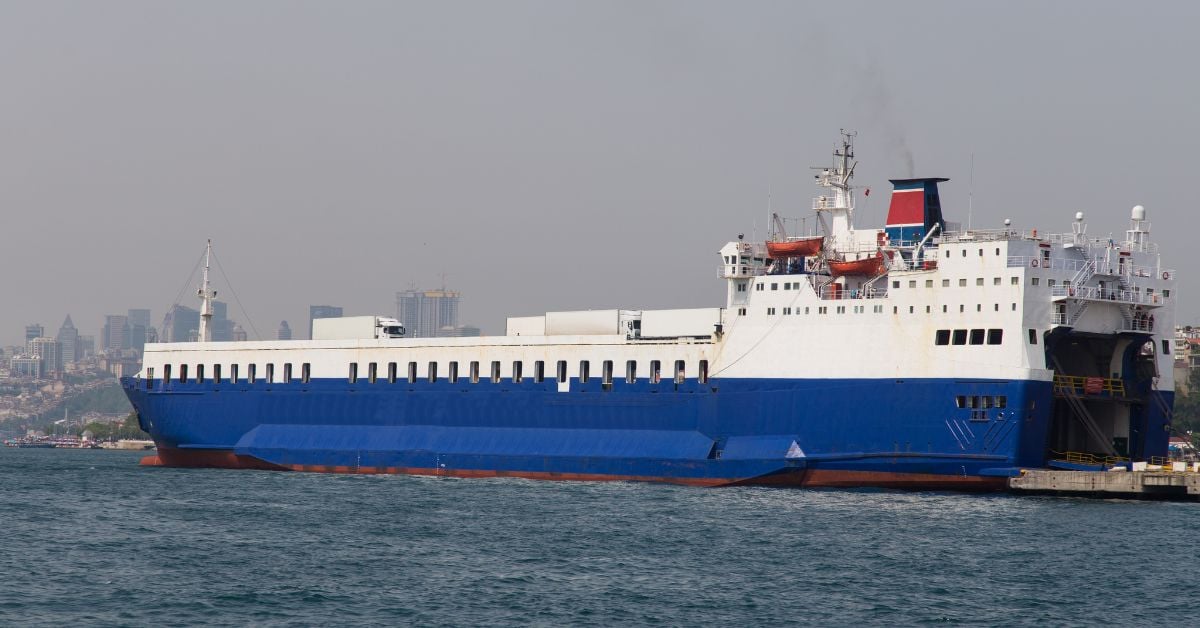
A cargo vessel carrying Mercedes-Benz vans has run aground in Düsseldorf's harbour, disrupting a route to the Port of Rotterdam. This is not a minor logistical hiccup; it is a clear, measurable indicator of how fragile our integrated maritime supply chains remain. For our readers, researchers, policymakers, and industry observers, this incident demands that we look beyond the immediate salvage operation and ask what this grounding reveals about the reliability of the data we use to model global trade and climate risk.
The vessel's stranding in a major inland waterway echoes broader patterns of maritime disruption we have tracked closely. Consider the Strikes on Odesa Port Underscore Broader Maritime Security Risks and the Fatal Attack on Cargo Ship Highlights Black Sea Shipping Risks, both events involve deliberate, geopolitical threats to shipping lanes. The Düsseldorf grounding, by contrast, appears to be an operational or navigational failure, not an act of war. Yet the consequence is the same: a blockage that delays goods, increases emissions from rerouted vessels, and strains port capacity. This is precisely the kind of event that our integrated data ecosystem must capture in real time to validate predictive models of supply chain resilience. If we cannot calibrate our risk assessments for a grounded cargo vessel in a controlled harbour, how can we trust our projections for the far more volatile corridors in the Black Sea or the Red Sea?
From a practical standpoint, this event forces a specific question: how many such groundings go unreported or under-analyzed because they lack the drama of a fire or an attack? The Cargo Ship Fire Prompts Evacuation Near Mykonos; Incident Under Investigation involved a clear emergency and a full evacuation, making it an immediate priority for response teams. A grounding in Düsseldorf, with no reported injuries, may not trigger the same urgency, but it still represents a measurable failure in navigation, pilotage, or hydrographic data. For ocean intelligence to be truly longitudinal and empirical, we must treat every incident, no matter how mundane, as a data point worthy of peer-reviewed analysis. The Mercedes-Benz vessel's predicament is a reminder that the most valuable climate indicators often emerge from the routine, not the catastrophic.
Our take is direct: the grounding in Düsseldorf is a stress test for the maritime data infrastructure we rely on. The specific takeaway is that real-time vessel tracking and hydrographic data must be integrated with port operational systems to flag high-risk approaches before they become blockages. We will be watching for the official investigation report, specifically, whether the cause was chart error, human judgment, or mechanical failure, because that answer will tell us how much of our current ocean intelligence is still reliant on outdated or incomplete information. The ocean does not distinguish between a luxury van carrier and a grain freighter when the hull hits the bottom. Neither should our data.