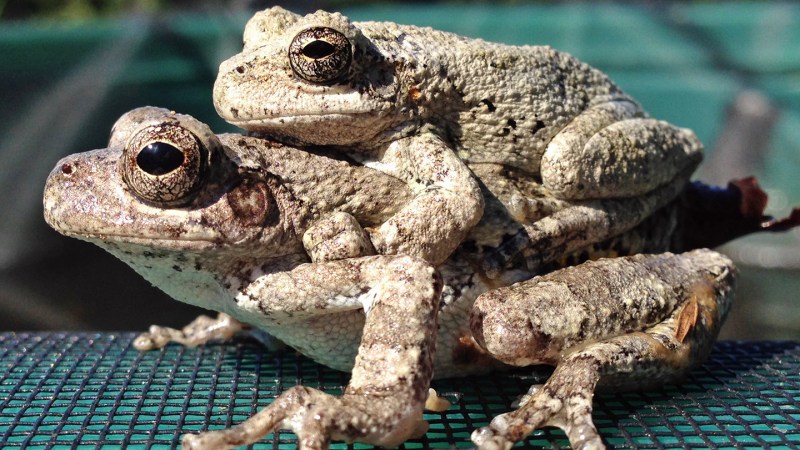
The chorus of a frog pond is rarely a uniform wall of sound. It is a layered conversation, a competitive marketplace where timing, frequency, and pitch determine who gets heard. A new lab study adds a compelling wrinkle to that dynamic: when female frogs were presented with a cacophony of mating calls, their ability to choose a preferred male collapsed. The noise did not just mask the signal; it introduced a form of choice paralysis that effectively leveled the playing field. This is not a story about a single species' quirk. It is a window into how sensory processing and decision-making interact under pressure, a theme that resonates far beyond the pond's edge.
We tend to think of animal communication as a straightforward exchange: a signal is sent, a receiver responds. But as research on sensory ecology shows, the environment is never a neutral medium. This study echoes findings from other corners of the natural world, such as how Do Fish Experience Cold, or Simply Temperature Change? forces us to question whether our own sensory biases blind us to the true experiences of other creatures. Similarly, the frog study suggests that the act of choosing is not merely about identifying the "best" option, but about the cognitive cost of sorting through a barrage of stimuli. When the signal-to-noise ratio degrades, the preference hierarchy that drives sexual selection can dissolve. The practical implication is significant: if a female cannot reliably distinguish a high-quality call from a mediocre one under a din, then the selective pressure that once favored specific traits weakens. The "best" male may lose out simply because his call is one of too many.
This should prompt us to reconsider how we measure the health of a species. We often track population numbers or habitat loss, but this study points to a subtler, more insidious threat: acoustic habitat degradation. As human-generated noise infiltrates natural soundscapes, we are not just deafening animals; we are altering their decision-making calculus. This connects to our own reporting on Rising Porpoise Sounds Signal Baltic Sea Population Shift, where a change in acoustic behavior served as a critical indicator of a population in flux. In both cases, sound is not just a byproduct of animal life; it is a primary instrument of survival. The frog study, however, adds a laboratory-confirmed layer: it isolates the mechanism of interference, showing that even without a predator or a competitor physically disrupting the scene, the sheer volume of information can cause a system to fail. It is a cautionary tale about the limits of processing capacity, one that applies to our own data-saturated lives as much as to a frog's.
What we find most striking is the potential for this to be a hidden driver of evolutionary change. If choice paralysis becomes a regular occurrence, then the selective advantage of having a preferred call diminishes. Over generations, this could homogenize the male population, reducing the very variability that makes a species resilient. It is a slow, quiet erosion. For our readers, the takeaway is not to mourn the frogs, but to recognize that conservation is not only about preserving space or food sources. It is about preserving the conditions under which informed choices can be made. We would tell a curious reader: watch the soundscape, not just the species count. The next time you read about a population decline, ask whether the animals are losing their ability to listen, not just their ability to be heard. The most direct consequence of this research is a new question for field ecologists: are we documenting preference, or are we documenting the absence of a workable alternative? That is the distinction that will shape the next decade of behavioral study.