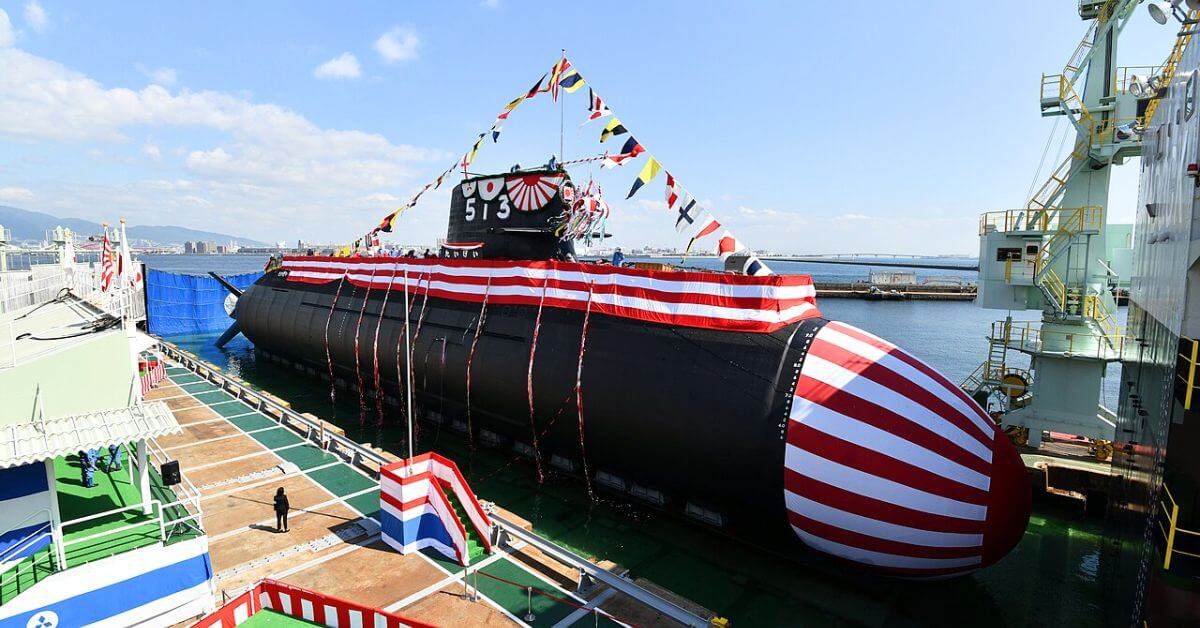
Japan's launch of the *Shogei*, the seventh Taigei-class submarine, marks a measured but meaningful step forward in undersea monitoring and regional maritime stability. This is not merely a procurement milestone; it reflects a deliberate investment in the kind of persistent, low-noise ocean intelligence that directly informs strategic decision-making. For our readers, whether researchers tracking submarine noise impacts on marine mammals or policymakers assessing naval balance in the Western Pacific, the practical implications are immediate and worth watching.
The *Shogei*'s design choices speak to a clear prioritization of stealth and endurance. Its Kawasaki 12V 25/31 diesel engines, paired with large-capacity lithium-ion batteries, allow for extended submerged patrols, but with a known constraint: recharging requires surfacing to snorkel, creating a detectable signature. This is a trade-off Japan has accepted, and it aligns with the broader trend we have observed in other programs, such as the Keel laid for second U212NFS submarine, advancing naval ocean intelligence. In both cases, the focus is on refining sensor performance and acoustic quieting rather than chasing nuclear propulsion for unlimited submerged endurance. The *Shogei* also carries the Type 18 torpedo and Harpoon Block II missiles, giving it a credible anti-surface reach of 248 kilometers, a capability that fits within Japan's defensive posture without crossing into the more aggressive long-range strike role that a vertical launching system would enable.
That future vertical launching system is where the open questions lie. Japan has allocated 3.9 billion yen for design studies through fiscal 2029, and a panel has called for research into "next-generation propulsion." Nuclear power remains an option, but not a decision. The challenge is practical: adding a VLS, more advanced sonar, and unmanned underwater vehicles will increase power demands, straining the battery-diesel architecture that defines the Taigei class. This is a tension we have seen before in other integrated maritime systems, such as the Integrated Maritime Data Collection Underway in Philippine Exercise, where data gathering and platform endurance must be balanced against operational constraints. Japan's next move, whether to scale up conventional propulsion, adopt nuclear, or develop hybrid solutions, will determine whether its submarine fleet can sustain the kind of persistent, real-time ocean monitoring that climate and security indicators increasingly demand.
The specific detail to watch is the *Shogei*'s noise-reduction engineering. The improvements to machinery and crew-activity dampening are not just tactical advantages; they have direct relevance for environmental monitoring. Quieter submarines can better calibrate passive acoustic sensors for tracking whale migrations, seismic activity, or underwater noise pollution, data that feeds into climate indicators and ocean health assessments. If Japan integrates these empirical capabilities into its routine patrols, the *Shogei* could contribute more than naval deterrence. It could serve as a validated platform for collecting longitudinal data from orbit to ocean floor, turning a military asset into a shared resource for ocean intelligence. That is a consequence worth following through March 2028 and beyond.