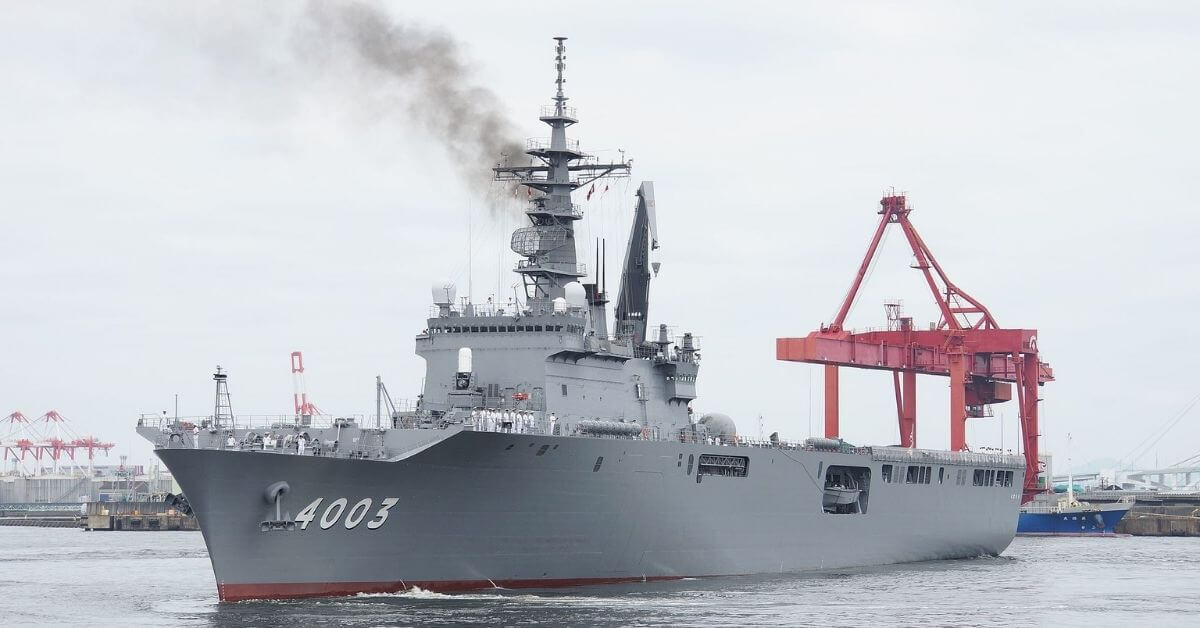
The departure of the JS Kunisaki from Japan, bound for Indonesian waters to support firefighting efforts, is a quiet piece of operational news with loud implications. This is not a drill or a routine patrol; it is the first overseas firefighting mission for this class of vessel, and it signals a practical recalibration of how maritime assets are being repurposed in an era of compounding climate emergencies. The Defense Ministry's confirmation of the timeline, roughly one to two weeks to reach the staging area, gives us a window into the logistics of disaster response, but the deeper story is about what happens when a naval vessel becomes a civilian emergency asset.
We have seen this pattern before, though usually in the context of search and rescue or humanitarian supply drops. The recent tragedy of the KM Virgo Transport 8 sinking, where recovery efforts are still climbing toward a higher death toll, reminds us that Indonesia's waters are a constant pressure point for both human and environmental disasters. The Kunisaki's mission is different in kind, but not in spirit. It is a firefighting support role, likely using its water discharge systems to combat coastal blazes, and that requires a level of interoperability and trust that does not appear overnight. What we are witnessing is the integration of military capacity into a regional rapid-response framework, and the fact that Japan is deploying a ship specifically for this purpose suggests that planners are treating wildfire risk as a maritime security issue, not just a terrestrial one.
Our readers, many of whom track oceanography and marine policy, should see this for what it is: a data point in a larger shift. When we discuss Tracking an Invasive Species: Sea Star Collection in Port Phillip Bay, we are talking about the slow, deliberate work of understanding ecosystems. The Kunisaki's deployment is the fast-moving counterpart to that, a reactive measure to immediate threats. Similarly, for those evaluating Expanding Oceanography Career Options: Evaluating International Master's Programs, this is a signal that the skillset of the future is not just in research but in applied logistics, knowing how to move people and equipment to where the ocean's problems are most acute.
The practical takeaway here is not about the ship's water cannons or its arrival date. It is about the precedent. If this mission is successful, and that is a genuine if, we will likely see more of these deployments, not fewer. The question we should be asking is not whether Japan can do this, but whether the region has a clear doctrine for when and how to ask. The Kunisaki is a tool, but tools are only as good as the command structure that wields them. Watch for the after-action reports, the after-action reports and the bilateral agreements that will inevitably follow. The real test is whether this becomes a standard operating procedure or remains a one-off gesture of goodwill. For now, the ship is at sea, and that is a fact worth noting, but the longer-term impact will be measured in the protocols it leaves behind.