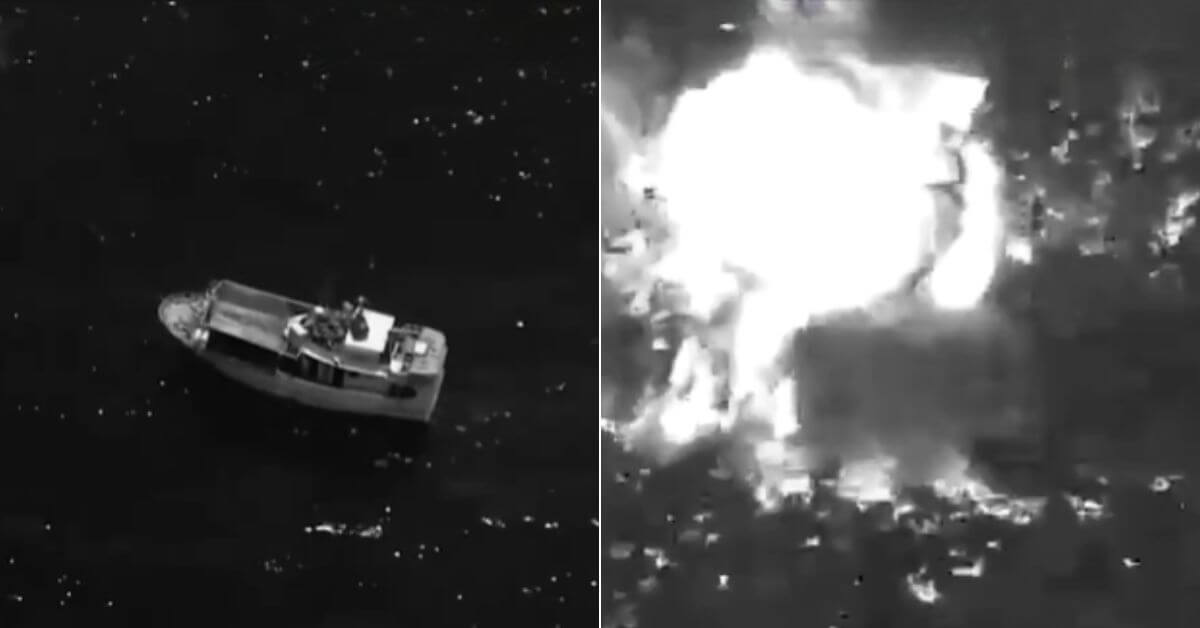
The interdiction of a vessel used as a floating refueling station for drug trafficking operations in the Eastern Pacific is a precise piece of operational intelligence. The U.S. Southern Command's action on Sept. 2 in international waters is not just a law enforcement win; it is a reminder that the ocean is a governed space, even far from shore. For our readers, this story is less about the vessel itself and more about what it reveals: the logistical backbone of illicit networks is vulnerable when surveillance and international coordination align.
We see a direct thread between this interdiction and the work of Puntland Forces Intercept Hijacked, US-Sanctioned Oil Tanker After 48 Hours. In both cases, the asset targeted was not the cargo but the capability to move or refuel. A hijacked tanker off Somalia and a refueling platform off the Americas are different symptoms of the same challenge: maritime domain awareness. The ocean is vast, but it is not opaque. Every tracked vessel, every reported anomaly, and every data point feeds a larger picture. This is where Integrated Subsea Cables Enhance Data Transmission Across the Indian Ocean becomes relevant beyond bandwidth. The same infrastructure that moves 99 percent of intercontinental data is part of the connective tissue that makes coordinated responses possible. We often talk about ocean intelligence in the context of climate indicators, but here it applies to security.
Our take is straightforward: this interdiction is a validation of persistent, layered observation. It is not a one-off event to celebrate in isolation. It is evidence that the integrated data ecosystem we advocate for, one that merges satellite tracking, patrol reports, and automated identification systems, works when it is used. The practical implication for researchers and policymakers is that investments in surveillance and data sharing are not abstract. They produce measurable outcomes. For a student or ocean enthusiast, the lesson is that the ocean's challenges are not only environmental; they are also about governance and security. The same platforms that monitor sea surface temperatures can track a vessel with its transponder dark.
What we would tell a reader who asks about this story is simple: watch how these operations are reported over time. A single interdiction is a data point, but a pattern of them signals a shift in how illicit networks are being disrupted. The open question is whether the intelligence that enabled this strike was a result of new technology or better use of existing tools. That distinction matters for where future funding goes. The concrete point to watch is whether we see a corresponding drop in fuel availability for these operations in the coming months. If we do, that will confirm that the strategy is not just reactive but preemptive. Until then, this is a reminder that the most effective environmental and security work happens when we treat the ocean as a single, interconnected system.