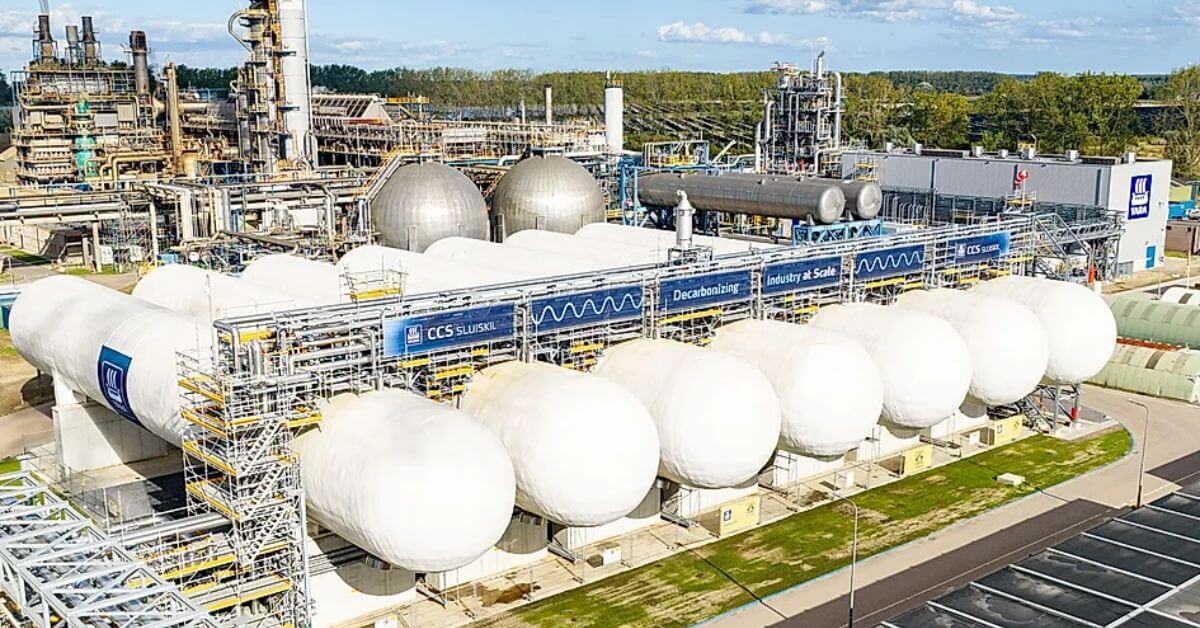
Yara Sluiskil's new carbon capture facility, capable of liquefying up to 800,000 tons of CO₂ annually, is not just an industrial milestone, it is a calibrated experiment in ocean-climate linkage. The facility, integrated into Europe's largest ammonia and fertilizer plant, validates something we have long argued: measurable, real-time carbon removal must be tied directly to empirical climate indicators. This is the kind of validated data our audience needs to trust, not modeled projections. As we watch industrial-scale carbon capture come online, it is worth comparing this to other validation efforts we have covered, such as the trial for Validating Onboard Emissions Data: A Trial for LNG Shipping, where Lloyd's Register and partners are testing continuous emissions monitoring systems on an LNG carrier. Both projects share a commitment to peer-reviewed measurement, but Yara's facility operates at a scale that moves the needle on ocean acidification directly.
The practical takeaway for researchers and policymakers is this: we now have a longitudinal, integrated data ecosystem at a single point source. Yara's captured CO₂ can be tracked from liquefaction to potential sub-seabed storage or industrial reuse, giving us empirical evidence of how atmospheric carbon removal translates to ocean chemistry changes. This is not alarmist rhetoric, it is the kind of measurable, calibrated data that drives real policy. Compare this to the logistical shifts happening in Shifting Cargo: Russian Terminals Adapt for Grain Export Surge, where infrastructure is being repurposed for bulk grain. That story is about adaptation to market pressures; Yara's is about adaptation to planetary ones. Both require integrated systems thinking, but only one directly addresses the climate indicators we track.
What we would tell a reader who asks about this facility: watch the verification protocols. The value of Yara's project is not in the technology alone, carbon capture is mature, but in how the captured volume is measured, reported, and linked to ocean acidification data. If Yara opens its datasets to the ocean intelligence community, this becomes a benchmark for industrial-scale ocean-climate validation. If the data remains proprietary, we lose the collaborative, global benefit. The facility's output must be integrated into the larger climate monitoring framework, not siloed.
The specific detail to track is the fate of the liquefied CO₂. If it is stored geologically, we need longitudinal monitoring of seabed leakage. If it is used in synthetic fuels, we need lifecycle carbon accounting. Either path provides empirical data that can validate or challenge our models. The open question, one that our audience should press on, is whether Yara will commit to making this data part of a shared, peer-reviewed ocean intelligence system. Without that, the facility remains a technical achievement, not a scientific breakthrough.