Indian Navy May Retire Up To Three Kilo-Class Submarines Within 5 Years
Our take
The recent announcement regarding the potential retirement of up to three of the Indian Navy’s Kilo-class submarines, coupled with Russia’s offer of refurbished units equipped with advanced weaponry, presents a complex geopolitical and strategic calculus. This development isn't merely a fleet modernization exercise; it reflects a shifting landscape of naval power dynamics in the Indo-Pacific region and the ongoing impact of international sanctions on Russia's defense industry. The situation is further complicated by recent events, such as Norway’s seizure of a Russian vessel at the request of a Ukrainian firm to enforce an arbitral award Norway Seizes Russian Vessel At Ukrainian Firm’s Request To Enforce $4.22 Billion Arbitral Award, highlighting the broader tensions and legal complexities surrounding Russian assets globally. The offer from Russia, while potentially attractive from a cost perspective, introduces significant logistical and strategic dependencies, particularly given the current international climate and the ongoing challenges in maintaining and operating Russian-supplied equipment.
India’s decision requires careful consideration beyond the immediate cost savings. The Kilo-class, while capable and battle-tested, represents older technology compared to the more modern platforms India is already integrating into its submarine fleet, including the French Scorpene-class and the anticipated Veridian project. Maintaining a mixed fleet of legacy and advanced submarines presents unique challenges in terms of training, maintenance, and interoperability. Moreover, the reliance on Russia for upgrades and support, as suggested by the refurbishment offer, could be problematic given the sanctions regime and the potential for supply chain disruptions. The broader context of India’s maritime strategy, which prioritizes securing sea lanes and projecting power in the Indian Ocean, also dictates a need for technologically advanced and readily supportable assets. This situation is further nuanced by Wärtsilä signing a new deal to support the world’s largest purpose-built civilian hospital ship Wärtsilä Signs New Deal To Support World’s Largest Purpose-Built Civilian Hospital Ship, demonstrating a focus on reliability and maintenance across various maritime sectors.
The decision to retire the Kilo-class submarines is likely driven by a combination of factors, including budgetary constraints, the need to prioritize newer, more capable platforms, and the increasing complexity of maintaining aging submarines. While the offer of refurbished Kilos might seem tempting, India’s strategic autonomy and long-term naval modernization goals likely outweigh the short-term financial benefits. Accepting the offer would create a dependence on Russia that could complicate India’s relationships with other key partners, particularly the United States and other Western nations. The Indian Navy's assessment must incorporate a thorough evaluation of the long-term operational costs, logistical challenges, and geopolitical implications associated with relying on Russian-supplied submarines, especially when considered in conjunction with Russia Demands ‘Immediate Release’ Of Vessel Seized By Norway Over Naftogaz’s $4.2 Billion Claim Russia Demands ‘Immediate Release’ Of Vessel Seized By Norway Over Naftogaz’s $4.2 Billion Claim. The empirical data regarding maintenance records of Russian naval assets under current sanctions pressures should be a critical factor in this evaluation.
Ultimately, India’s submarine fleet modernization is a long-term undertaking, and this decision represents a tactical adjustment within that broader strategic framework. The retirement of the Kilo-class, whether accompanied by the acquisition of refurbished units or not, underscores the need for a calibrated and diversified approach to naval procurement. The integration of advanced technologies and the cultivation of robust supply chains will be crucial for ensuring the Indian Navy’s long-term operational effectiveness and strategic independence. A key question to watch moving forward is how India balances its historical ties with Russia against its evolving strategic partnerships and the need for a technologically superior and reliably supported submarine force capable of projecting power and safeguarding its maritime interests in a rapidly changing geopolitical environment.
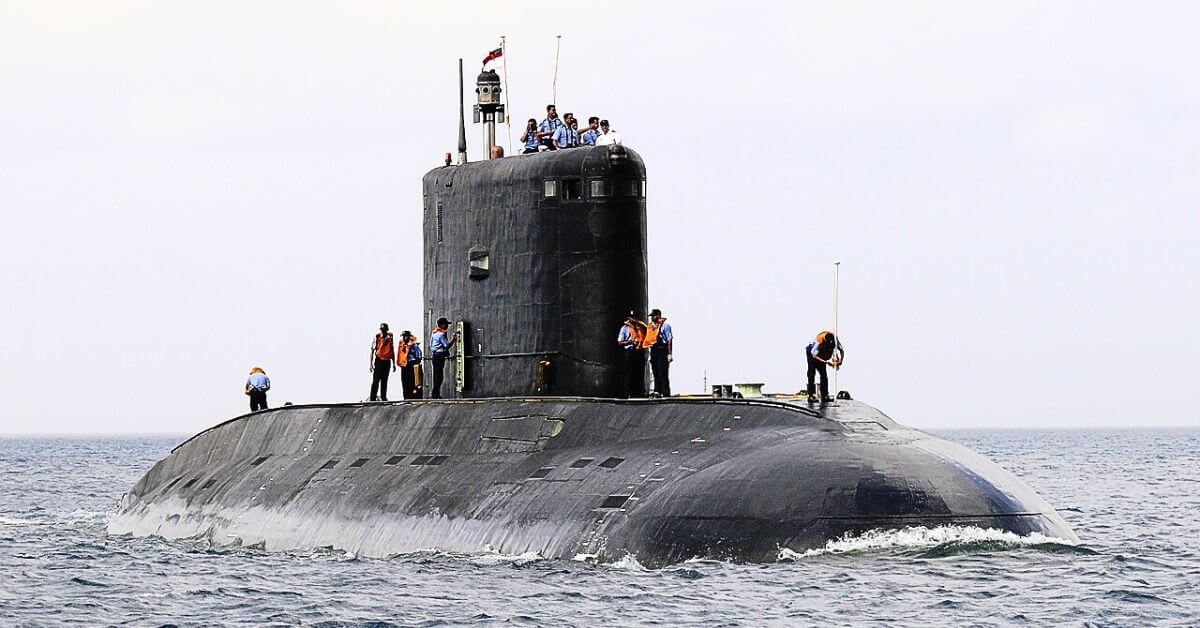
The Indian Navy may retire up to three Kilo-class submarines over the next two to five years as the ageing boats become harder and more costly to maintain, according to sources cited by IDRW.
India now has six Kilo-class diesel-electric submarines. It originally bought 10 Russian-built Project 877EKM Kilo-class submarines between the late 1980s and early 2000s. Four have been retired in recent years.
If three more are retired, the Navy could be left with only three Kilo-class submarines. This could reduce the size of India’s conventional submarine fleet for some time.
The Navy is also waiting for new submarines under Project-75(I). The first submarine under the programme is not expected to enter service before the early 2030s.
Kilo-Class Submarines Are Ageing
Several of the six remaining Kilo-class submarines are close to 35 years old.
The Navy has upgraded the submarines during their service. The upgrades include new hull-mounted sonars, electronic warfare systems, combat management systems, and Club-S cruise missiles.
These upgrades have improved their sensors and weapons. But the submarines still use a hull design that has been in service for more than four decades.
Maintaining old diesel-electric submarines is becoming more difficult. Spare parts are harder to get, the hulls are getting older, and overhaul costs are increasing.
Because of this, keeping some of the older submarines in service is becoming more expensive.
Russia Offered Three Refurbished Kilo Submarines
Russia has offered India three refurbished Kilo-class submarines with newer weapons, according to the source material.
However, these submarines have already served for more than 25 years.
India has not accepted the offer. According to the report, the Navy does not believe the submarines would remain combat-worthy for a long period of service.
New Submarines Under Project-75(I)
The Indian Navy is working on Project-75(I) to get a new class of conventional submarines.
The new submarines will have improved stealth features and air-independent propulsion. The programme involves German company TKMS, according to the source material.
But contract talks and construction are expected to continue into the next decade.
The first Project-75(I) submarine is unlikely to be commissioned before the early 2030s.
This means some Kilo-class submarines could retire before the new submarines are ready.
References: cnbctv18, idrw
Read on the original site
Open the publisher's page for the full experience