Norway Seizes Russian Vessel At Ukrainian Firm’s Request To Enforce $4.22 Billion Arbitral Award
Our take
The recent seizure of a Russian vessel by Norway at the request of a Ukrainian firm to enforce a $4.22 billion arbitral award represents a significant escalation in the application of international legal mechanisms amidst ongoing geopolitical tensions. This action, targeting a vessel utilized for commercial expedition cruises, including voyages to the sensitive Arctic region of Svalbard, highlights the increasingly complex interplay between maritime law, international arbitration, and national sovereignty. The case underscores a willingness to leverage assets within national jurisdiction to satisfy judgments rendered through international arbitration, a tactic that could set a precedent for future enforcement actions. The broader context is further illuminated by Norway's concurrent efforts to accelerate wind-powered shipping [Norway Launches NOK 68 Million Project to Accelerate Wind-Powered Shipping], demonstrating a dual commitment to both legal enforcement and sustainable maritime practices. The incident also follows recent reporting regarding Russia’s expansion of its LNG carrier fleet servicing the sanctioned Arctic LNG 2 project [Russia Nearly Doubles LNG Carrier Fleet Serving Sanctioned Arctic LNG 2 Project], revealing a continued focus on Arctic resource development despite international pressure.
The legal ramifications of this seizure are substantial. International arbitration awards are generally enforceable across borders, but the process of enforcement often relies on cooperation from the state where the assets are located. Norway's action demonstrates a proactive approach, signaling a potential shift in how states may choose to enforce such awards, particularly when dealing with parties facing sanctions or exhibiting reluctance to comply voluntarily. While the principle of sovereign immunity traditionally protects state-owned assets, the fact that this vessel was engaged in commercial activity, and the award itself stemmed from a commercial dispute, appears to have provided a legal basis for the seizure. The incident is also noteworthy given the risks inherent in enforcing judgments against assets operating in international waters or within the jurisdiction of potentially adversarial states. The tragic attack on a Saudi oil tanker in the Strait of Hormuz [2 Filipino Seafarers Killed After Attack On Saudi Oil Tanker In Strait Of Hormuz] serves as a stark reminder of the security challenges that can complicate maritime operations and enforcement efforts.
Beyond the immediate legal and financial implications, this case carries significant geopolitical weight. It underscores the ongoing impact of the conflict in Ukraine and the lengths to which parties are willing to go to seek redress for losses. The choice of a Russian vessel, operating in a region of strategic importance like the Arctic, also carries symbolic significance. Svalbard, governed by the Svalbard Treaty, is a unique territory with complex jurisdictional considerations, and actions impacting Russian activity there are likely to be closely scrutinized. The incident also highlights the vulnerability of assets connected to sanctioned entities, regardless of their operational status. The willingness of a European nation to take such assertive action suggests a growing determination to enforce sanctions and hold accountable those who violate international norms and agreements. The integrated data ecosystem we develop at World Data Ocean is crucial in providing the validated, empirical data needed to accurately assess these shifting geopolitical landscapes and their impact on ocean-related activities.
Looking ahead, the outcome of this case will be closely watched by legal scholars, policymakers, and businesses operating in international trade and maritime sectors. The potential for increased enforcement actions targeting assets connected to sanctioned entities, particularly in strategically sensitive regions like the Arctic, is a clear possibility. The long-term implications for international arbitration and the enforcement of judgments remain to be seen, but this incident has undoubtedly raised the stakes. One key question is whether other nations will follow Norway’s lead in proactively enforcing arbitral awards against assets within their jurisdiction, and what safeguards will be implemented to prevent such actions from escalating geopolitical tensions further.
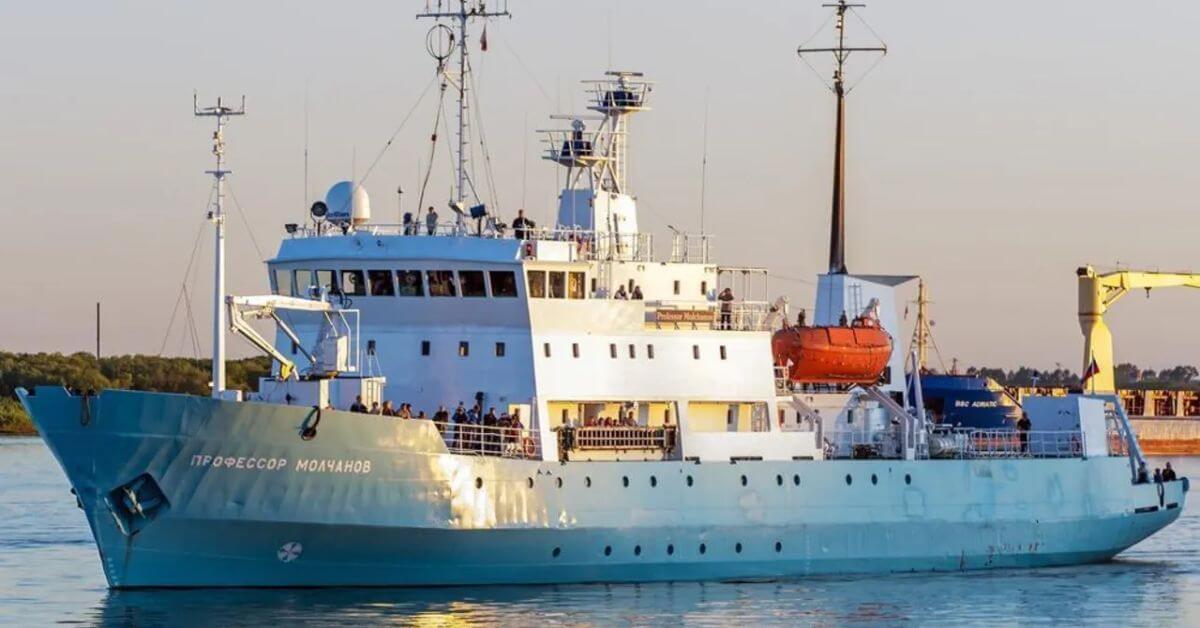
Norway has seized a Russian ship in Svalbard at the request of Ukrainian state energy company Naftogaz, which is trying to enforce a $4.22 billion arbitration award against Russia.
The ship, Professor Molchanov, was seized at the port of Barentsburg under an order issued by the Nord-Troms and Senja District Court on Aug. 31, Naftogaz said.
The vessel belongs to the Russian Federation and is used for commercial expedition cruises, including trips to Svalbard.
Naftogaz is seeking compensation for assets it lost after Russia annexed Crimea in 2014.
A tribunal in The Hague ordered Russia in April 2023 to pay Naftogaz about $4.22 billion, plus interest and legal costs, for the assets seized in Crimea.
Russia has not paid the award.
The award had already been recognised as enforceable in Norway.
Under the court order, the Professor Molchanov cannot leave its current location. The Governor of Svalbard has been asked to take the necessary steps to make sure the vessel is not moved.
The Governor’s office said the ship was seized on Wednesday and would remain in Svalbard until the court decides otherwise.
Norwegian authorities are dealing with matters concerning passengers who are currently on board.
Naftogaz Continues Efforts to Recover Compensation
Naftogaz has been taking legal action against Russia since 2016 to seek compensation for its property in Crimea.
The company is also pursuing enforcement measures in other countries, including the US, UK, France and Finland. Russian assets have been frozen in Finland in connection with the case.
Russia is contesting the enforcement process and has said it was not given notice.
Naftogaz Acting CEO Sergii Fedorenko said the seizure was another step in the company’s efforts to recover the compensation.
“This is another important step towards restoring justice for Russia’s unlawful seizure of Naftogaz assets in Crimea,” Fedorenko said.
“Russia cannot evade responsibility simply by refusing to comply with an international arbitral award. We will continue to pursue Russian assets around the world until the compensation awarded to Naftogaz and other Naftogaz Group companies is paid.”
Naftogaz is represented in Norway by law firm Wikborg Rein and international legal counsel Covington & Burling LLP.
According to VesselFinder, the vessel was anchored at Barentsburg, a mining settlement in Svalbard.
The vessel cannot leave its current location under the court order. It will stay there unless the court decides otherwise, while Naftogaz continues its efforts to enforce the $4.22 billion award against Russia in other countries.
References: Naftogaz Group, Reuters
Read on the original site
Open the publisher's page for the full experience