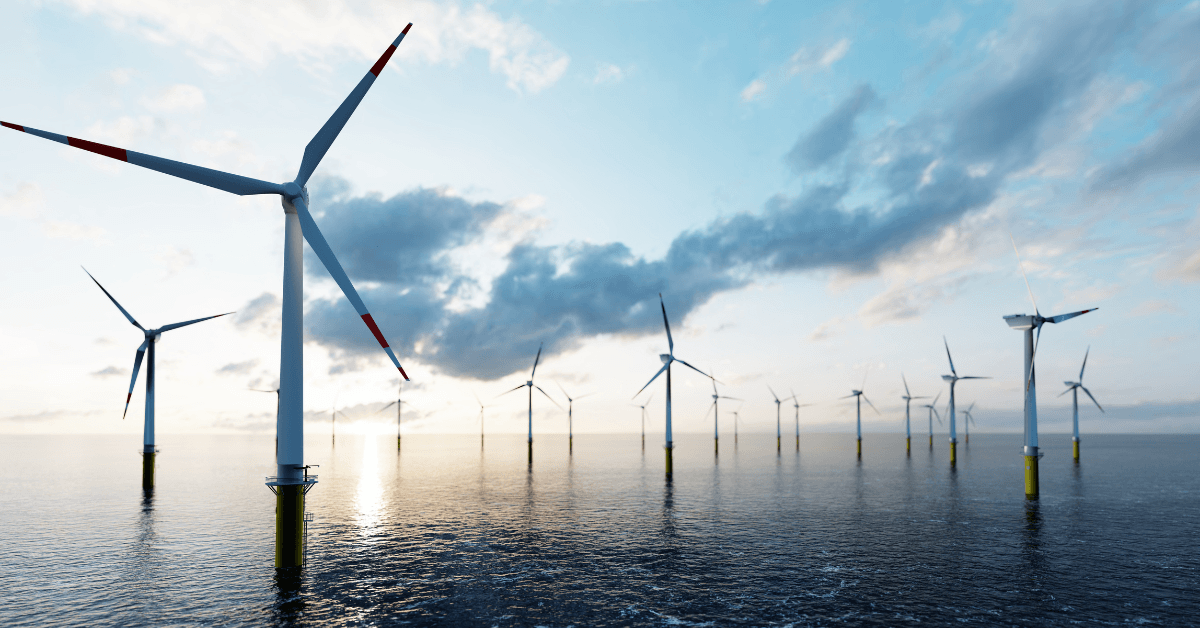
The withdrawal of Hanwha Ocean from the 800 MW Buan offshore wind consortium is a clear signal that South Korea's ambitious renewable energy targets are colliding with economic reality, and the industry must recalibrate its expectations. What appears to be a single corporate exit is, in fact, a measurable data point in a larger pattern: the cost of deploying large-scale offshore wind is escalating faster than project budgets can absorb, even in a nation pushing for over 14 GW of offshore capacity by 2030. For our readers, researchers, policymakers, and project developers, this is not merely a headline about one shipbuilder; it is a real-time climate indicator that the gap between ambition and execution is widening.
The estimated project cost has risen from KRW 4.8 trillion to KRW 6 trillion, driven by higher equipment and construction prices, and while Hanwha Ocean did not officially cite this escalation, the timing is telling. This mirrors a global trend we have observed in other marine infrastructure projects, such as the Petronas launches world's first nearshore floating LNG facility, calibrated for 2027 start-up, where cost pressures demand precise engineering and validated timelines. The Buan project's remaining partners, including public energy companies and Doosan Enerbility, now face a practical question: can they absorb Hanwha Ocean's share of investment and responsibility without further delays to a construction start slated for the second half of 2028? The consortium structure, which required public institutions to hold at least 50%, was designed for stability, but it cannot insulate the project from the empirical reality of rising steel and turbine prices.
This development also underscores a tension between technological innovation and financial feasibility. Hanwha Ocean remains active in the sector, building specialized wind turbine installation vessels and advancing the 390 MW Shinan Ui project, suggesting its exit from Buan was a strategic portfolio decision rather than a retreat from offshore wind entirely. Yet the broader implication is that South Korea's path to 14 GW by 2030 requires not just integrated data ecosystems and peer-reviewed planning, but also a hard look at how cost overruns are managed. As we noted in our coverage of The ocean offers a measurable solution for AI data center constraints, the ocean's value as a resource is increasingly tied to our ability to build infrastructure reliably and economically. Offshore wind is no exception.
The specific consequence to watch is how the remaining consortium reallocates equity and risk. If public institutions increase their stakes, the project may gain financial backing but lose the private-sector efficiency Hanwha Ocean represented. If a new private partner steps in, the timeline could slip past 2030. Either way, the Buan wind farm's completion date, and South Korea's decarbonization schedule, now hinges on a recalibrated investment model, not just on technical capability.