Ground-Breaking 100-Foot Full-Foiling Monohull Yacht Driven By Renewable Energy To Redefine Ocean Sailing
Our take
The announcement of a technology partnership between ABB and Ferrari Hypersail to develop a 100-foot, full-foiling monohull yacht powered by renewable energy represents a significant intersection of advanced engineering, sustainable technology, and maritime exploration. This isn't merely about building a faster sailboat; it’s a demonstration of how electrification and innovative design can redefine ocean sailing and potentially unlock new capabilities for ocean data collection and research. The project's ambition aligns with the growing need for sustainable solutions across industries, and the maritime sector is no exception. The challenges inherent in powering a high-performance vessel entirely with renewable sources—solar, wind, and potentially wave energy—require a level of integration and efficiency previously unseen in this context. Understanding the complexities of bottom friction, as explored in Estimation and interpretation of spatially varying bottom friction coefficients in Bohai Bay using A-4DEnVar, is crucial for optimizing hull design and minimizing energy expenditure, and this project will undoubtedly generate valuable data in that area.
The choice of ABB as a technology partner is particularly noteworthy. Their expertise in electrification, automation, and digital solutions is increasingly vital for addressing the challenges of decarbonizing various sectors. The application of these technologies to a high-performance sailing yacht highlights the potential for broader adoption within the maritime industry. We’ve observed heightened geopolitical risks impacting maritime trade, as evidenced by recent events like the Iranian Seafarer Killed As Unidentified Strike Hits Ship Near Strait Of Hormuz, underscoring the need for robust and resilient operational systems. This partnership demonstrates a proactive approach to developing sustainable and technologically advanced solutions, which can contribute to both environmental responsibility and enhanced operational security. Furthermore, the interception of a vessel suspected of oil smuggling off Mumbai, detailed in Indian Coast Guard Intercepts Vessel Suspected Of Oil Smuggling Off Mumbai, serves as a reminder of the importance of monitoring and enforcing maritime regulations, a task that could be enhanced through advanced data collection and analysis facilitated by vessels like this one.
Beyond the immediate implications for sailing, the technologies developed for the Ferrari Hypersail project could have significant applications in oceanographic research and data collection. A fully electric, autonomous or semi-autonomous sailing vessel offers a platform for deploying sensors and collecting real-time data on ocean conditions, climate indicators, and marine ecosystems with minimal environmental impact. The vessel's foiling capability reduces drag and increases efficiency, allowing for extended periods of operation and greater range. This aligns directly with World Data Ocean’s mission to build an integrated data ecosystem and provide ocean intelligence for informed decision-making. The ability to collect validated, measurable data longitudinally, using a platform powered by renewable energy, represents a major step forward in our understanding of the ocean’s complex systems. The integration of sophisticated sensor suites and real-time data transmission capabilities would provide researchers with unprecedented access to previously inaccessible data.
Ultimately, the Ferrari Hypersail project serves as a compelling example of how technological innovation can drive progress towards a more sustainable and data-rich future for ocean exploration. The confluence of luxury yacht design, cutting-edge electrification, and a commitment to renewable energy showcases the potential for interdisciplinary collaboration to address pressing environmental challenges. The calibrated approach to energy management and data acquisition will undoubtedly produce valuable insights, and the project’s success will likely spur further investment in sustainable maritime technologies. A key question moving forward is how the data generated by vessels like this can be integrated into broader ocean data initiatives to create a truly comprehensive and accessible ocean intelligence platform.
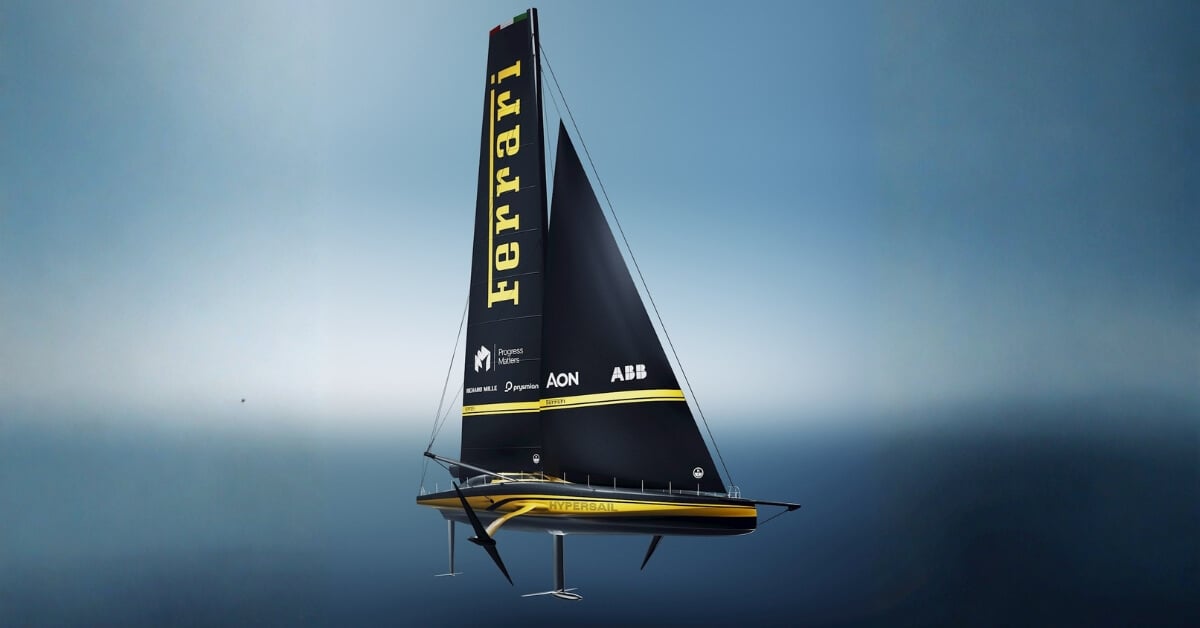
ABB today announces a technology partnership with Ferrari Hypersail that brings ABB’s electrification expertise to the world’s most ambitious offshore challenge. As Electrification Partner, ABB will support the challenge with expertise across marine power, Direct Current (DC) technology and advanced electrical systems.
Ferrari Hypersail is a groundbreaking 100-foot oceanic full-foiling monohull yacht powered by renewable energy. The vessel is designed to push the boundaries of sustainable marine performance, bringing together speed, resilience and safety with onboard energy generation and management in one of the most technically demanding environments.
ABB brings more than 25 years of experience in DC technology to the partnership, backed by a portfolio of more than 700 patents in the field. As Electrification Partner, ABB will support Ferrari Hypersail with expertise across energy management, marine electrical systems, and energy storage.
Ferrari Hypersail provides ABB with a high-performance environment to demonstrate how advanced electrification, DC architectures and intelligent energy management can improve resilience and efficiency under extreme offshore conditions. These demands – balancing renewable generation, storage, and power distribution in real time – are critical to the development of next-generation industrial microgrids.
“Ferrari Hypersail gives ABB a unique platform to demonstrate how we are collaborating with partners to push the limits of Direct Current technology,” said Giampiero Frisio, President of ABB’s Electrification business area. “Ferrari Hypersail is designed to operate in conditions that are as demanding as anything our systems face in industry.
ABB’s role showcases how electrification and automation technologies help industries outrun and achieve record-breaking performance. The lessons from a challenge like this can help us advance the resilient, efficient power systems our customers need across sectors from marine and renewables to data centers and industrial microgrids.”
For Enrico Voltolini, Project Leader of Ferrari Hypersail, the partnership delivers the technical foundation required to execute the mission. “Hypersail runs entirely on renewable energy,” Voltolini said. “It has to be self-sufficient for weeks at a time in the most hostile ocean environments on earth. Having ABB’s electrification expertise connected to the project is a valuable operational advantage.”
Ferrari Hypersail’s DC architecture will function as a high-performance, self-sufficient microgrid with systems operating at 48V and 800 VDC. It will generate, store, and manage power for critical navigation, foil controls, safety systems and propulsion while operating in conditions of extreme cold, salt spray, pressure and motion.
ABB’s team will support Ferrari Hypersail with expertise in DC system integration, intelligent power distribution and resilience at sea. Insights from the project will help inform the development of advanced power systems for industries including shipping, data centers and renewable energy infrastructure.
Press Release
Read on the original site
Open the publisher's page for the full experience