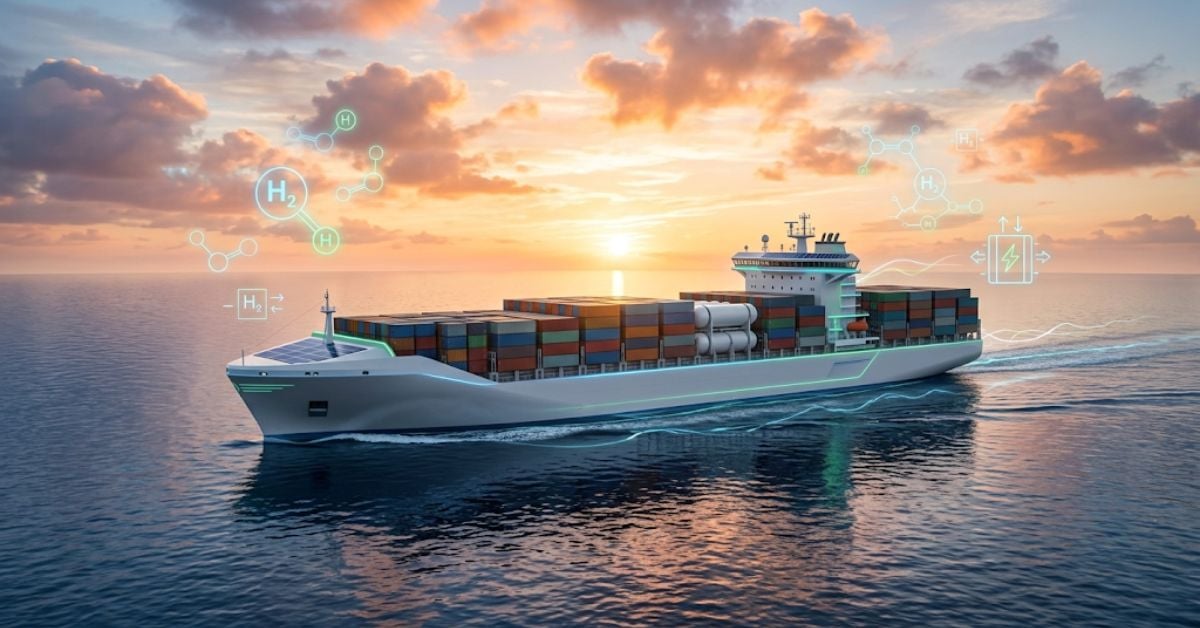
The maritime industry has long treated decarbonization as a distant horizon, a problem for the next generation of shipbuilders. The steady tightening of FuelEU Maritime regulations has changed that calculus, and the commercial maturation of marine fuel cells is the clearest signal yet that the wait is over. This is not a speculative research project; it is an integrated response to a regulatory clock that is now very much ticking. The move from concept to commercial reality is the kind of empirical, measurable progress that should define the next decade of ocean transport, and it connects directly to the broader need for an integrated data ecosystem that can track and verify these new energy sources.
Our take is straightforward: the fuel cell's real advantage is not its novelty but its flexibility. Unlike a single mandated fuel, fuel cells offer a pathway that can integrate with multiple feedstocks, from green hydrogen to methanol and ammonia. That is a practical win for operators who face the uncertainty of which alternative will dominate. This is precisely why we see the parallel work on validating onboard emissions data as the necessary companion to this story. A fuel cell is only as clean as the data that proves it. Without calibrated, peer-reviewed verification of what is actually coming out of the stack, any fuel switch is just a claim. The trial on the new LNG carrier, comparing direct measurement against expected values, is the kind of rigorous, longitudinal validation that gives regulators and financiers the confidence to commit. The fuel cell conversation is incomplete without that data layer; the two technologies are converging on the same principle: you cannot manage what you cannot measure.
What does this mean for our readers in practical terms? If you are a fleet operator, the question is no longer *if* you will face compliance penalties, but *when* you will start accounting for them in your operational budgets. The flexibility of fuel cells could be the buffer that keeps your assets from becoming stranded. If you are a policymaker, the message is that the technology is ready, but the regulatory framework needs to be equally agile, rewarding measurable outcomes rather than prescribing a single solution. And for the rest of us watching from the shore, this is a quiet but definite shift away from alarmist narratives toward a solvable engineering challenge. The ocean is a fluid, interconnected system, and the pollution that crosses borders today is a governance problem that requires the same integrated thinking we see in the fuel cell's design.
The one detail we are watching closely is the pace of bunkering infrastructure development. A fuel cell is only useful if the fuel is available at the next port. The regulations are set, the technology is moving, but the shore-side ecosystem remains the critical bottleneck. Will the first movers in this space be rewarded for their foresight, or will they be ahead of the infrastructure curve? That is the specific, concrete question we would put to any reader considering an investment in this space: your engine is ready, but is your supply chain? The next two years will tell us if the commercial reality can outpace the regulatory timeline.