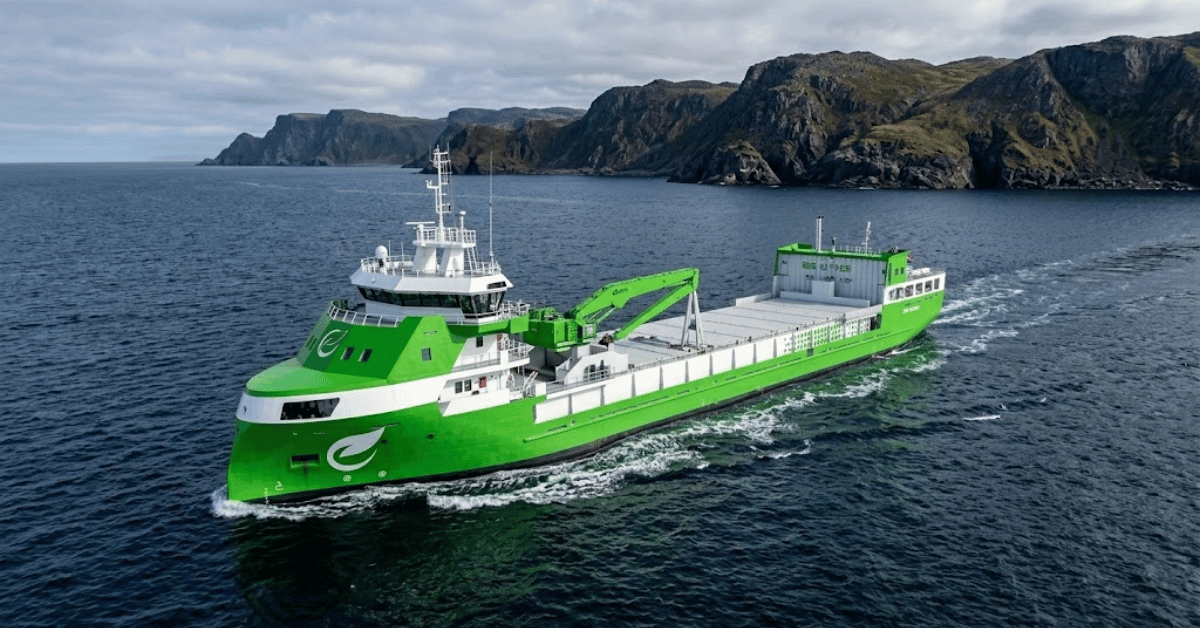
The decision by GMI Group to double its order of hydrogen-electric bulk carriers from two to four vessels is the most concrete validation yet that hydrogen fuel cells are moving from maritime pilot projects to repeatable commercial platforms. This is not a headline about a single flagship demonstration; it is evidence that a shipowner sees enough operational and economic confidence in the technology to scale its commitment within months, and that is precisely the signal the industry needs.
The SEK 27 million follow-up order for ten additional Marine System 225 units, totaling more than 2 MW of power, brings the four-vessel program to 24 fuel cell systems and 5.4 MW of installed capacity. What matters most here is the deliberate reuse of the same fuel cell platform across vessels of different sizes, with the first two ships at 4,000 deadweight tons and the next two at 3,000 tons. PowerCell's CEO, Richard Berkling, frames this correctly: the value lies in applying engineering, certification, and integration experience from the first vessels directly to subsequent deliveries. That is how costs come down and delivery timelines compress, not through bespoke one-off projects. For shipowners watching from the sidelines, the practical takeaway is that hydrogen-electric propulsion is no longer a custom experiment but a standardized option with a growing service base.
This order also reinforces a broader shift toward integrity and collaboration across the maritime value chain. The project's support from Norway's Enova fund, the NOx Fund, and the Green Shipping Program shows that public and private incentives are aligning, much like the recent move by Three classification societies set a new standard for maritime integrity to formalize their role in industry-wide accountability. Classification societies, funders, and technology suppliers are converging on shared standards, which is the only realistic path to fleet-wide decarbonization. At the same time, the modular approach here echoes the logic behind Steel cut for first unified dry cargo vessel in Russia's new fleet platform, where a single design template is intended to streamline construction across a series of ships. Standardization, whether in hull design or fuel cell architecture, is the quiet engine of maritime innovation.
The specific detail to watch is the 2027-2028 delivery window and the certification process managed by eCap Marine. Delivering five Marine System 225 units per vessel on a compressed renewable hydrogen supply chain is a demanding logistical and safety exercise, and the world's first hydrogen-electric bulk carriers will face intense scrutiny. The open question is whether the compressed hydrogen storage and bunkering infrastructure will scale as quickly as the fuel cell hardware itself. If GMI and PowerCell meet that schedule, the case for hydrogen in short-sea shipping will be empirically proven, not just theoretically argued. The next order, not the next announcement, will tell us if this platform becomes the industry baseline.