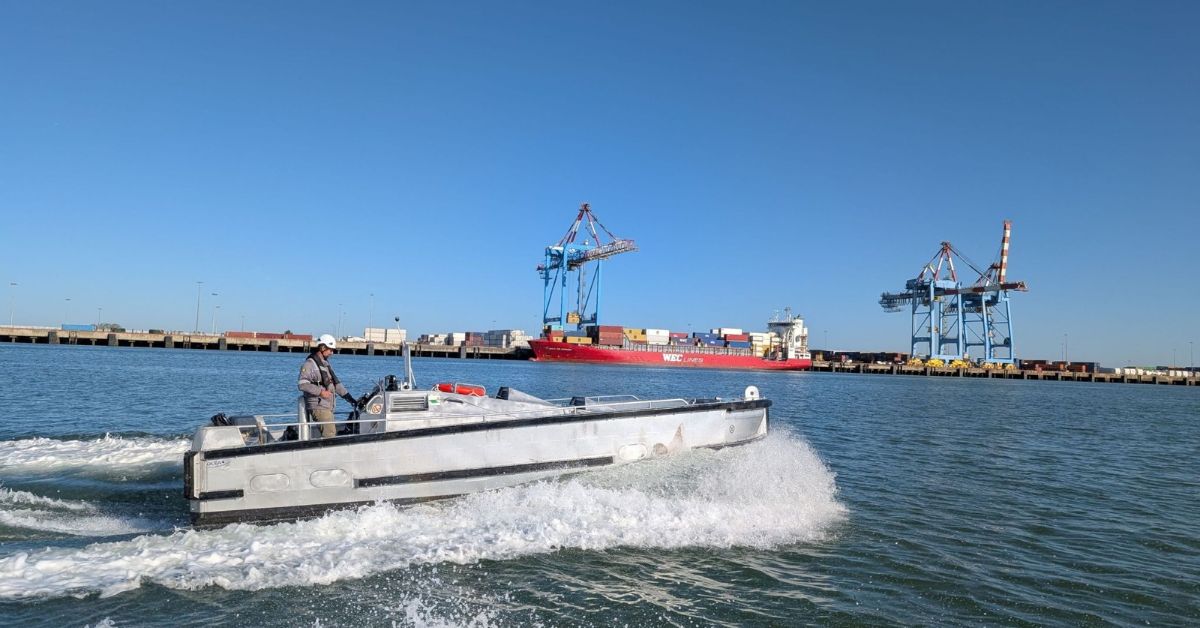
The electrification of harbor operations has moved from concept to certification. France's first officially registered fully electric mooring boat, developed by Lamanage Huchet Desmars, Groupe LHD in partnership with Aqua superPower, is not a pilot project waiting for validation, it is a registered vessel with a six-month operational test program already completed. This is a measurable step toward zero-emission port services, and it sets a concrete benchmark for an industry that has long talked about decarbonization without always delivering the integrated infrastructure to support it. The story connects directly to the broader challenge of building a unified data and energy ecosystem for ocean operations, much like the work described in Edge intelligence and multi-AUV networks advance autonomous hydrographic surveying and From satellite to sensor: real-time ocean intelligence across the data ecosystem. In each case, the bottleneck is not the vessel or the sensor alone, it is the shore-side, real-time support system that makes the technology viable at scale.
What makes this announcement different from many others is the specificity of the charging infrastructure. Aqua superPower is not just supplying a charger; it is operating and managing the shore-side system, backed by a 400 kW marine fast charging unit powered by a transformer installed by the Port of Nantes Saint-Nazaire. The vessel itself carries a 300+ kWh battery system certified by Bureau Veritas, capable of reaching worksites 30 miles away at 12 knots. These are not aspirational numbers. They are validated parameters from a prototype that has already undergone testing and is now receiving final modifications from builder OCEA. For port operators, researchers, and policymakers who track empirical progress, this is the kind of calibrated, longitudinal data point that matters. The project also benefits from European ERDF REACT-EU funding covering more than 50 percent of the R&D costs, plus support from the CMA-CGM C Fund, a funding structure that demonstrates how public and private capital can align behind measurable emission reductions rather than vague sustainability pledges.
Our take is straightforward: this project succeeds because it treats the vessel and the charging network as a single integrated system from the outset. Too many electric vessel initiatives stall because the charging infrastructure is treated as an afterthought or left to different stakeholders with misaligned timelines. Here, Aqua superPower owns the charging operation over the vessel's entire service life, and the port has invested in the grid transformer before the boat began its test program. That sequencing is rare and instructive. The long-term vision includes expansion to Montoir-de-Bretagne and then across French and European ports, but the immediate question is whether the operational data from this six-month test program will be shared openly enough to inform the next generation of electric workboat designs. The Port of Nantes Saint-Nazaire, the regional partners in Pays de la Loire, and the European funding bodies have an opportunity here to publish the validated performance metrics, battery degradation rates, charging cycle efficiency, real-world range under load, that the entire maritime sector needs to move beyond prototypes. That would turn a single registered vessel into a replicable template.