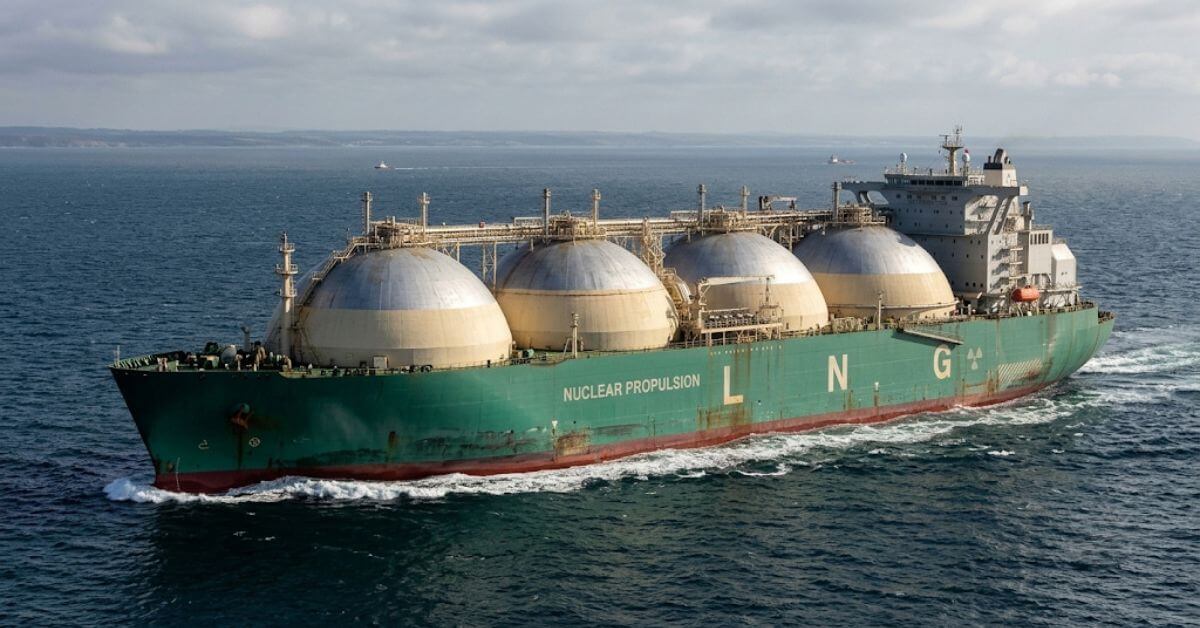
Nuclear power on a merchant ship has been discussed for decades, but this MoU between Samsung Heavy Industries and Tesser Atomics moves the conversation from theoretical to engineering-ready. We see this as a significant step toward decarbonizing one of the hardest-to-abate sectors, not because the technology is new, but because the integration plan addresses the two barriers that have kept nuclear out of commercial shipping: trust in the fuel and compatibility with vessel operations. For our readers tracking the intersection of ocean intelligence and energy systems, this project offers a concrete test case of how validated reactor technology can enter a global supply chain.
The choice of the Triton unit, a fluoride-salt-cooled high-temperature reactor using TRISO fuel developed over two decades by the U.S. Department of Energy, is notable. TRISO particles are among the most robust nuclear fuels ever tested, and the low-pressure molten salt coolant eliminates the need for the high-pressure systems that complicate conventional marine reactors. Online refuelling means the vessel can remain in service without docking for fuel swaps, a practical advantage for a transatlantic LNG carrier that needs predictable schedules. This is not a speculative design; it builds on the NuProShip research program and the SFI SAINT consortium at NTNU, giving it an empirical foundation that aligns with our emphasis on measurable, peer-reviewed development. The parallels to our reporting on Five decades of ocean warming measured, validated, and mapped are clear: long-term, systematic data collection and validation underpin both climate science and maritime engineering. Just as warming trends become actionable only when they are calibrated and longitudinal, nuclear propulsion becomes viable only when reactor performance is demonstrated under real operating conditions.
The project also raises questions about regulatory pathways and environmental monitoring. Tesser will lead the licensing, but the vessel will operate between the U.S. and Europe, meaning it must satisfy at least two national maritime authorities and the International Maritime Organization. That process will set precedents for every subsequent nuclear merchant ship. Our earlier piece on Thermal Discharge Impacts on Coastal Ecosystems Measured Through Integrated Data underscores why integrated data ecosystems are essential here: the thermal and radiological profiles of a molten salt reactor in port and at sea must be tracked with the same rigor as any coastal power plant. Shipowners and regulators alike will need real-time, validated data to build confidence, and the demonstration vessel is the only way to generate that data.
One specific detail to watch is the timeline from concept validation to commercial replication. SHI and Tesser have not announced a target year for the first voyage, but the fact that SHI already holds an Approval in Principle from ABS and the Liberian Registry for a similar molten salt LNG carrier design suggests the engineering groundwork is further along than typical MoU announcements. If this vessel sails commercially on a transatlantic route within the next decade, it will provide the empirical evidence that shipowners need to commit orders. If it does not, the reasons, whether regulatory, economic, or technical, will be equally instructive. The ocean does not offer room for error, and neither should the systems we deploy to protect it.