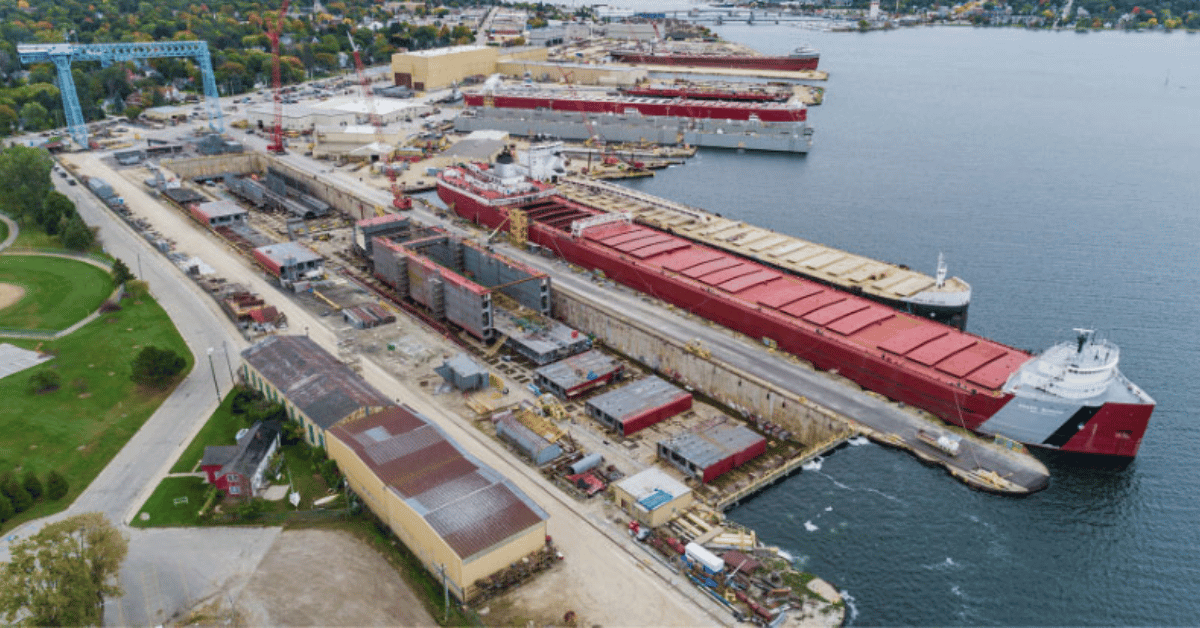
Fincantieri's nearly €100 million commitment to BOOST² is not a futuristic experiment; it is a calibrated, industrial-scale bet that productivity and safety in shipbuilding will be defined by Physical AI and automation. This is the kind of investment that moves the conversation from theoretical debates about digitalisation to measurable, real-world outcomes. For an industry where margins are tight and the margin for error is narrower, integrating collaborative robotics and digital twins into the daily rhythm of a shipyard is a pragmatic step toward resilience.
The program's scale matters. Engaging 450 employees across 13 shipyards, from Italy to Romania and the United States, demonstrates that Fincantieri is treating technology adoption as a human systems problem, not a hardware upgrade. By focusing on "industrial deployment" rather than lab-based prototyping, BOOST² aims to embed solutions into operational workflows. This aligns with a broader trend we are following: the intersection of AI and digitalisation is already being formalised in new maritime safety and emissions frameworks, as seen in the recent AI and digitalisation anchor new maritime safety and emissions pact signed between China Merchants Energy Shipping and RINA. That pact targets regulatory compliance and operational efficiency, two pressures that Fincantieri's automation push is designed to address from the production side.
What distinguishes this initiative is its integration with an Open Innovation strategy that draws on SMEs and startups. By partnering externally rather than building everything in-house, Fincantieri avoids the trap of becoming a technology island. This approach mirrors the collaborative logic we see in naval capability projects such as the INS Vikrant model docks in Thiruvananthapuram as tribute to indigenous naval capability, where national shipbuilding expertise depends on integrating diverse industrial partners. The same principle applies here: no single company can own every solution for additive manufacturing, smart supply chains, or automated heavy equipment.
The practical takeaway is that Fincantieri is redefining how shipyard competitiveness will be measured. It will no longer be solely about labour cost or throughput tonnage, but about the speed and reliability with which validated technologies move from pilot lines to production floors. The biggest question, and the one to watch, is whether the physical AI systems can maintain peer-reviewed levels of performance when scaled across yards with different layouts, climates, and workforce skill sets. If BOOST² succeeds in proving that integration at this cost and complexity is replicable, it will set a benchmark that competitors will have to match, not just admire.