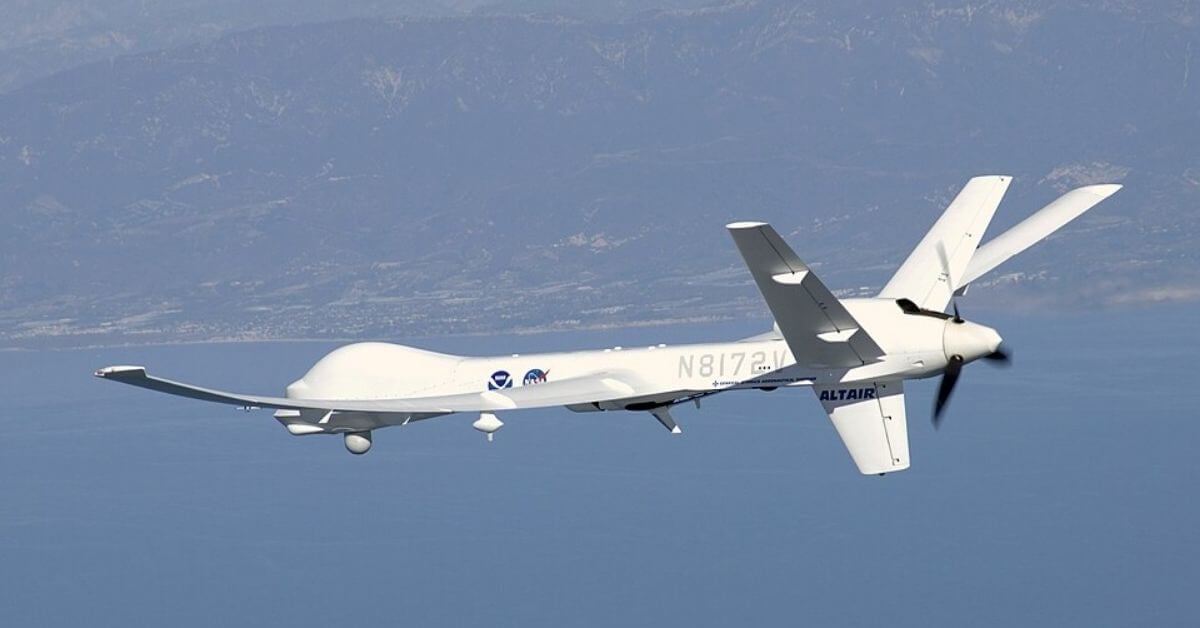
The Strait of Hormuz is not a place where incidents stay isolated. When Iran intercepts a US MQ-9 Reaper, the news moves from a defense channel to a maritime trade alert in under an hour. The drone is a medium-altitude, long-endurance platform built by General Atomics, and its presence there is not an anomaly. It is a calibrated signal in a waterway that carries a fifth of global oil consumption. We should treat this not as a headline about one aircraft, but as a data point in a pattern of escalating pressure on the world's most important chokepoint.
The timing aligns with what our colleagues have been tracking across the region. Gulf of Oman STS Transfers Max Out Amid Rising Saudi Oil Exports shows that ship-to-ship transfers are at capacity, a workaround that keeps barrels moving when direct routes grow risky. That is the practical context here. Iran is not just testing drone defenses; it is testing how much friction the global logistics chain can absorb before rerouting costs become structural. Meanwhile, Puntland Forces Intercept Hijacked, US-Sanctioned Oil Tanker After 48 Hours reminds us that the same waters are seeing a rise in opportunistic piracy tied to sanctioned cargo. These are not separate stories. They are the same story about a maritime order that is being challenged from multiple directions at once.
Our take is straightforward: the intercept is less about the drone and more about the precedent. Iran is signaling that it can impose costs on unarmed surveillance without triggering a wider military response, because the MQ-9 is not a strike asset in this configuration. That is a calculated move. For shipping companies, insurers, and navies, the takeaway is that the Strait is no longer just a transit lane. It is a pressure point where aerial and surface incidents are becoming the new normal. The Integrated Subsea Cables Enhance Data Transmission Across the Indian Ocean project, now being laid across the Indian Ocean, underscores how much of our modern economy depends on infrastructure that runs through or near these contested zones. We are building new data highways along the same routes where old geopolitical frictions are rising.
If a reader asked us what to do with this news, we would say this: do not watch for the next intercept. Watch for how quickly insurance premiums on war-risk coverage react, and whether the STS transfers in the Gulf of Oman start shifting to floating storage instead of onward transit. That will tell you more about the real threat level than any statement from Tehran or Washington. The drone is a symptom. The rerouting of trade is the diagnosis. And that is already happening.