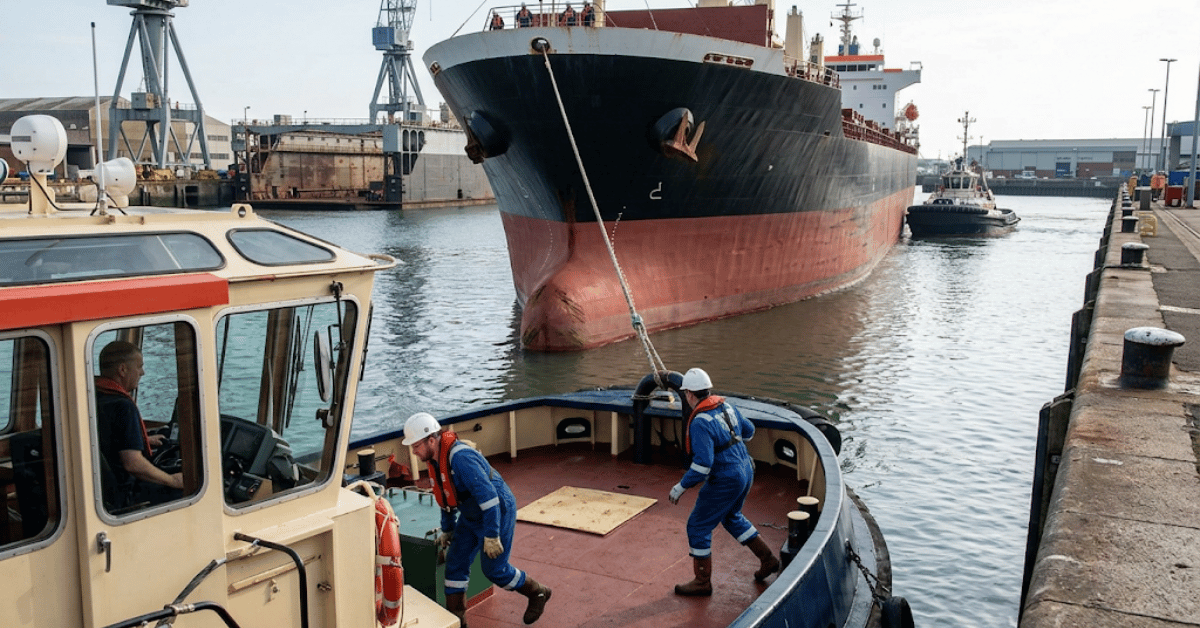
The recent fatal tug accident during a shipyard berthing operation is a stark reminder that the ocean's greatest risks often concentrate in the narrow margins of harbor water. The report details a cargo vessel in ballast, moving under pilot guidance with the Master in agreement, when a routine line-handling procedure turned lethal. For our readers, this is not a distant incident report; it is a case study in how operational visibility collapses under pressure. We know from the Drone Strike Impacts LPG Tanker Near Strait of Hormuz that maritime threats can arrive unannounced, but this accident shows that the most predictable operations, like a shipyard berthing, carry their own hidden dangers. The lesson is not to assign blame but to demand a higher standard of situational awareness for every line handler on the dock.
Our take is direct: the industry has spent years investing in sophisticated navigation and communication systems, yet the human element remains the most variable component. In this case, the pilot and Master agreed on the plan, but the execution failed at the point of physical contact between vessel and shore. This is where "ocean intelligence" must mean more than data feeds; it must mean real-time, calibrated awareness of the people on the bitts and the wires in their hands. The India Establishes Support Network to Safeguard Seafarers in Conflict Zones rightly focuses on geopolitical threats, but a fatal accident in a shipyard proves that the most immediate threat is often the one we have normalized. If we can track a drone strike in the Strait of Hormuz, we can track the tension on a spring line during a berthing evolution.
What would we tell a reader who asks about this? We would say that the takeaway is not to retreat from shipyard operations, but to treat every line-handling evolution as a high-risk event worthy of the same pre-mission brief as a transit through a conflict zone. The Black Sea Attack Damages Tugboat, Claims Lives of Two Seafarers shows that tug crews face danger from external actors, but here the danger was internal, a failure of process and communication. The specific detail to watch is how the investigation frames the decision-making sequence: was there a moment when visibility of the tug's position was lost, and why did that moment pass without intervention? That is the question that should drive procedural change.
We close on a concrete point: the next revision of line-handling guidelines must mandate a dedicated observer whose sole task is to monitor the tug's angle and the line's tension, with the authority to halt the operation without a challenge. This is not a suggestion for a new committee; it is a practical, measurable response to a fatal gap. The ocean is unforgiving, but our procedures should not be. If this accident forces one shipyard to recalibrate its risk assessment, then the loss is not entirely in vain. Watch for the final report's emphasis on visibility, and ask your own crew if they could have seen the same hazard coming.