ecological restoration
ecological restoration at World Data Ocean is a file of 5 stories. The newest of them: “Five Years of Data Track Phased Recovery in Bohai Bay Oyster Reefs”, “Governing Marine Damage: An Evolutionary Analysis of Compensation Strategies in China”, and “Sponges as Habitat Engineers: Restoring Life to Polluted Harbors”. Five years of empirical data now confirm what calibrated monitoring can reveal: subtidal oyster reef restoration works, but recovery is phased. Compensation for marine ecological damage rarely follows a straight line. A Global Hub for Ocean Intelligence 4 World Data Ocean is a centralized digital platform where researchers, scientists, and ocean enthusiasts converge to… The list below is every ecological restoration story on World Data Ocean, newest first.
Five Years of Data Track Phased Recovery in Bohai Bay Oyster Reefs
Five years of empirical data now confirm what calibrated monitoring can reveal: subtidal oyster reef restoration works, but recovery is phased. In Bohai Bay's Dashengtang project, oyster density on natural reefs reached 1,830.4 individuals per square meter by March 2026, while artificial reefs showed steady recruitment. Water quality improved measurably, suspended particulate matter dropped from 19.3 to 7.28 mg L⁻¹. These are not quick fixes; they are validated, stage-specific gains.

Governing Marine Damage: An Evolutionary Analysis of Compensation Strategies in China
Compensation for marine ecological damage rarely follows a straight line. In China, the central government, local regulators, and sea-using enterprises each pursue distinct interests, often turning policy into a delicate balancing act. This study's evolutionary game model reveals that penalties must be differentiated to drive compliance, while monetary standards require careful calibration, too low fails, too high backfires. The choice between cash and restoration hinges on cost. For deeper context on governance challenges, see our analysis of Somalia's Fisheries. Governance shapes outcomes, measurably and persistently.
Sponges as Habitat Engineers: Restoring Life to Polluted Harbors
A single sponge species endured where its peers could not. In a 455-day transplant experiment across a recreational harbor, *Chondrosia reniformis* posted 91.7% survival while four other Mediterranean species perished during preparation or shortly after deployment. This resilience warrants attention. The survivors did more than persist: they crawled up to 12.7 centimeters, recovered from disease, and fissioned during warm months, nearly doubling their experimental population. Such clonal proliferation and morphological plasticity position this species as a credible habitat engineer for degraded coastal infrastructure.
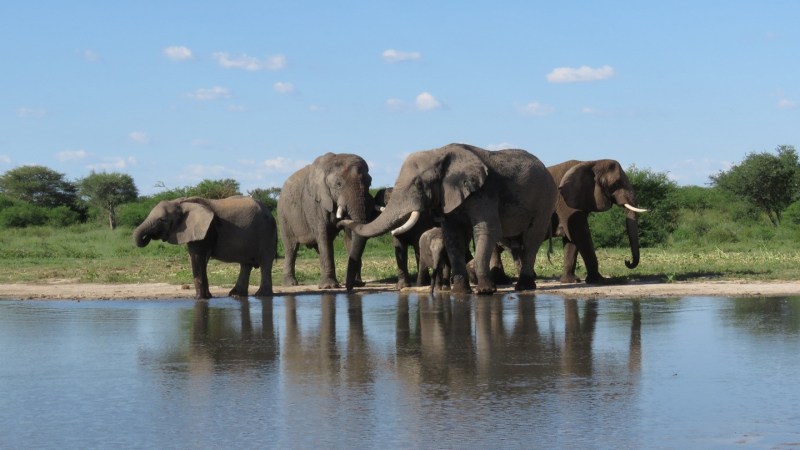
Rehabilitated Elephants Show Remarkable Behavioral Convergence with Wild Populations
Eleven rehabilitated elephants now move, forage, and socialize in patterns strikingly similar to their wild counterparts, according to new research. The findings suggest that structured care and gradual reintegration can preserve natural behaviors, a hopeful signal for conservation programs worldwide. This empirical alignment strengthens the case for science-led rewilding. For context on how environmental systems respond to pressure, readers may explore our related piece on Cascadia and San Andreas, which examines sequential earthquake risk. Understanding drives protection, and these elephants offer measurable proof of resilience.
Data-Driven Solutions for a Sustainable Ocean Future
Every observation we log, from a chiton's unexpected presence in Puerto Rico to a mystery specimen washing ashore in California, sharpens our collective picture of the ocean. These are not isolated curiosities; they are data points that refine the models guiding our stewardship. We treat each report as a signal worth integrating into a larger, peer-reviewed framework. Understanding drives protection, but only when we connect the dots.