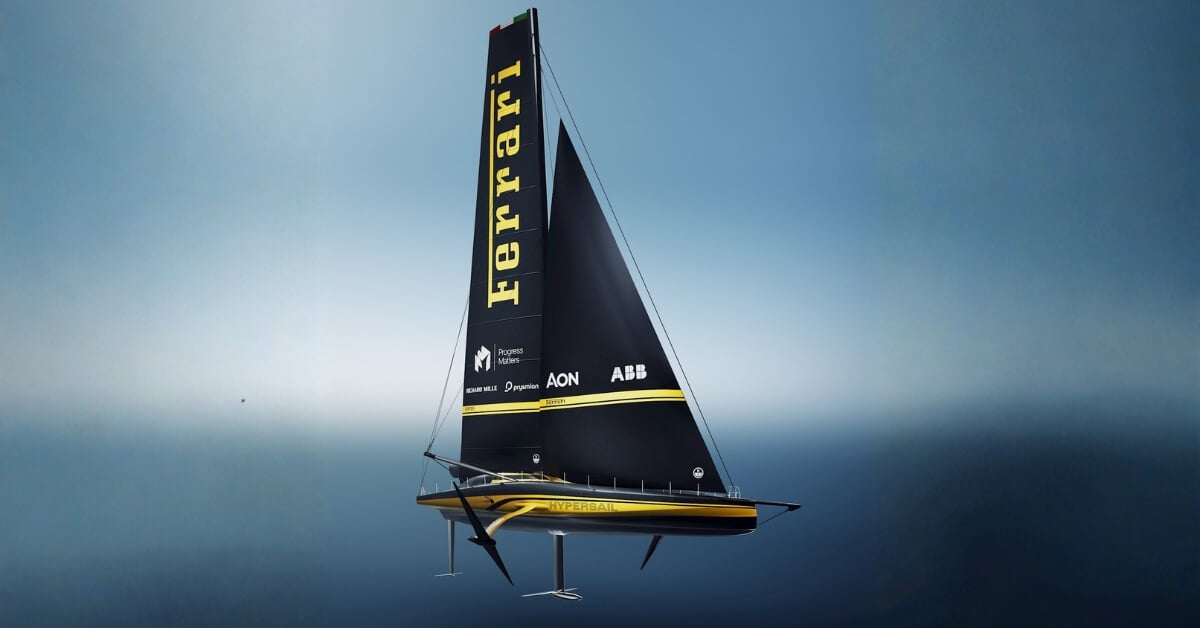
The announcement that ABB is partnering with Ferrari Hypersail on the world's most ambitious offshore challenge is not about speed. It is about the quiet redefinition of what a sailboat can be when electrification moves from auxiliary support to core architecture. For an ocean that remains critically under-observed, particularly in coastal zones where traditional monitoring is limited, this partnership signals something larger than competitive sport. It is a live demonstration that high-performance marine engineering and integrated data systems can coexist without compromise. The same week we learn of Integrated Subsea Cables Enhance Data Transmission Across the Indian Ocean, we see a floating platform designed to push electrification into open-ocean extremes. The connective tissue is clear: the ocean is becoming a connected, measured, and electrified space.
What impresses us is not the headline of innovation, but the calibrated integration of systems that this partnership implies. ABB's electrification expertise is not being bolted onto a hull; it is being engineered into the vessel's operational logic. For our readers, this matters in practical terms. If a hypersail yacht can manage power loads, recover energy, and maintain real-time performance data under the harshest offshore conditions, the same validated technology can be adapted for research vessels, cargo ships, or autonomous platforms. This is not a niche experiment. It is a proof point that electrification is not a constraint on ambition. It is an enabler of it. We would tell a reader who asked whether this is just about racing that they are missing the point. Racing is the test bed. The takeaway is that the distance between high-stakes marine engineering and operational ocean intelligence is shrinking.
We also see a direct echo of the work being done to bridge data gaps through citizen science, as reported in Bridging Data Gaps: Integrating Citizen Science for Ocean Intelligence. A vessel like Hypersail, equipped with integrated sensors and electrified systems, is not just a competitor. It is a mobile sensor platform capable of capturing longitudinal, peer-reviewed quality data from remote stretches of ocean that are expensive to monitor. The more these technologies converge, the more we move toward an integrated data ecosystem where every voyage contributes to climate indicators and ocean health metrics. That is the quiet promise here. It is not about one boat going fast. It is about a future where every vessel, from racing yachts to commercial ships, is a node in a global observation network.
Our honest take is this: watch how the energy management data from this partnership is shared. If ABB and Ferrari Hypersail publish their performance metrics, they will set a new standard for transparency in marine electrification. If they keep it proprietary, they will have missed an opportunity to lead. We are not asking for charity. We are asking for empirical accountability. The ocean does not need more buzzwords. It needs validated, measurable, real-time evidence of what works. This partnership has the potential to deliver exactly that. The question is whether the data will flow as freely as the current under the hull. That is the detail to watch.