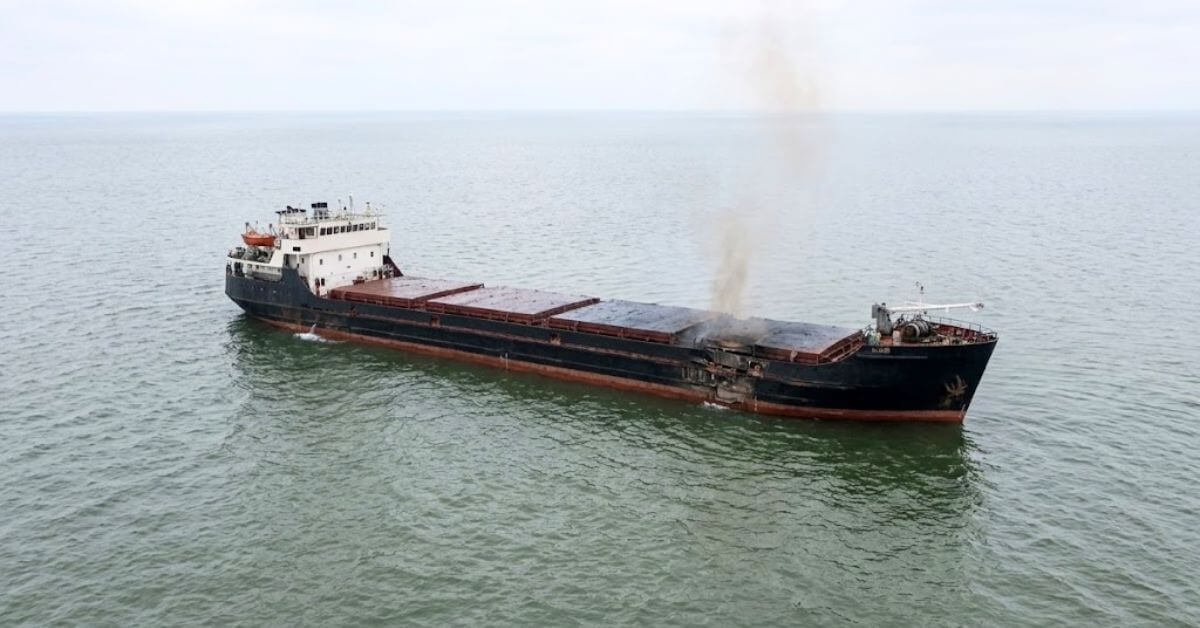
The recent incident in the Sea of Azov, where a drone strike led to the sinking of a grain-laden vessel, underscores a critical nexus between geopolitical conflict and global food security. While the immediate cause of the sinking is attributed to military action, the disruption to the grain supply chain highlights the broader fragility of maritime trade routes and their susceptibility to external pressures. This event serves as a stark reminder that the stable flow of essential commodities, like grain, relies on more than just the physical act of transportation; it is intrinsically linked to peace and security across vital oceanic and inland waterways.
From the perspective of World Data Ocean, such events reinforce the imperative for comprehensive, real-time ocean intelligence. Understanding the dynamics of maritime traffic, the potential for conflict zones to impact supply lines, and the cascading effects on global food reserves requires integrated data ecosystems. The ability to monitor vessel movements, identify potential risks, and analyze the impact of disruptions on critical supply chains is paramount. This incident, though localized in its origin, has tangible consequences for markets and populations far beyond the Sea of Azov, emphasizing the interconnectedness of our planet's systems, from the battlefield to the dinner table.
Our commitment lies in providing the validated, measurable data necessary for informed decision-making in the face of such complex challenges. By integrating diverse data streams – encompassing maritime surveillance, geopolitical assessments, and economic indicators – we aim to equip researchers, policymakers, and international organizations with the empirical insights needed to navigate these turbulent waters. The long-term implications of such disruptions on food security and global stability necessitate a proactive, data-driven approach, moving beyond reactive responses to anticipate and mitigate future risks. Understanding drives protection, and in this context, understanding the intricate web of factors impacting global trade is crucial for fostering resilience and ensuring the sustained availability of vital resources.