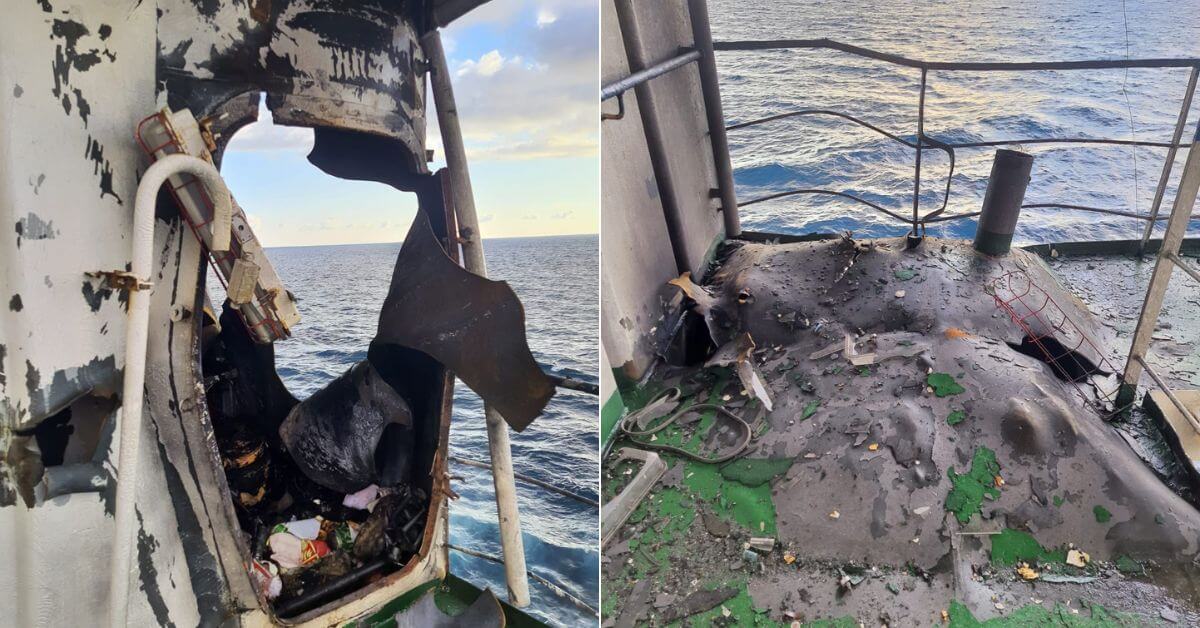
The MV BARYON was not carrying headlines when it left Novorossiysk, only cargo and 23 Indian seafarers bound for Karachi. A drone strike and subsequent fire have now turned a routine route into a crisis point, forcing the crew to abandon ship and raising the same question that has shadowed the Black Sea and Mediterranean for months: where does commercial shipping end and strategic target begin? This is not an isolated incident. It sits alongside a recent warning that Russian maritime activity may involve launching drones from commercial vessels in the Mediterranean, and it follows a separate cargo ship fire near Mykonos that required evacuation. The pattern is not coincidence; it is a trend line.
For our readers, the practical takeaway is blunt: the waterborne supply chain is now a front line, and the rules of engagement are being rewritten faster than regulators can respond. The BARYON was sailing a well-worn corridor, yet it still became a target. That tells us something uncomfortable. No amount of route optimization or cargo documentation protects a crew from a weaponized drone. The related reports on ship-to-ship transfers in the Gulf of Oman and the Mykonos fire underscore that vessels in these regions are operating under compounded stress, from geopolitical tension and fire risk to the constant threat of asymmetric attack. We would tell any operator or policy maker to stop treating these as separate incidents and start mapping them as a single, integrated risk picture.
Our honest take is that the industry has been too slow to move beyond reactive safety protocols. The BARYON incident is not a failure of seamanship; it is a failure of collective maritime security architecture to keep pace with cheap, accessible drone technology. The crew did their job. The question is whether the rest of us are doing ours. We are not calling for alarmism, but we are calling for calibration. Every vessel transiting high-risk zones should be treated as a potential target, and that means real-time threat assessments, hardened bridge procedures, and contingency plans that assume the first warning may be the strike itself. The Mykonos fire and the Gulf of Oman congestion may have different causes, but they share the same operational environment: one where a single incident can cascade.
What we would tell a reader who asks us directly is this: watch the investigation into the BARYON closely, not just for the cause, but for how the response is coordinated. The specific consequence to track is whether this incident accelerates the deployment of escort tugs, armed security, or naval patrols along the Novorossiysk-to-Karachi lane. If it does not, the next vessel may not be as fortunate. The ocean is vast, but the margins for error are shrinking. Understanding drives protection, and right now, the data suggests we are still learning what we are up against.