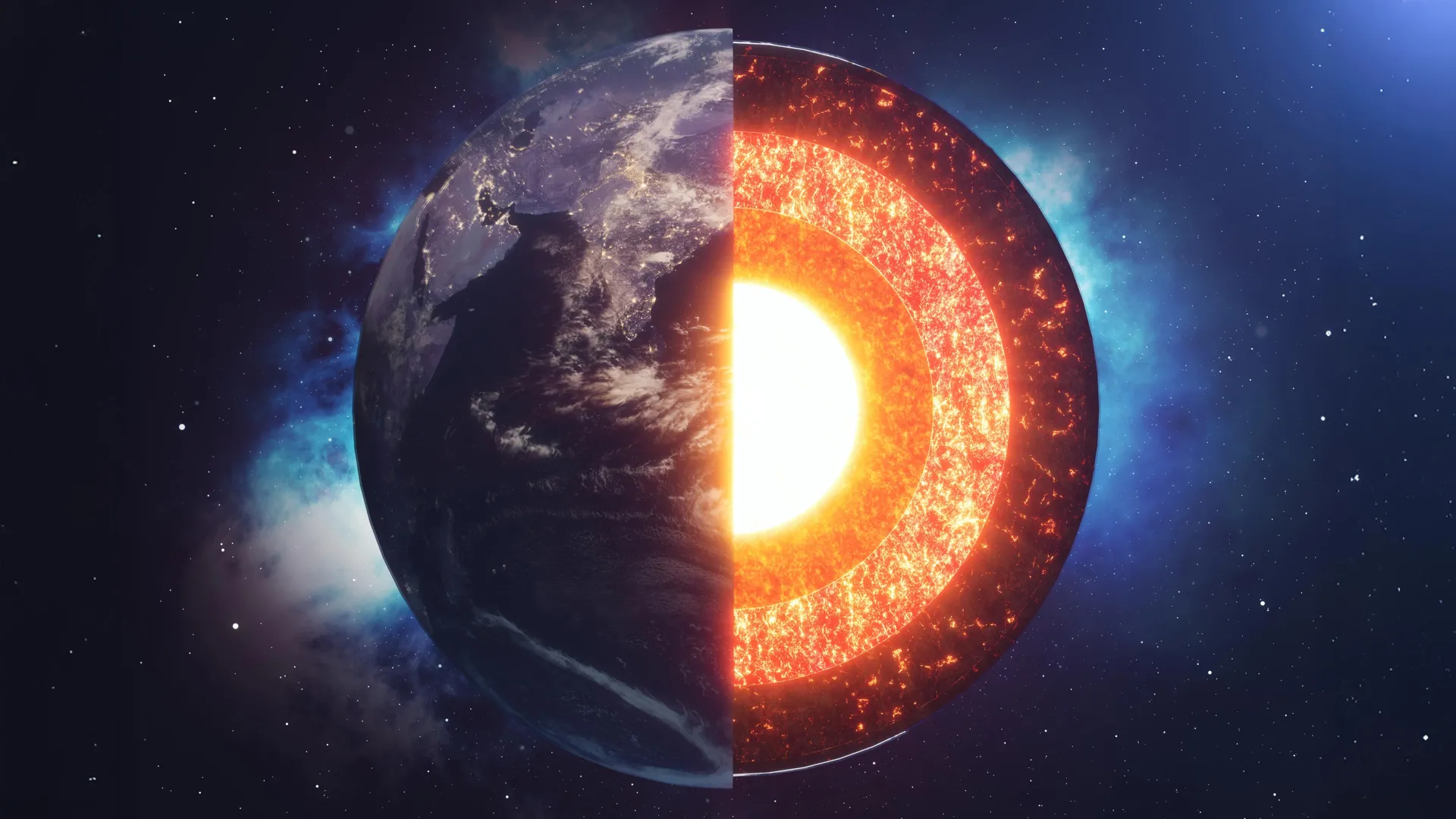
The idea that entire chapters of Earth's history can simply vanish from the rock record is a humbling reminder that our planet's surface is anything but static. New research suggesting that deep planetary currents slowly raised and lowered entire continents, allowing erosion to erase more than a billion years of geological strata, reframes how we understand the archive beneath our feet. This is not a gap in our knowledge; it is a physical process we are only beginning to measure. For researchers and policymakers alike, the finding forces a practical recalibration: if the rock record is inherently incomplete, then the data we do have, especially from the ocean floor and coastal margins, becomes even more critical.
This discovery connects directly to the work we cover on coastal systems and sea-level change. When we look at Mapping Stakeholder Priorities for Coastal Adaptation in Costa da Caparica, the challenge is not just about rising water; it is about understanding the long-term geological behavior of the land itself. The same deep-Earth currents that erased ancient strata may also be subtly influencing the subsidence or uplift of modern coastlines, compounding the pressures of climate change. Meanwhile, Measured sea level rise validated across decades of ocean data provides the kind of empirical, long-term record that helps separate human-driven change from natural geological cycles. Without that validated baseline, we risk mistaking a billion-year hiccup in the rock record for a stable reference point.
The missing strata are not merely a curiosity for geologists. They represent a lost opportunity to calibrate climate models against past periods of extreme warmth, high CO₂, and shifting ocean currents. Every missing layer is a gap in our understanding of how Earth's coupled systems, atmosphere, ocean, and solid planet, respond over deep time. A curious sandstone find on a Costa Rican beach invites geological inquiry, reminding us that even a single outcrop can hold clues that challenge prevailing narratives. The new research suggests that such fragments may be all that remains of entire eras, and that our job is to read them not as a complete story, but as scattered pieces of a much larger puzzle.
The concrete takeaway is this: we must treat Earth's geological archive as a partial, filtered dataset, not a continuous timeline. That means investing in integrated data ecosystems that combine seafloor mapping, sediment cores, and real-time ocean monitoring to fill the gaps the planet itself has erased. The question to watch is whether these deep currents operate on predictable cycles, and if so, whether we can detect their influence on modern continental motion before another billion years of evidence is swept away.